REVIEW · KENYA
Swahili Carved Doors Tour by Woman Woodcarver: Lamu Island
Book on GetYourGuide →Operated by SWAHILI CARVED DOORS TOURS · Bookable on GetYourGuide
Carved doors tell stories in Lamu. I love how Almasi, the woman woodcarver of Lamu, turns a simple stroll into a front-row look at Swahili carved doors tucked into the Old Town lanes. You get to connect design details to the people who made them, not just admire them from the sidewalk.
Two things I liked a lot: the way you’ll learn to spot different door-carving styles and what likely shaped each look, and the slow, leisurely pace through Lamu’s quieter back streets. It’s not a rushed checklist tour, and that matters in a place where the best details are small and close up.
One consideration: the walk depends on weather. If it’s rainy season (May/June/July), the timing may shift to avoid the heaviest rain, so plan to stay flexible.
In This Review
- Key highlights worth your time
- Lamu Old Town and Swahili carved doors: why this works
- Who Almasi is and what changes when the guide is a maker
- The 3-hour walking route: town square to door alleys
- What you’ll learn: reading Swahili door designs like a pro
- Timing, heat, and weather: plan for an afternoon start
- Accessibility and comfort in Lamu Old Town
- Optional add-on: Swahili carved doors in Shela
- Price and value: what $40 buys you
- Who this tour suits best
- Should you book Almasi’s Swahili Carved Doors tour?
- FAQ
- What is the duration of the Swahili Carved Doors tour?
- What time does the tour start?
- Is hotel pickup and drop-off included?
- Where does the tour start?
- Is the tour private?
- Are there accessibility accommodations?
- What languages will the guide use?
- What should I bring?
- Is the tour affected by weather?
- Is there an optional second tour in addition to Old Town?
Key highlights worth your time

- Meet Almasi, Lamu’s only woman woodcarver and hear the craft explained in plain language
- See carved doors on UNESCO-listed streets, not in a museum setting
- Learn to differentiate design styles as you move street to street
- Walk main lanes and quieter back streets, then slow down for the workmanship
- Wheelchair-accessible routes and an afternoon start that fits most days
- Optional Shela add-on near Lamu Town for more doors and more context
Lamu Old Town and Swahili carved doors: why this works
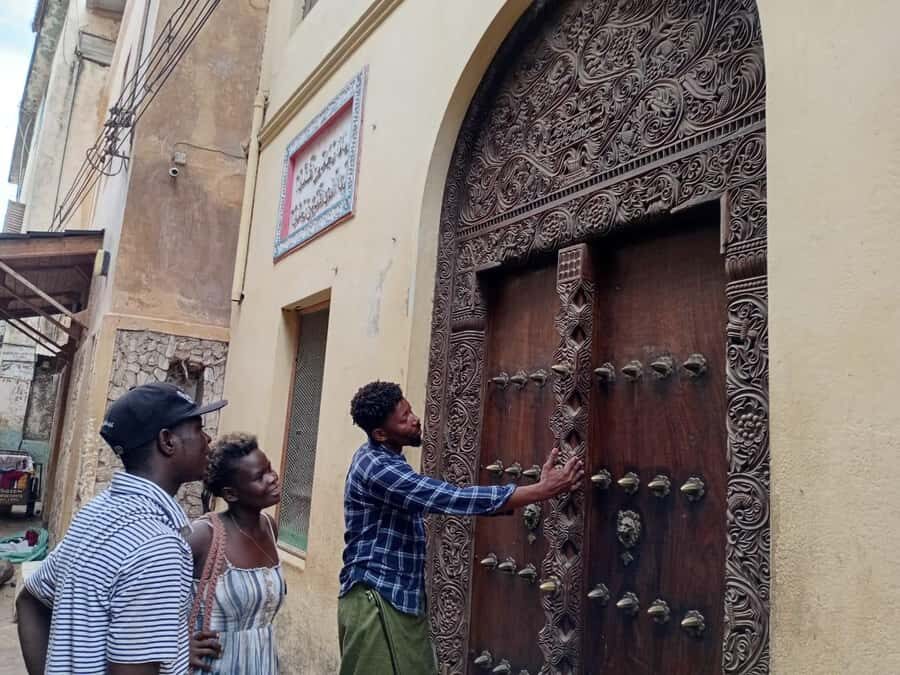
Lamu Old Town is a UNESCO World Heritage Site for a reason: the town plan, the alleys, and the buildings keep the past visible. But the real magic is that Swahili culture shows up in everyday details, especially on doorways. On this tour, you’re not just passing buildings. You’re reading them.
The carved doors are the headline, but what you’re really seeing is craftsmanship tied to community life—work done with care, for people who would walk past these doors every day. Even if you’re not a “doors person,” once you start noticing patterns, your eyes adjust fast. You’ll start looking for cuts, depth, repeating motifs, and how the whole frame is treated as part of the artwork.
This is also a strong option if you’ve done the standard shoreline stops already. Here, you get something more intimate and human-scale.
You can also read our reviews of more tours and experiences in Kenya.



Who Almasi is and what changes when the guide is a maker
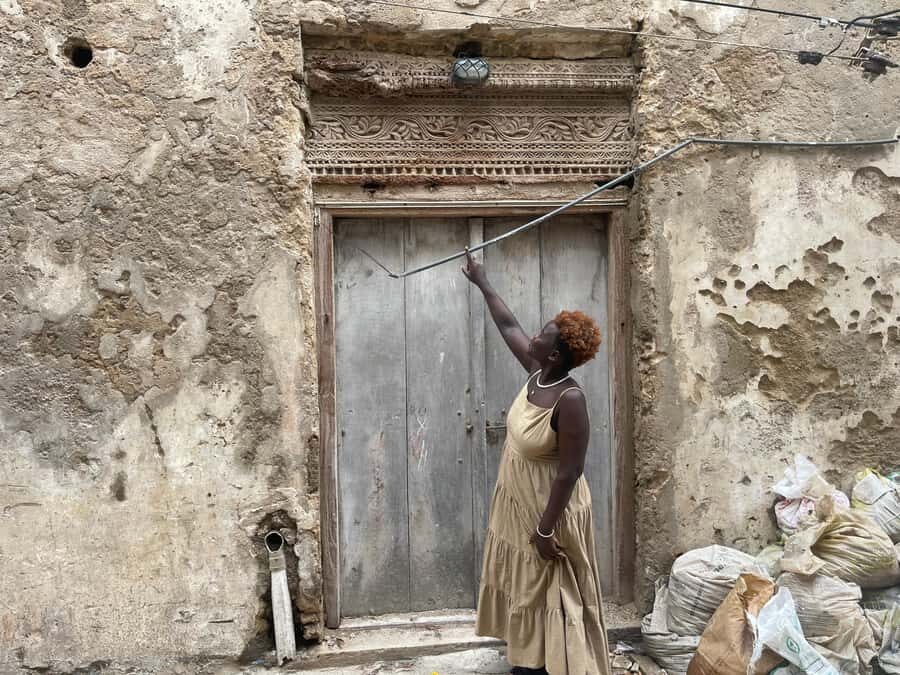
This tour is anchored by Almasi—an actual woodcarver, and the only woman woodcarver in Lamu. That matters more than most people expect. A guide who makes things tends to explain how decisions get made: where the tool likely bites, how the carver plans the pattern, and what makes one design feel distinct from another.
Because it’s a private group, you can ask questions without feeling like you’re hijacking a big tour. The guide works in English and Swahili, so you’ll have plenty of chances to clarify what you’re seeing. And since you’re walking through functioning neighborhoods, the tone stays personal and practical rather than performative.
You’ll also get a sense of stewardship. In more than one hot-afternoon moment, Almasi has been known to offer a cooling treat like sugarcane juice. Even if that doesn’t happen every day, the bigger point is clear: she clearly cares about the experience ending with you feeling comfortable, not rushed.
The 3-hour walking route: town square to door alleys
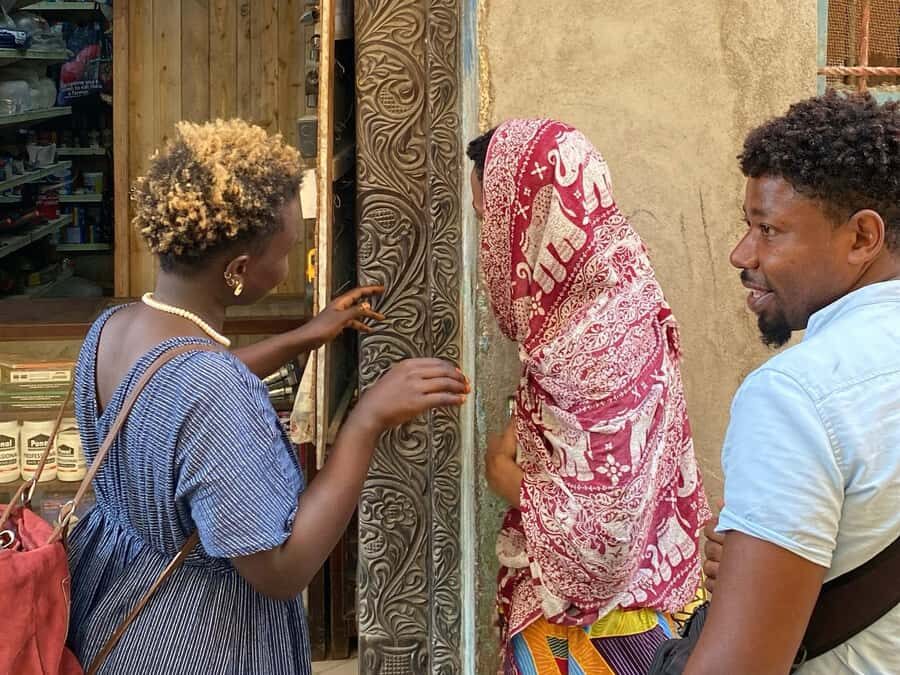
You’ll meet in the Old Town area and set off either from the town square or from a pickup spot you prefer. The tour is designed as a leisurely walk through Lamu’s main streets and back streets, so you don’t only get the most obvious views. You’ll spend time looking at doors in situ—meaning you see how they sit within narrow entrances and how they catch light from different angles.
The walking portion is described as off the beaten path, and the overall time on the ground is about 3 hours. Expect enough time to stop often, zoom in with your camera, and ask questions. This isn’t a “keep moving or you’ll miss it” kind of experience.
As you go, you’ll learn how to connect what you see to where the designs may have come from, and how styles differ. That gives your walk a structure: you’re not just collecting pictures, you’re building a mental map of what changes from one door to the next.
What you’ll learn: reading Swahili door designs like a pro
The best part of this tour is the shift from looking at decorations to understanding design language. Almasi helps you differentiate carving styles as you encounter them, so you’re not stuck guessing.
What that looks like on the ground:
- You’ll notice how motifs repeat and how frames and panels get treated differently.
- You’ll learn that the same general Swahili door tradition can show up in distinct styles depending on origin and design approach.
- You’ll get help understanding what to look for besides the main carving theme—depth, spacing, and workmanship all play a role.
This is also the part where you’ll feel the value of having a working woodcarver as your guide. The explanations tend to stay tied to the physical craft: what a carver can realistically create, why certain patterns land nicely, and how the overall door design works as one unit.
Practical tip: bring your camera and use it in steps. First take a wide shot showing where the door sits. Then take a close-up of the carvings. You’ll thank yourself later when you’re trying to remember what style you liked and why.
Timing, heat, and weather: plan for an afternoon start
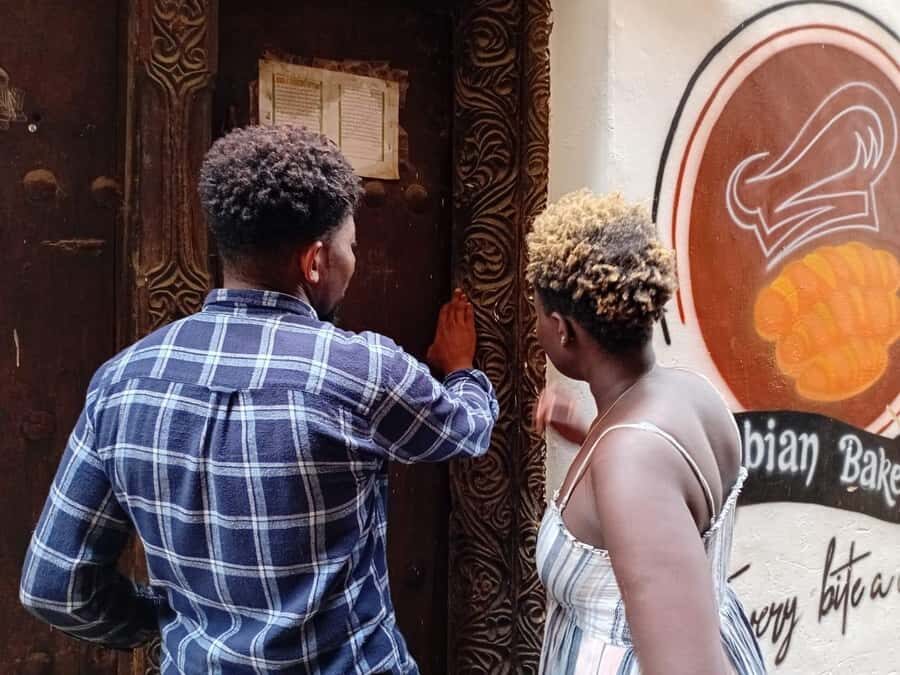
The tour runs in the afternoon, with 3 p.m. listed as the standard start time. That’s a smart slot for many travelers because it fits between day trips and evening plans. It also lines up well with how Old Town streets feel when light shifts and people move at a calmer pace.
The tour is weather-dependent. Lamu usually has favorable conditions for much of the year, but during the rainy season (May/June/July) the tour may be scheduled for times when rain is lighter or gaps between showers are likely.
In practice, that means you should pack for both sun and sudden clouds:
- Comfortable shoes for uneven, narrow footpaths
- Water to stay hydrated
- Hat for sun protection
- A camera (or phone with a good lens) for close carvings
Also note there are shops around where you can buy small items when you need them, but it’s still smart to carry your own basics since you’re walking and stopping.




Accessibility and comfort in Lamu Old Town
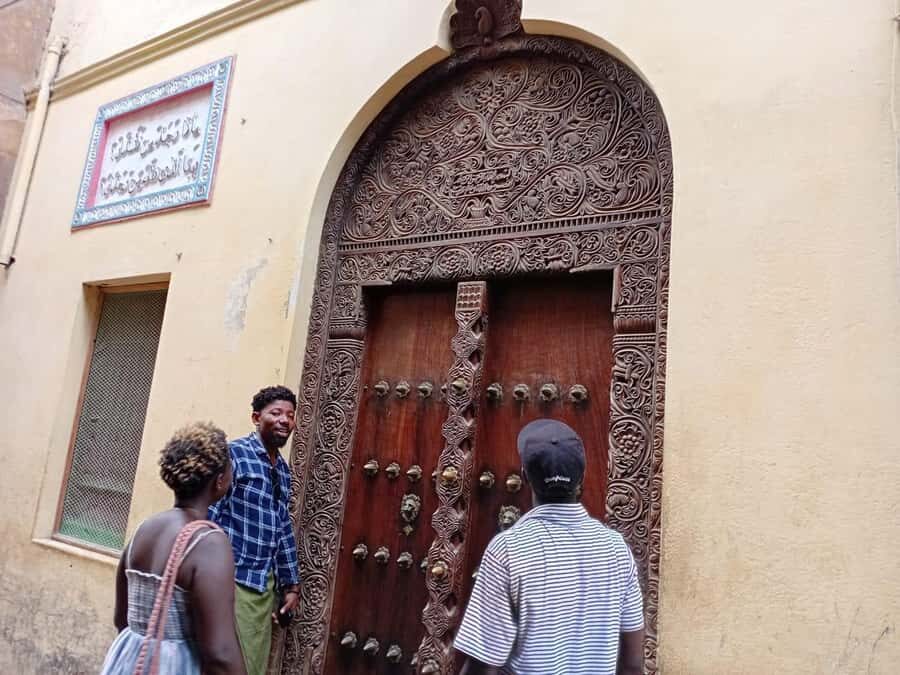
If you’re concerned about getting around, this tour has reassuring info: routes are wheelchair accessible. That doesn’t mean every doorway is identical in usability, but it does mean the route planning takes accessibility seriously.
For comfort, wear shoes you can trust. Old Town streets can be a mix of smooth patches and harder-to-walk sections. You’ll also be doing repeated short stops, which is great for sightseeing, but it’s easier when your feet aren’t fighting you.
Since hotel pickup and drop-off are not included, you’ll need to meet the guide at the chosen starting point. If you’re planning your day, build in time to reach Old Town calmly.
Optional add-on: Swahili carved doors in Shela
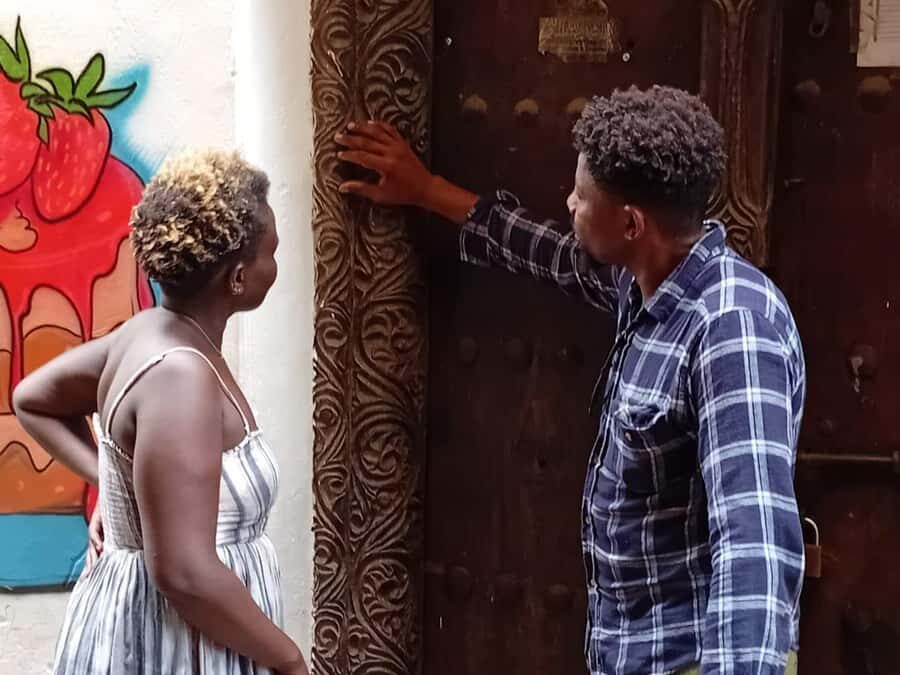
You can extend the experience with an additional walking tour in Shela, about 3 km from Lamu Old Town. This is an appealing add-on if you want more door examples, more comparison between styles, and a bit more time walking.
It’s also a good fit if you like the idea of learning through repetition. When you see more doors in different areas, the style differences can start to click even faster than in a single 3-hour session.
If you’re tight on time or energy, stick to the Old Town core tour. The main value is already there.
Price and value: what $40 buys you
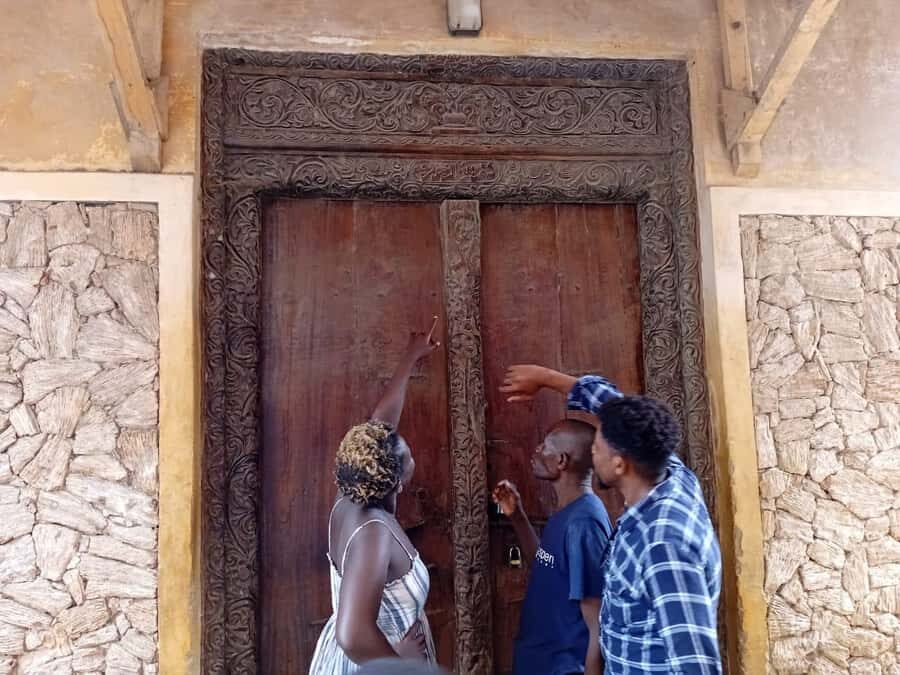
At $40 per person for about 3 hours, this tour is priced like a focused local experience rather than a long, multi-stop day. You’re paying for three things that add up quickly in value:
- A guided walk through UNESCO-listed Old Town streets
- Explanations tied directly to woodcarving craft
- Time to slow down and take in details you would otherwise miss
Two cost notes matter:
- Food and drinks aren’t included, so plan to handle water and snacks yourself (or buy small items along the way).
- Hotel pickup and drop-off aren’t included, so factor in how you’ll get to your meeting point.
If you’re the kind of traveler who enjoys learning through looking, $40 feels fair. If you mainly want big views and don’t care about details, you might feel the experience is more slow and quiet than you expected.
Who this tour suits best
Book this if you:
- Like small details and old craftsmanship
- Prefer walking with time to stop and ask questions
- Want Swahili culture through tangible art, not just big attractions
- Enjoy meeting makers, not only guides
You might skip it if:
- You hate walking in the sun or rain (even with weather adjustments)
- You want a fast photo spree without explanations
- You need a lot of included meals or transport convenience
Should you book Almasi’s Swahili Carved Doors tour?
I think you should book it if your goal is to understand Lamu instead of just passing through it. The combination of UNESCO Old Town streets and a working woodcarver as your guide gives this tour a level of clarity you rarely get from door sightseeing alone.
If you can handle a 3-hour afternoon walk, bring comfortable shoes, water, and your camera, and keep your schedule flexible for weather, you’ll get a lot out of it. And if you’ve been craving something authentic, hands-on, and quietly impressive, this is a strong choice.
FAQ
What is the duration of the Swahili Carved Doors tour?
The walking tour is listed as lasting about 3 hours.
What time does the tour start?
The tour is conducted in the afternoon, with 3 p.m. as the noted time. Other time slots may be possible if you contact in advance.
Is hotel pickup and drop-off included?
No. Hotel pickup and drop-off are not included.
Where does the tour start?
You’ll set off in Lamu Old Town from the town square or from wherever you prefer to be picked up.
Is the tour private?
Yes, the tour is described as a private group.
Are there accessibility accommodations?
Yes. The routes are wheelchair accessible.
What languages will the guide use?
The live tour guide speaks English and Swahili.
What should I bring?
Bring comfortable walking shoes, a hat, a camera, and water.
Is the tour affected by weather?
Yes. The tour is dependent on weather conditions, and during the rainy season it may be conducted at times when there is no rain.
Is there an optional second tour in addition to Old Town?
Yes. There is an additional walking tour in Shela, about 3 km from Lamu Old Town.