REVIEW · KENYA
4 Days Mt Kenya Climb, Chogoria Route up and out Sirimon route
Book on Viator →Operated by Arch Treks & Safaris · Bookable on Viator
Chasing mountains can be easier with the right route. The Chogoria route is known for huge gorge views as you work your way toward the summit area, and you sleep right on the mountain during the whole trek. I also like that this trip wraps in the hard parts—private transport, park fees, a guide, and all food—so your focus stays on the walking and the views.
Two standouts for me: the walk beside the Gorges Valley (with sweeping views to major peaks) and the way the days are paced for a real mountain experience without you having to plan meals or logistics. One thing to consider up front: it is not the driest route, and there’s also a report of serious stomach trouble after the trip, so take hygiene and personal health precautions seriously.
In This Review
- Key things that make this Mt Kenya trip worth it
- Chogoria Gate start: why the approach matters
- The Chogoria route: a serious ascent with unforgettable gorge views
- The Gorges Valley highlights: Lake Michaelson, the Temple, and the far peaks
- Hall Tarns near the cliff edge above Lake Michaelson
- Camping nights on the mountain: what “bring” actually means
- Food and pacing: a 4-day climb where you’re never left guessing
- Coming out via Sirimon: why route contrast can be a feature
- Price and value: what $840 covers (and why it can be fair)
- Hygiene and health reality check: take it seriously
- Who should book this climb, and who should rethink it
- Should you book the 4 Days Mt Kenya climb via Chogoria and out via Sirimon?
- FAQ
- How many days is the Mount Kenya climb?
- Which route is used to climb and which route is used to exit?
- Is camping included?
- Are meals included?
- Do I need to bring a sleeping bag?
- What fitness level do I need?
- What’s included in the price?
Key things that make this Mt Kenya trip worth it
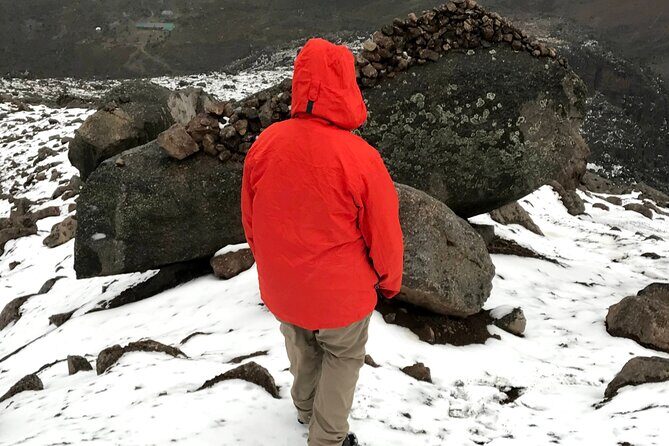
- Gorges Valley walking with big-picture views across the valley and toward multiple peaks
- Hall Tarns on the path and views above Lake Michaelson from a dramatic cliff edge
- All-mountain camping so you feel the altitude rhythm instead of doing day trips
- Guide + all meals on the mountain so you spend less time worrying and more time moving
- Private transport to/from Nairobi and a private group setting for a smoother start and finish
- Route contrast: Chogoria ascent toward the summit area, then out via the Sirimon route
Chogoria Gate start: why the approach matters
This trek begins with private transportation from Nairobi to the Chogoria Gate. That matters because getting to trailheads in Kenya can eat up time and energy—on a climb like Mount Kenya, you want to preserve your legs for the actual work.
Once you’re set at the gate and in the national park, the rhythm turns simple: walk, rest, eat, and keep moving up. You’ll have a guide with you throughout, which is a big deal on Mount Kenya because conditions can change quickly. Also, the trip is set up as a private activity, so your group doesn’t get diluted by a mixed crowd with different hiking speeds.
A practical point about timing: this experience runs on a broad schedule window, but you should plan around weather more than the calendar. When conditions aren’t right on the mountain, the operator can offer a different date or a refund, which is about as fair as it gets for mountain travel.
A few more Kenya tours and experiences worth a look
The Chogoria route: a serious ascent with unforgettable gorge views
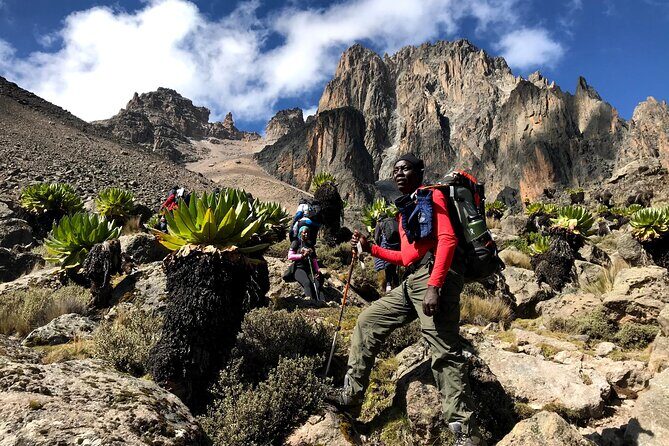
If you’re choosing Chogoria, it’s because the scenery is the main event. This is described as one of the most magnificent ascent routes toward the summit area. And even if you’re not a peak-chaser, you’ll still get rewarded: the walking often runs alongside the Gorges Valley, giving constant perspective.
Here’s what you can expect as you climb: the valley opens and closes as the trail turns, and the views stack up rather than showing just one impressive angle. You get peak views, valley depth, and layered ridgelines—so even when you’re tired, you’re not walking in emptiness.
One honest downside: Chogoria is not the driest option. If rain or mist rolls through, you may feel it more here than on a more arid route. That doesn’t make it “bad,” but it does change what you should pack and how careful you need to be on footing.
The Gorges Valley highlights: Lake Michaelson, the Temple, and the far peaks
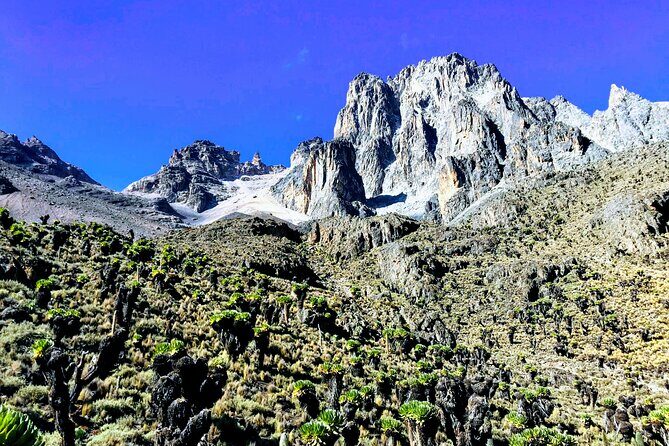
The standout moments on Chogoria are the viewpoints tied directly to the Gorges Valley. As you hike, you’ll get views toward Lake Michaelson and The Temple, plus across the valley toward Delamere and Macmillan Peaks.
That “across-the-valley” feel is the magic. You’re not just looking up at the mountain—you’re reading the whole geography around you. It’s the kind of landscape that makes you slow down without meaning to. And the fact that these views are built into the route (not a random side trip) keeps you motivated even on slower sections.
Also, keep an eye on the path for the water-and-cliff surprises ahead. On this trek, the trail doesn’t just lead you forward—it drops scenery into your lap at the moments you’re paying attention.
Hall Tarns near the cliff edge above Lake Michaelson
One of the most specific, memorable features on this climb is Hall Tarns. They’re situated right on the path and appear above a roughly 200-metre (660 ft) cliff directly above Lake Michaelson.
That detail matters because it shapes the experience. You’re moving along a route where water features show up close to the trail, and you can feel the altitude and exposure when you look down. It’s also a great spot for a pause—long enough to take photos, short enough to keep your muscles from cooling.
If you’re the type who likes nature moments between “big” milestones, this is exactly that. In a trek where you’re working daily, these built-in landmarks give you those satisfying check-in points.
Camping nights on the mountain: what “bring” actually means
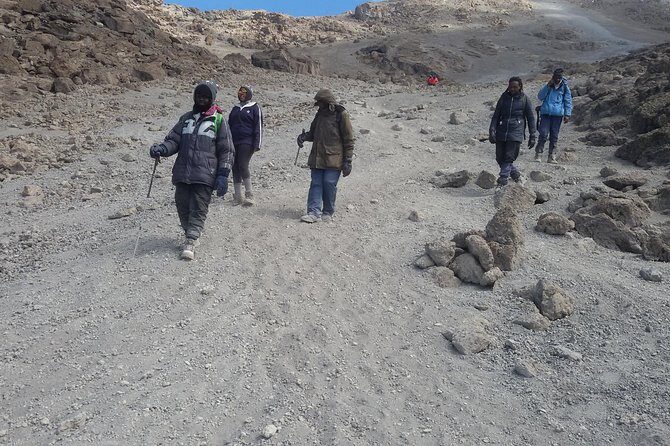
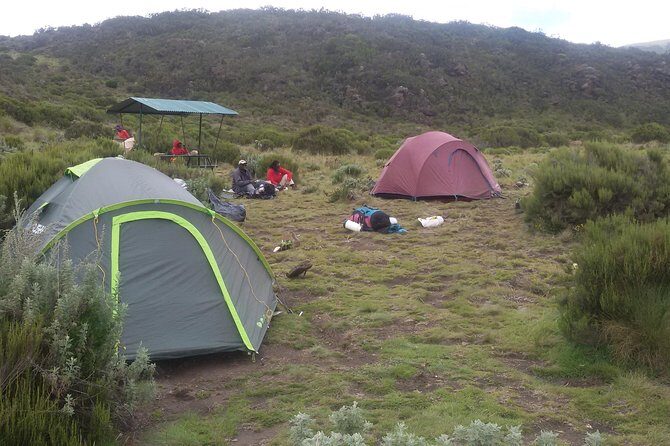
The accommodation is camping on all nights on the mountain. In practical terms, this is not a lodge experience with hot water and a warm bed waiting at the end of the day. It’s a mountain routine: you hike, you eat, you sleep, and you repeat.
The good news is that camping equipment is provided by the operator. That reduces the gear burden, especially for first-time climbers who don’t know what they truly need yet.
Still, there’s a key packing requirement: sleeping bags. The info specifically notes huts require sleeping bags, and even with camping included, you should treat sleeping-bag coverage as non-negotiable. If you don’t have one, you’ll feel it fast once temperatures drop at night.
And then there’s clothing. “MUST HAVE MOUNTAIN CLOTHING” is listed as a requirement, which is travel-speak for this: plan for cold and changing conditions. Layers, rain protection, and warm items matter more than fashion.
Food and pacing: a 4-day climb where you’re never left guessing
Food is where this itinerary is unusually supportive. On day 1, you get lunch/dinner. Day 2 brings breakfast/lunch/dinner, day 3 repeats the full breakfast/lunch/dinner, and day 4 includes breakfast.
That structure is valuable because it reduces the classic mountain problem: guessing whether you’ll have enough fuel for the day. On longer climbs, hunger turns into clumsiness, clumsiness turns into slower movement, and slower movement turns into getting cold. With meals handled, your energy management stays simpler.
The pace itself is also built for a moderate physical fitness level—this is not described as a technical climb, but it still demands stamina. If you’re fit but not a daily long-distance walker, plan to train a bit before you go so the first day doesn’t surprise you.
Coming out via Sirimon: why route contrast can be a feature
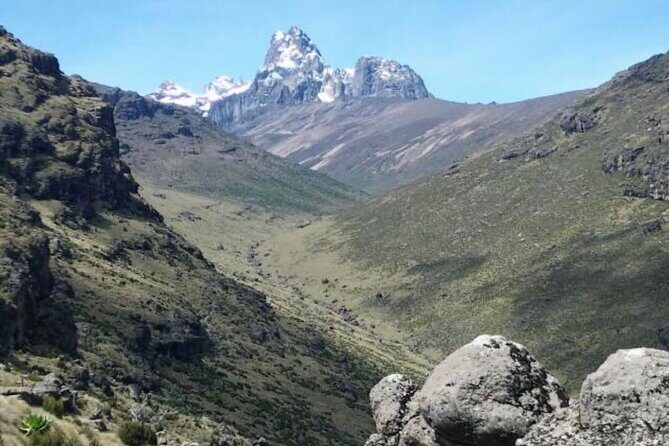
This trip is described as Chogoria route up and out via the Sirimon route. Even without a detailed stop-by-stop list, route contrast is usually the point on Mount Kenya: you’re seeing different mountain faces as you climb and then as you exit.
From a travel standpoint, this is often more satisfying than doing a simple out-and-back because you get a change in scenery and a psychological reset when the descent begins. Your body feels the transition too—going down has its own challenges, especially on uneven ground—so knowing you’re not retracing every step keeps the experience from turning monotonous.
Price and value: what $840 covers (and why it can be fair)
The price is $840 per person for a roughly 4-day experience. That can look steep at first glance, but you’re not paying only for a guide and a trail.
What’s included:
- Private transport from Nairobi to Chogoria Gate and back
- Entry to the mountain and all park fees, government taxes, and levies
- All food while on the mountain
- Camping accommodation on-mountain
- Camping equipment provided
- Guide
When you add those pieces together, it becomes easier to see what you’re buying: risk reduction and time savings. Mountain climbing rewards planning. If you’ve ever tried to coordinate transport, permits, and meal logistics yourself, you know how fast costs and stress stack up.
What’s not included:
- Sleeping bags
- Mountain clothing
- Anything beyond the food and camping support listed
So for value, the real question is fit and preparation: if you already have a good sleeping bag and appropriate gear, this looks more like a complete climbing package than a bare-bones hike.
Hygiene and health reality check: take it seriously
One review highlighted serious hygiene issues and extreme GI problems starting about 10 hours after the trip finished. I can’t verify more than that report, but it’s enough to treat hygiene as a planning topic, not an afterthought.
Here’s how I’d handle this before your departure:
- Pack a small first-aid kit and any personal meds you rely on
- Bring your own hand sanitizer and use it often, especially around meal times
- Pay close attention to how food is handled on trail
- If you’re prone to stomach issues, consider discussing risk factors with your doctor before you go
Mountain travel is already stressful on the body. You don’t need preventable gut problems adding to the strain.
Who should book this climb, and who should rethink it
This trek says moderate physical fitness is required, which makes it a good fit for many active travelers who can handle multi-day walking and altitude conditions. If you enjoy walking for hours, don’t mind cold nights, and want to experience the mountain as a full program—not a quick photo stop—this is a strong match.
It’s also a good option if you want the structure of a guided trek with everything handled: permits, park fees, meals, and camping setup.
Where it might not fit:
- If you’re very gear-sensitive and expect full comfort services, camping and mountain conditions may feel too basic
- If you know you’re very vulnerable to stomach upset, you’ll want to prepare extra carefully
- If rain and wet trails make you miserable, understand Chogoria is not positioned as the driest ascent
Should you book the 4 Days Mt Kenya climb via Chogoria and out via Sirimon?
I’d book this if you want the Chogoria experience specifically: gorge views, Lake Michaelson perspective, and the Hall Tarns moment on the path are exactly the kind of mountain highlights that make you remember days, not just summits.
I would also book it if you value the package style—private transport, a guide, and all mountain meals—because those details reduce the common “I planned wrong” problems on big treks.
Hold back (or prep extra) if you’re worried about hygiene sensitivity or if wet conditions could derail your comfort. Chogoria isn’t sold as the driest route, and mountain travel rewards preparation.
If you’re an active traveler ready for cold nights and serious scenery, this is the sort of climb that delivers value through focus: fewer logistics to manage, and more attention on the mountain itself.
FAQ
How many days is the Mount Kenya climb?
The trip lasts about 4 days.
Which route is used to climb and which route is used to exit?
You climb via the Chogoria route toward the summit area, then you go out via the Sirimon route.
Is camping included?
Yes. Accommodation is on the mountain with camping on all nights.
Are meals included?
Yes. Meals while on the mountain are included, including lunch/dinner on day 1, full meals on days 2 and 3, and breakfast on day 4.
Do I need to bring a sleeping bag?
Yes. Sleeping bags are required because huts require them.
What fitness level do I need?
The trek is for people with a moderate physical fitness level.
What’s included in the price?
The price includes private transportation to and from Nairobi, entry and park fees, a guide, camping equipment, all food on the mountain, and camping accommodation.