REVIEW · MOMBASA
Nature Walk with Giraffes in Mombasa
Book on Viator →Operated by Travel4Purpose · Bookable on Viator
Giraffes without fences sounds impossible, until you do it. At Nguuni Nature Sanctuary you’ll take a guided walk where animals roam freely and you’re kept at a respectful, close distance. I especially like the way the guide frames the experience as responsible wildlife watching, not a circus.
You also get a real mix of animals—people go in for the giraffes and often leave talking about ostriches (and more). The main drawback is simple: it’s a walking experience, so comfortable shoes and some stamina matter, even though the route can be adapted.
In This Review
- Nguuni Nature Sanctuary: the Mombasa giraffe walk, in plain terms
- What you’ll see up close: giraffes, ostriches, antelopes, and more
- Your guide’s role: conservation talk plus safety that feels real
- Walking trail options: hike it, or use the tuk tuk
- Small group time in the sanctuary: what “2 hours” really means
- What to bring: the simple gear list that keeps the experience smooth
- Value check: is $34 worth getting that close to giraffes?
- Who should book, and who should think twice
- Should you book this Nature Walk with Giraffes in Mombasa?
- FAQ
- How long is the Nature Walk with Giraffes in Mombasa?
- Where does the tour start?
- Do I need to buy bottled water or snacks?
- What animals will I see?
- Is there a fence between you and the animals?
- What should I wear?
- Is the tour good for families?
- How many people are in a group?
- Is there an option to avoid walking the whole time?
- What if the weather is bad?
Nguuni Nature Sanctuary: the Mombasa giraffe walk, in plain terms
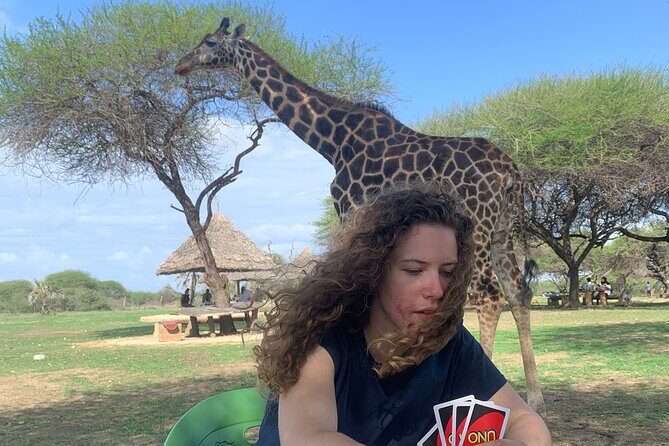
This is a 2-hour guided nature walk in Mombasa, Kenya, priced at $34 per person. It starts at Nguuni Nature Sanctuary, off Kiembeni Road and ends back where you began. Tickets are mobile, the group stays small (max 20 travelers), and it’s designed for an up-close feel without fences or walls between you and the animals.
What makes it work for most people is that it’s not a rushed, “herd you through” style tour. Your guide briefs you on how to behave, then you move through the sanctuary with time to pause, look, and settle. Depending on your group and conditions, there’s even the option of a sanctuary wildlife tuk tuk for getting around.
And yes, this is off the beaten track enough that many visitors miss it entirely. If you’re tired of the same tourist circuit, this has that more local, real-wildlife feel.
What you’ll see up close: giraffes, ostriches, antelopes, and more
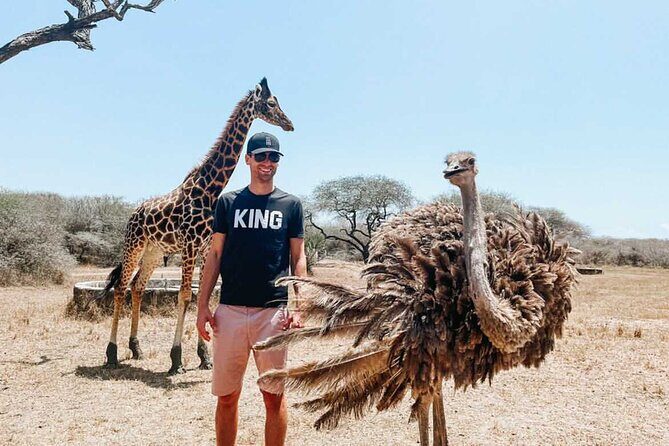
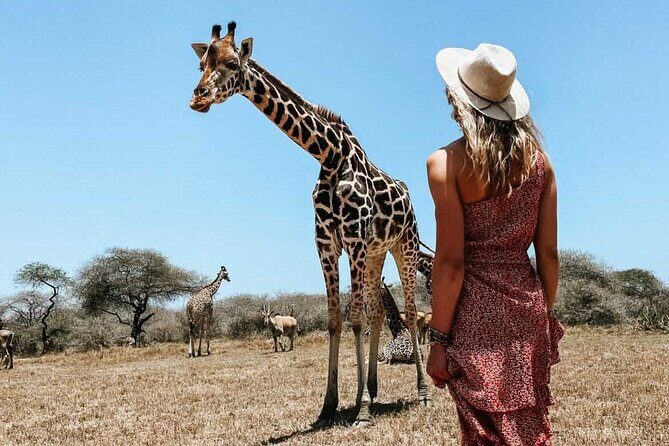
The headline is right there: you’ll be walking close to giraffes and ostriches with no barriers between you and them. That’s the big reason people book. It’s the closest you can realistically get to these animals in Kenya without feeling cut off by glass, rails, or mesh.
Here’s what you can expect to spot as you follow the guide’s route:
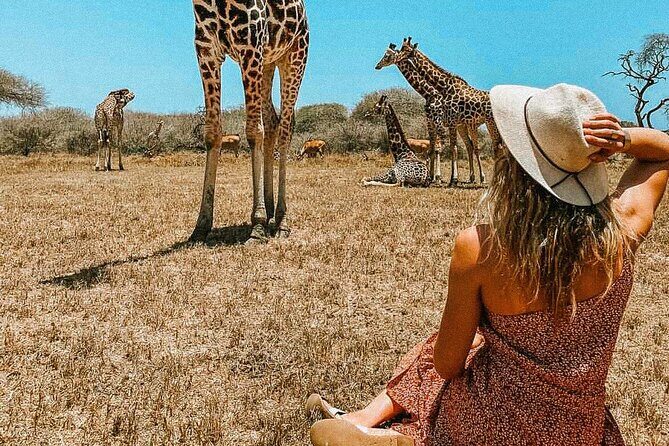
- Giraffes at very close range, where you can really appreciate their height and body language
- Ostriches that feel surprisingly calm as long as you keep your distance
- Antelopes and other roaming animals within the sanctuary
- In the same walk, some visitors also note seeing turtles, so keep an eye out beyond the big-feathered stars
The experience is built around the idea that animals are still animals. You’ll be given guidance on where to stand, how to move, and how to keep the interaction safe for both sides. That matters because the moment you step into a space like this, the animal behavior becomes the main show.
You can also read our reviews of more walking tours in Mombasa


Your guide’s role: conservation talk plus safety that feels real
The guide isn’t just there to point. You get a briefing on how to respect the animals and follow safety measures before you start walking. That’s not fluff. When you’re inches away from large wildlife, you need simple rules you can actually remember while you’re trying not to gawk.
During the walk, you’ll also get fun facts and explanations about what you’re seeing. This is one of those tours where the “out of Africa” feeling comes from more than proximity—it comes from understanding why the sanctuary exists and what conservation looks like on the ground in Kenya.
I also like that the experience includes a bit of emotional support for nervous first-timers. One review described a guide reassuring a hesitant guest and even helping them feel comfortable while walking past giraffes. Not every guide will do the exact same thing, but the point is that they’re used to people who are excited and a little unsure at the same time.
If you’re someone who likes learning while you travel, you’ll probably enjoy the way the guide mixes safety with storytelling.
Walking trail options: hike it, or use the tuk tuk
The sanctuary route can be adapted depending on what you want and what your group can handle. If you feel like walking, great—you’ll follow the trail around the animals. If you want to take it slower or relax longer, the guide can adjust your walking pace and route.
Then there’s the practical bonus: there may be a sanctuary wildlife tuk tuk to help take guests from place to place. This is especially useful if you’d rather spend more time watching than covering ground.
After the moving portion, you get time to settle down on a bench and take in what’s around you—views, animal activity, and the calm rhythm of a working sanctuary instead of a high-pressure attraction.
Tip: if you’re traveling with kids or you’re not sure how your body will do, decide early. Tell the guide what pace you want. The tour is set up to be flexible, not rigid.
Small group time in the sanctuary: what “2 hours” really means
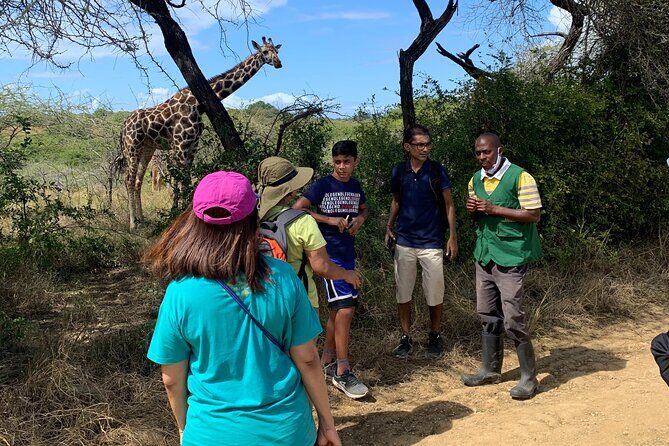
Two hours sounds short—until you’re close to giraffes. In practice, this tour gives you time to do more than just pass by animals. You’ll walk through the sanctuary with the guide, visit different types of animals, and still have a chance to pause and actually watch what they’re doing.
There’s also a family-friendly detail that adds character to the whole place: tyre swings on trees. That’s the kind of thing that makes a sanctuary feel human and relaxed—kids get something to do while adults focus on the wildlife. If you’re traveling solo, you’ll still notice it as a reminder that this isn’t a sterile zoo setting.
Because the group is capped at 20, you’re less likely to feel swallowed by a crowd. It keeps the vibe calm enough for animal viewing, which is what you really came for.
What to bring: the simple gear list that keeps the experience smooth
This tour is straightforward, but you’ll enjoy it more if you pack for comfort.
Wear comfortable footwear. You’ll be walking around the sanctuary, and reviews point out that there’s a bit of a hike involved. It isn’t complicated terrain, but your feet will thank you for shoes with grip.
Bring water. Snacks and bottled water are not included. Even on a mild day, you’ll be outside and moving.
Wear long bottoms if possible. This is recommended, and it makes sense for walking around wildlife areas—extra coverage is practical.
Weather matters too. The experience runs in good weather, and if conditions are poor, you’ll be offered a different date or a refund. That means it’s smart to plan the rest of your day around this booking, so you’re not scrambling to reshuffle things at the last minute.
If you’re thinking about photos: bring your phone or camera and be ready to pause. The guide takes time to help people get good pictures, and you’ll want to balance shooting with staying in control of your body and space.



Value check: is $34 worth getting that close to giraffes?
For Mombasa, $34 for about 2 hours can feel like a steal, or it can feel like a lot—depending on what you compare it to. Here’s why it tends to be good value.
First, you’re not paying for a drive-by photo moment. You’re paying for guided access to a sanctuary experience where you’re close to giraffes and ostriches without barriers. That alone is the big differentiator.
Second, it’s a small group walk. Smaller groups usually mean more guide attention and less waiting around.
Third, all fees and taxes are included in the price. That keeps the math easy.
So what’s the tradeoff? You’re not doing a long, multi-stop safari day with huge distances covered. This tour is about quality time at close range. If you’re chasing a big “checklist” outing, you might find it shorter than you hoped. If you want a focused, memorable wildlife moment, it’s priced in a way that makes sense.
In other words: this is value if you care about being there with the animals, not just collecting stamps.
Who should book, and who should think twice
This tour is a strong fit if:
- You want an out-of-Africa style encounter without fences
- You enjoy guided experiences with safety rules and simple learning moments
- You’re traveling with kids and want something with movement and play nearby (those tyre swings help)
- You have a moderate comfort with walking and can handle time outdoors
It may be less ideal if:
- You have limited ability to walk for an extended outdoor period. The tour mentions moderate physical fitness, and while the route can be adapted, you’ll still be in a walking-focused environment.
- You hate being around animals at very close range. Even with guidance, this is an intimate wildlife setting. It’s not for people who want a lot of separation.
One smart approach: if you’re on the fence, ask yourself whether your goal is proximity and calm watching. If yes, this tour matches that goal extremely well.
Should you book this Nature Walk with Giraffes in Mombasa?
If you want a memorable animal experience you can talk about later—specifically giraffes close enough to feel real—I’d book it. The combination of a guided sanctuary walk, the lack of fences, and the small group format gives you the best chance of an experience that feels personal rather than rushed.
I’d only hesitate if your biggest priority is comfort that never involves walking. In that case, consider whether you can handle a nature-walk pace, and whether the guide can incorporate the tuk tuk option during your visit.
Overall, this is one of those rare activities where the “wow” factor comes from simple reality: you’re standing near wildlife in a space designed to protect it. If that’s your kind of travel, you’ll probably feel like you got a genuinely special dose of Kenya.
FAQ
How long is the Nature Walk with Giraffes in Mombasa?
It lasts about 2 hours.
Where does the tour start?
The meeting point is Nguuni Nature Sanctuary, off Kiembeni Road, Mombasa, Kenya.
Do I need to buy bottled water or snacks?
Snacks and bottled water are not included, so you’ll want to bring your own.
What animals will I see?
You’ll walk around the sanctuary with a guide to experience animals such as giraffes, ostriches, antelopes, and others in the sanctuary.
Is there a fence between you and the animals?
No. This is described as the closest you’ll get to giraffes and ostriches without any walls or fences in between.
What should I wear?
Wear comfortable footwear for walking and, if possible, wear long bottoms.
Is the tour good for families?
It includes tyre swings on trees, so it can be fun for kids as well.
How many people are in a group?
The maximum group size is 20 travelers.
Is there an option to avoid walking the whole time?
The route can be adapted depending on the guest’s preference, and there may be a sanctuary wildlife tuk tuk available to take guests from place to place.
What if the weather is bad?
This experience requires good weather. If it’s canceled due to poor weather, you’ll be offered a different date or a full refund.