REVIEW · MOMBASA
Mombasa Getaway with Haller Park Tours
Book on Viator →Operated by Mamistravel Limited · Bookable on Viator
This tour gives you a full Mombasa hit without feeling rushed. You start with Haller Park’s transformation story, then you move through monuments and sacred sites, and you end at Fort Jesus Museum, a big UNESCO stop.
I like the way the day is paced: you get real time for each highlight (a long Haller Park window, plus museum time), not just quick photo stops. I also like the practical extras: an air-conditioned vehicle, water, and a guide who can shape the day around your group.
One consideration: two major entrance fees are not included (Haller Park and Fort Jesus for non-residents), so the final cost can be higher if you’re not budgeting for tickets.
In This Review
- Key highlights you’ll actually care about
- A well-structured 7-hour mix in Mombasa
- Pickup, a/c comfort, and the 9:00 am start
- Haller Park: the quarry rehab story you can walk through
- Mombasa Tusks: a 1950s royal tribute that evolved
- Mama Ngina’s Drive: picnic space and archaeology underfoot
- Swaminarayan Plaza: a Hindu temple with a built-in connection
- Fort Jesus Museum: Portuguese walls, multiple cultures, and UNESCO weight
- Price and value: $120 plus the entrance fees to plan for
- The guide experience: flexible timing and practical help
- How much walking and fitness you’ll need
- Who should book this Mombasa getaway
- Should you book this tour?
- FAQ
- What time does the tour start?
- How long is the tour?
- Is pickup included?
- Is a mobile ticket used?
- Are lunch and entrance fees included?
- How much are the Fort Jesus entrance fees?
- How much are the Haller Park entrance fees?
- What is the cancellation policy?
Key highlights you’ll actually care about
- Haller Park: a former Bamburi quarry site rebuilt into a rich tropical ecosystem
- Mombasa Tusks: a 1950s monument with four aluminum tusks forming an M shape
- Mama Ngina’s Drive: above-ground picnic space with archaeological remnants underneath
- Swaminarayan Plaza: a Hindu temple connected to India, assembled in 1960
- Fort Jesus Museum: a 16th-century Portuguese-built fortress and UNESCO World Heritage site (since 2011)
A well-structured 7-hour mix in Mombasa
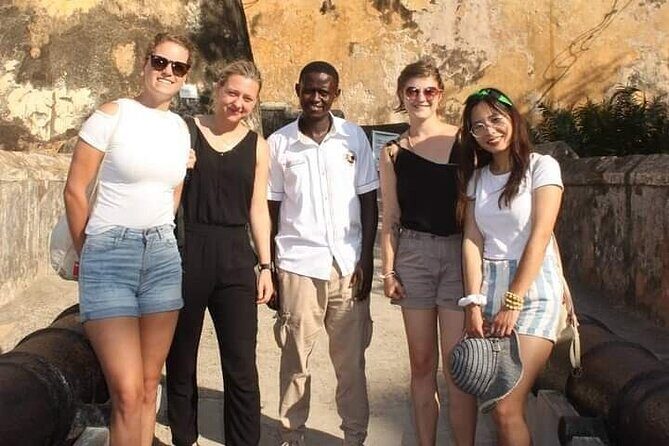
This is the kind of day trip that works when you want variety: nature recovery, colonial-era architecture, and coastal-city storytelling in one route. The timing is built around a main anchor (Haller Park) and then a series of culturally important stops that don’t eat your whole day.
At a little over 7 hours, you’re not trapped in one single area. You’ll be moving between Mombasa’s different layers—modern city landmarks, old-town context, and a museum that explains how the port shaped the region.
Also, the group size is capped at 40, which keeps things from turning into a chaotic cattle call. You still get the energy of a group tour, but with enough space for photos and questions.
You can also read our reviews of more tours and experiences in Mombasa.

Pickup, a/c comfort, and the 9:00 am start
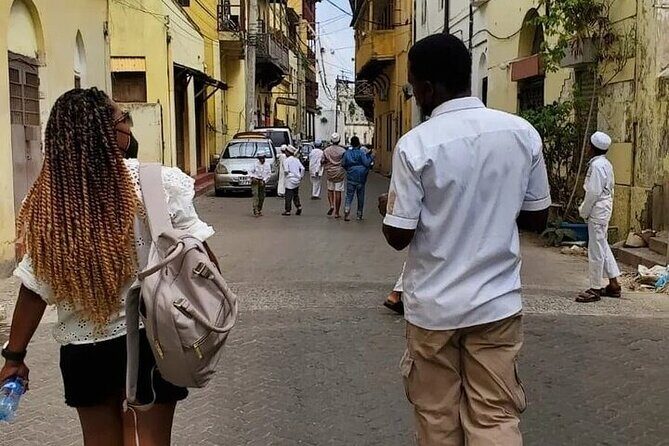
The day begins at 9:00 am, and pickup is offered. That matters more than it sounds. If you’re staying in Mombasa and you don’t want to spend your morning figuring out transport, pickup turns the day from a planning project into an actual outing.
You’re also traveling in an air-conditioned vehicle, which is a big quality-of-life upgrade in Mombasa’s heat. Water is included during the excursion, so you’re not starting the day dehydrated or hunting for bottles between stops.
One extra practical note: the meeting point is near public transportation. So even if you’re organizing your own route to the start, you have options.
Haller Park: the quarry rehab story you can walk through
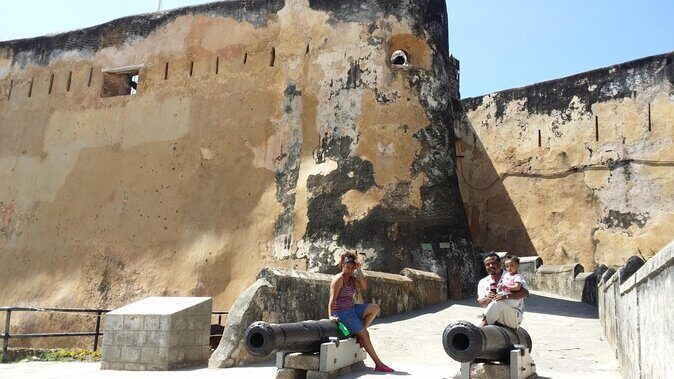
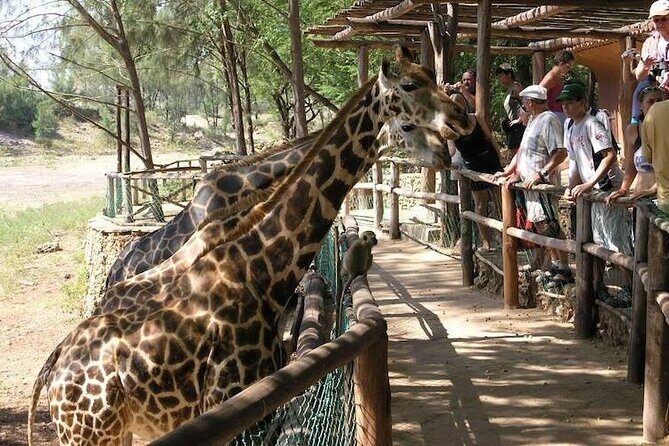
Haller Park is the longest stop on the day—about 3 hours—and that’s intentional. This isn’t just a quick roadside attraction. It’s an ecological and ecotourism showcase, and it began as a Bamburi quarry wasteland that was rehabilitated into a diverse tropical ecosystem.
What you’ll feel there is change. The idea is simple: a scar in the landscape got repaired into a living habitat, and you can experience that contrast by moving through the park at a relaxed pace.
The tour does not include the Haller Park entrance fee, which is listed as KSH 1,800 for non-residents and KSH 600 for residents. For value-minded travelers, I suggest you budget for this up front rather than treating it like a surprise. It’s one of those costs you’ll be happy to pay if you want a genuine conservation story, not just monuments.
If you’re the type who likes to ask questions while you walk—about how a place recovers and how people manage it—you’ll get more out of these hours. And because the day includes other city stops after, that longer Haller Park block helps you avoid the feeling of skipping the best part.
Mombasa Tusks: a 1950s royal tribute that evolved
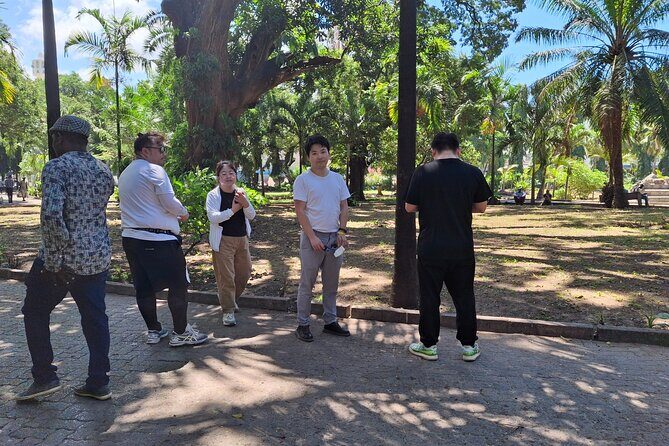
Next comes the Mombasa Tusks, a compact stop with a strong sense of place. The monument was built in the 1950s to commemorate visits by the British royal family. Originally, it featured two wooden structures resembling tusks.
Now the monument looks different: there are four aluminum tusks in an M shape. It’s under the jurisdiction of Kenya’s National Museums and the city’s municipal government, which is a helpful detail if you like understanding who maintains what.
You’ll spend about 30 minutes here, and the admission is free. That makes it a good breather in the middle of the day—enough time to take photos, learn the story, and keep moving without losing momentum.
The practical takeaway: don’t treat this like a stop you rush through. Even in half an hour, the monument’s shift from wood to aluminum and from two tusks to four tells you something about the way the city’s memory gets updated.
Mama Ngina’s Drive: picnic space and archaeology underfoot

Then you head to Mama Ngina’s Drive, a place locals use to picnic and relax. It’s also where people go for research and to connect with the area’s history.
Here’s the interesting part: beneath the park are ancient archaeological remnants. Archaeologists say these remains offer an important lesson about how the port city of Mombasa developed.
The stop runs about 1 hour, and it’s free to visit. That hour is useful because it gives you time to slow down and actually absorb the setting. You get a mix of everyday coastal-life vibes (picnic and relaxation) with a “wait, there’s older history under this” feeling.
If you’re curious about layers of time—how a place can feel modern while hiding older remains—you’ll like this stop. If you want strictly one-dimensional sightseeing, you might find it calmer than you expected. But that calm is part of the value.


Swaminarayan Plaza: a Hindu temple with a built-in connection
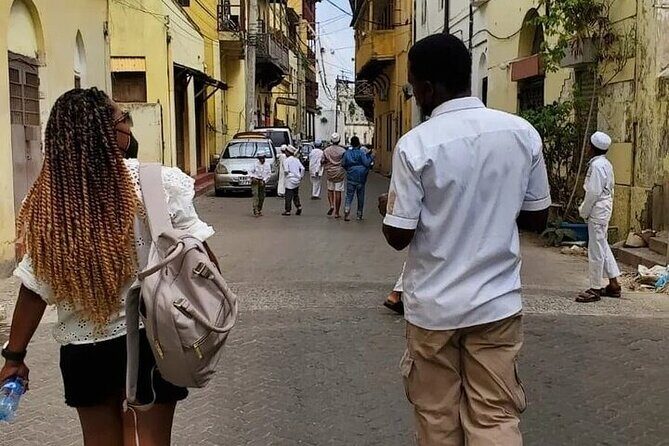
Your next cultural stop is Swaminarayan Plaza, including a Hindu temple that was assembled out of India to Kenya in 1960. That “connected origin” detail is the reason this place is worth an hour.
This is also a stop where you can visit while you’re in Mombasa, and admission is listed as free. You’ll spend about 1 hour here.
What I like about adding this to the route is that it widens your sense of what “coastal Mombasa” means. It’s not only Portuguese walls or British-era monuments. It’s also lived faith and community space tied to wider Indian ocean connections.
Practical tip: because this is a religious site, expect it to be an active place for visitation. Move respectfully, keep your voice down, and take your time with the details you can see from where you’re standing.
Fort Jesus Museum: Portuguese walls, multiple cultures, and UNESCO weight

You finish at Fort Jesus Museum, and it’s the kind of stop that deserves its own block of attention—about 1 hour 30 minutes, with admission included.
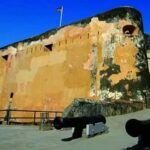
Fort Jesus is described as a highly decorated castle dating back to the 16th century, built by the Portuguese. What makes it more than an old building is the cultural mix inside the story: Portuguese, Oman Arabs, and British influences are all presented, and the site is recognized as a UNESCO World Heritage site (2011).
Why this matters for your day: earlier stops focus on monuments and town context. Fort Jesus gives you a framework for how Mombasa worked as a port, and why different powers cared about this stretch of coast.
It’s also one of the easiest stops to feel satisfied about because it’s structured. You can walk through the museum experience and walk away with clearer context than you’d get from just looking at buildings outside.
One budget note: Fort Jesus entrance fees are listed for non-residents and residents, and the tour says Fort Jesus admission is included. If you’re a non-resident, your fee assumptions should be clear when you book. When in doubt, check that your ticket really covers your status.
Price and value: $120 plus the entrance fees to plan for
The base price is $120 per person, and the tour includes several cost-saving basics: an air-conditioned vehicle, water, and guide services.
What’s not included:
- Lunch
- Fort Jesus Museum entrance fee details (non-resident KSH 1,200; resident KSH 400)
- Haller Park entrance fee details (non-resident KSH 1,800; resident KSH 600)
Even though Fort Jesus is listed as included on the itinerary, you should still treat the entrance fee numbers as something to confirm for your booking. This is especially important if you’re using local currency and you want to avoid a last-minute payment confusion.
Now the value math: you’re paying for a guided, structured day with transportation and key stops that would take time to assemble on your own—especially if you don’t want to bounce between sites with separate taxis and inconsistent timing. The guide also means fewer dead ends and more context per hour.
If you’re the kind of visitor who hates spending hours planning, this tour’s value increases fast. You’re buying time and clarity, not just moving from place to place.
The guide experience: flexible timing and practical help
A lot of tours claim they’re informative. This one earns it through how the guide handles the day in real life.
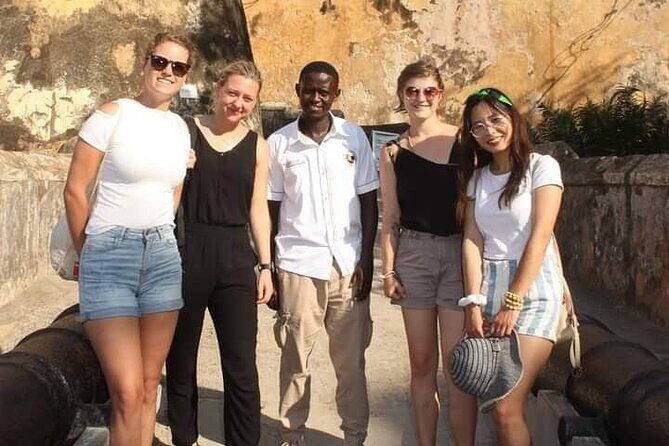
The name Antony/Anthony comes up repeatedly in feedback. The theme is consistent: he knows the kind of information you actually want, and he’s helpful when small practical problems pop up.
One useful example from customer feedback: he can help you find a bureau to change money. That matters because in a coastal city, cash needs can hit unexpectedly. Another detail: he takes photos seriously—meaning he gives you time to get the shots you want instead of shoving you out the door.
Finally, he’s flexible to fit the group’s needs. That doesn’t mean the route changes wildly, but it does mean he can adjust the rhythm so the day feels smoother for your specific group.
How much walking and fitness you’ll need
The tour recommends moderate physical fitness. That likely means you’ll be doing a normal amount of walking, standing, and moving between sites in an urban setting, plus a longer park block at Haller Park.
For me, the best prep is simple:
- Wear comfortable shoes
- Bring a hat or sunscreen
- Keep water in mind, even though water is provided during the excursion
- Plan for some sun and some walking time across multiple stops
If you have mobility limits, the moderate fitness note is the one to take seriously. Ask in advance how much walking is expected at Haller Park and whether there are options to reduce it.
Who should book this Mombasa getaway
This tour fits you if you want a one-day overview of key Mombasa sights—especially if you care about understanding the port city’s layers. It’s also a good choice if you like guided context more than independent wandering.
You’ll also like it if you’re coming for:
- a mix of nature rehabilitation and city monuments
- a strong museum finish
- a guide who helps with practical needs like timing and money change
It may not be the best pick if you want a slow, beach-only vacation rhythm or if you’re trying to avoid entrance fees entirely. Budgeting matters here, even though the tour includes transportation and a guide.
Should you book this tour?
Book it if you want a structured Mombasa day that covers major highlights without you needing to solve logistics on your own. The combination of Haller Park’s conservation story and Fort Jesus’s UNESCO-level significance is a solid match for first-time visitors and repeat visitors alike.
Skip—or at least compare—if you’re highly fee-averse, or if your ideal day is less structured and more open-ended. This is a guided route with set timing, and it rewards travelers who like clear plan and explanation.
If you do book, I’d go in with one mindset: treat entrance fees as part of the price of understanding. When you plan for them, the $120 base feels fair for a full day with transport and guidance.
FAQ
What time does the tour start?
The tour starts at 9:00 am.
How long is the tour?
It’s approximately 7 hours.
Is pickup included?
Pickup is offered.
Is a mobile ticket used?
Yes, a mobile ticket is included.
Are lunch and entrance fees included?
Lunch is not included. Fort Jesus and Haller Park entrance fees are not included as listed (fees vary by resident status), even though Fort Jesus is marked as admission included on the itinerary—confirm what applies to your booking.
How much are the Fort Jesus entrance fees?
Non-residents: KSH 1,200. Residents: KSH 400.
How much are the Haller Park entrance fees?
Non-residents: KSH 1,800. Residents: KSH 600.
What is the cancellation policy?
You can cancel for a full refund if you cancel at least 24 hours in advance of the start time.