REVIEW · NAIROBI
Nairobi: Chocolate City Kibera Slum Walking Tour
Book on GetYourGuide →Operated by Agape Hope for Kibera Slum Tour · Bookable on GetYourGuide
Photo ops come with real stories. This 2-hour walk through Kibera, Nairobi’s largest informal settlement, is built around meeting people, seeing everyday life up close, and supporting community work along the way. You’ll start with a safety-first introduction at the meeting point, then move through key stops like Agape Hope Children Centre and a beadwork project.
What I really like is that the guides are based in the community, so the explanations feel grounded and practical. I also like that you’re not just passing through: the tour includes time at Agape Hope plus a visit to a beadwork factory, which ties your ticket to real local activity.
One thing to consider: even though the tour lists multiple languages, my read of the experience is that English is the safe bet in practice—several guides were effective in English, and at least one guest noted a language mismatch when booking Japanese.
In This Review
- Key things to know before you go
- What Kibera Chocolate City means on this tour
- Where you start and how you get oriented fast
- The walk through Kibera: streets, stories, and photo stops
- Ayany Equity Bank stop: the day starts in real Nairobi life
- Agape Hope Children Centre: where your ticket turns into support
- Beadwork project and factory visit: hands-on culture, not a hard sell
- Toi Market: watching commerce in motion
- The home visit: personal, sensitive, and worth taking seriously
- Safety, guide style, and the small details that change everything
- Price and time: why $15 can be good value here
- Who this tour is for (and who should skip it)
- What to bring (so you don’t overthink it)
- Should you book the Nairobi Kibera Chocolate City walking tour?
- FAQ
- How long is the Kibera Chocolate City walking tour?
- How much does it cost?
- Where do I meet the guide?
- What are the main stops during the tour?
- Does the tour include bottled water?
- What languages are available for the live guide?
- What should I wear or bring?
- Who is the tour not suitable for?
Key things to know before you go
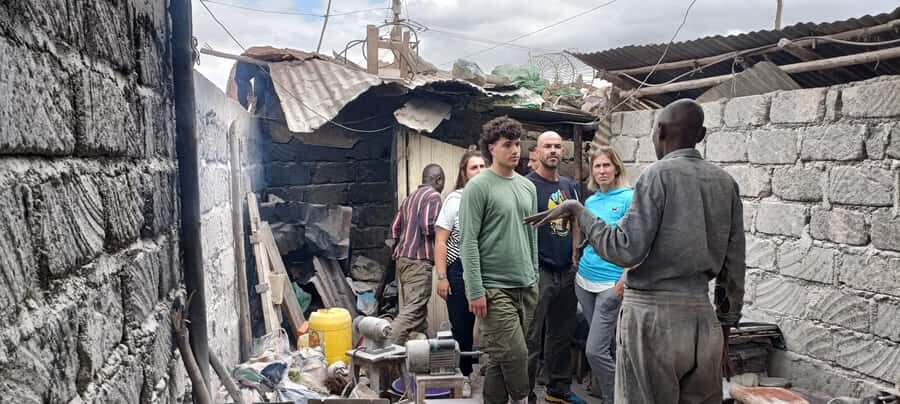
- Community-led guidance: guides like Collins and Allan are residents who explain daily life and answer questions as you walk.
- Safety is treated as part of the visit: you get a safety briefing early and you’re guided through the area.
- Agape Hope Children Centre stop: you’ll spend time at a children’s centre that focuses on support for education and empowerment.
- Beadwork is part of the story: you can see and participate in a community beadwork project, plus visit a beadwork factory.
- There’s a market stop: Toi Market is included, so you get a sense of how commerce works in Kibera.
- A home visit is included: you may be invited to see a family setting, so expect a more personal, respectful moment.
What Kibera Chocolate City means on this tour

Kibera is Nairobi’s largest informal settlement, often nicknamed the Chocolate City. On this kind of tour, that name isn’t just branding. It’s a reminder that the area is made of real neighborhoods, real routines, and real people—alongside huge challenges.
This experience aims to be more than sightseeing. It’s designed for understanding and empathy, with community initiatives built into the route. That’s why the stops matter: you’re not only looking at buildings, you’re seeing institutions and work that residents run.
You’ll also notice the tour is structured to keep the day moving at walking speed. The group spends time on guided walking and photo stops, and the schedule includes a bus component and some self-guided time. That mix is useful: you get context, but you also get moments to look and breathe.
You can also read our reviews of more walking tours in Nairobi



Where you start and how you get oriented fast

Your meeting point can vary based on what you book, with two options: Agape Hope for Kibera or Prestige Plaza Shopping Mall. Either way, you’ll start your tour with a practical orientation and safety briefing.
This matters more than it sounds. Kibera’s street layout can feel unfamiliar, and the best way to handle it is with clear guidance on where to walk, when to stop for photos, and how to behave. The tour’s approach is explicitly safety-focused, and multiple reviews highlight that guides make people feel secure throughout.
If you’re the type who gets nervous in crowded, unfamiliar areas, you’ll probably appreciate that the guide team leads the pace. You don’t wander off trying to figure things out alone, and you get explanations as you go.
The walk through Kibera: streets, stories, and photo stops

Once you’re moving, the tour becomes a guided tour of lived-in space. Expect a mix of guided walking, a photo stop, and times when you’re allowed to look more independently. This is where the community-led aspect shows: your guide isn’t lecturing from a distance.
Some guests specifically mentioned how guides like Collins encouraged questions and pointed out places worth noticing. That changes the tone of the walk. Instead of you guessing what you’re seeing, you’re learning why certain spots matter.
A practical point: wear comfortable, closed-toe shoes. This tour isn’t a fashion show, and the rules also prohibit high-heeled shoes and bare feet. You’ll feel better if you’re prepared for uneven ground and frequent turning and stopping.
Ayany Equity Bank stop: the day starts in real Nairobi life

The route description includes Ayany Equity Bank in Kibera as a starting hub for the tour. Banks aren’t just backdrops. They tend to be places where people gather, talk, and handle daily errands, so it’s a good first signal that you’re stepping into everyday routines.
Even if your exact meeting point differs, the effect is the same: you begin with an area locals actually use. That helps you understand Kibera not as a single attraction, but as a neighborhood with systems, sounds, and movement.
Agape Hope Children Centre: where your ticket turns into support

One of the most meaningful stops is Agape Hope Children Centre. The tour doesn’t just say it’s a charity stop; it frames it as a beacon of support in the middle of difficult circumstances. You can think of it as a place that helps children and families through education, healthcare support, and empowerment efforts.
From a visitor point of view, the value here is two-fold. First, you’re seeing an organization operating inside Kibera rather than on the outside looking in. Second, you’re getting a clear link between your visit and community impact.
A review described the tour as more than a tour—almost like a movement. The point wasn’t sentiment; it was that the ticket supports children tied to the centre’s work. If you care about where your money goes, this is one of the reasons this tour has strong ratings.
You can also read our reviews of more city tours in Nairobi




Beadwork project and factory visit: hands-on culture, not a hard sell
This tour includes participating in a community beadwork project and also visiting a beadwork factory. That combination is smart because it shows the full chain: making, teaching, and producing.
It also helps you understand what work can look like in an area where jobs may be limited and creativity often turns into income. Beadwork is detailed, slow, and skilled—so seeing it made in person hits differently than seeing photos.
One review specifically praised the fact that there was no pressure to buy. That’s not guaranteed on every trip in every market environment, so it’s worth noting as a positive. In general, if you’re worried about being pushed into purchases, pay attention to how the guide manages the timing and shopping expectations. On this experience, that approach appears to be respectful.
Toi Market: watching commerce in motion
Toi Market is another scheduled stop. Markets change the feeling of the day because they pull you into commerce—sound, bargaining, and quick exchanges of goods and services.
You’re not going to a museum display. You’re walking through a working place where people are trying to meet needs, not trying to entertain visitors. The tour describes secure and respectful cultural exchange here, which is the key word: respect.
If you want souvenir shopping, keep your brain switched on. It’s easy to get carried away, but you’re also learning about how the market operates. If you don’t want to shop, you can still enjoy the atmosphere and the explanation from your guide.
The home visit: personal, sensitive, and worth taking seriously
A home visit is included, which makes this tour feel more human and less staged. That also means you should go in with the right mindset.
You might see how families live, and you’ll likely understand more about what daily life looks like beyond the street view. The tour’s tone emphasizes respect and sensitivity, so your job as a visitor is to stay polite, follow the guide’s lead, and avoid treating the home as a photo prop.
Also, the rules about what you can wear matter here too. The tour prohibits weapons or sharp objects, explosive substances, nudity, and bare feet. Even if these feel obvious, it’s a reminder to keep your behavior and appearance simple and respectful.
Safety, guide style, and the small details that change everything

The experience is guided by an English-speaking team, and the tour lists live guide languages including English, French, German, Japanese, Italian, and Spanish. In practice, reviews show strong English support, and guests mentioned specific guides like Collins and Allan, including how patiently they managed the end of the tour.
What I like is that safety isn’t treated like a lecture. It’s woven into how you move through the area, starting with a briefing and continuing with a guide who keeps the group together. One guest even said the guide makes you feel really safe during the whole tour.
Guides also seem to handle the practical ending with care. Allan was praised for waiting until a taxi arrived, which is the kind of small detail that prevents “tour anxiety” at the end of the day.
One caution: if you’re booking for a specific language like Japanese, don’t assume it will always match what you select. A guest noted a mismatch after booking Japanese, ending up with English. If language precision is critical for you, plan on English or ask ahead if you need something specific.
Price and time: why $15 can be good value here
At $15 per person for about 2 hours, this tour is priced in a way that feels accessible. But the better question is: what do you get for that money?
You’re paying for a professional guide, bottled water, and a structured experience that includes multiple stops: the Kibera area tour, Agape Hope Children Centre, a beadwork factory, a beadwork project participation, and a stop at Toi Market—plus a home visit. That’s a lot of guided time for one ticket.
You’re also supporting community initiatives directly. One review framed the ticket as helping create impact in children’s lives. Whether you think of that as “charity,” “community support,” or “responsible tourism,” the key point is your money isn’t just covering walking. It’s tied to the people and programs you visit.
If you’re doing Nairobi for the first time and only have a small window of time, this fits well as a focused, single-afternoon commitment.
Who this tour is for (and who should skip it)
This is a walking tour, so it suits people who can handle an active schedule and comfortable time on foot.
It’s not suitable for wheelchair users or people with mobility impairments, and it’s listed as not suitable for pregnant women, people with epilepsy, and babies under 1 year. Age rules are strict: the tour notes children under 2 years, under 3 years, and under 4 years are not allowed.
If you want a version of Nairobi that goes beyond the typical highlights, you’ll likely like this. If you’re looking for a relaxing, minimalist city stroll, this may feel intense because it’s grounded in real conditions and real conversations.
Also avoid this if you know you get sick from motion or unfamiliar environments—people with motion sickness are listed as not allowed.
What to bring (so you don’t overthink it)
Keep your packing simple. The tour asks you to bring comfortable shoes and closed-toe footwear.
You also need to follow the rules on what’s not allowed, including high-heeled shoes and weapons or sharp objects. There’s no mention of needing any special gear beyond that, but show up prepared to stand, walk, and pause often for explanations and photo moments.
Bring a mindset of respect too. This is the kind of visit where how you act matters more than what you planned to say.
Should you book the Nairobi Kibera Chocolate City walking tour?
I’d book it if you want a short, structured experience that’s centered on community life and on-the-ground support. The guide-led safety approach, the stops at Agape Hope Children Centre, and the beadwork work you can see and help with make this feel purposeful rather than performative.
I’d think twice if you need full language certainty, since reviews suggest English may be the main operating language even when other options are selected. I’d also skip it if you’re dealing with mobility limits, pregnancy, epilepsy, or age constraints, since the tour is clearly listed as not suitable for several groups.
If you’re ready for a guided, respectful look at Kibera—and you care where your money goes—this is one of the better-value options in Nairobi for an education-and-impact type of day.
FAQ
How long is the Kibera Chocolate City walking tour?
The tour duration is about 2 hours.
How much does it cost?
It’s priced at $15 per person.
Where do I meet the guide?
You can meet at either Agape Hope for Kibera or Prestige Plaza Shopping Mall. The exact meeting point may vary depending on the option booked.
What are the main stops during the tour?
You’ll visit Kibera, including photo stops and a guided experience, then stop at Agape Hope Children Centre, participate in a community beadwork project, visit a beadwork factory, and include time at Toi Market. A home visit is also included.
Does the tour include bottled water?
Yes, bottled water is included.
What languages are available for the live guide?
The live guide is listed in English, French, German, Japanese, Italian, and Spanish.
What should I wear or bring?
Wear comfortable shoes with closed-toe footwear. High-heeled shoes and bare feet are not allowed.
Who is the tour not suitable for?
It’s listed as not suitable for pregnant women, wheelchair users, people with mobility impairments, people with epilepsy, and babies under 1 year. It also lists children under 2, under 3, and under 4 as not allowed.