REVIEW · NAIROBI
Go Granny Go – An Amazing Cultural Tour in Kenya
Book on Viator →Operated by One Horizon Africa · Bookable on Viator
Grannies change the way you look at Kenya. This small-group cultural tour brings you face-to-face with Kikuyu grandmothers as community leaders and family caretakers, then ties it all to a working livelihood program around pig farming. It’s not a drive-by culture stop, it’s a structured meet-and-greet with time to talk, eat, and ask questions.
I especially love the small group size (max 9), because you actually get conversation time instead of rushing from one photo spot to the next. I also like how the tour connects stories to real work—your visit centers on community matriarchs raising grandchildren, running tight households, and earning income through pig-husbandry supported by One Horizon.
One consideration: you’ll be stepping into a community home and farm environment, so expect the realities of limited space and day-to-day chores, not a staged show. If you’re sensitive to poverty, go in with respect and emotional stamina.
In This Review
- Key Things That Make Go Granny Go Worth Your Time
- A Grandmothers-First Meet-and-Greet Near Nairobi
- Price and Timing: What You’re Paying for in 6.5 Hours
- Ngong Hills Village Visit: Family Care, Tight Housing, and Pig Farming
- Lunch and Tea: The Slow Part That Makes the Tour Work
- What the Small Group (Up to 9) Changes for You
- Pickup, Mobile Ticket, and the Simple Way the Day Runs
- Who This Tour Is Best For (and Who May Prefer Another Option)
- How to Show Respect During a Community and Farm Visit
- The One Horizon Connection: Why the Stories Land
- Should You Book Go Granny Go?
- FAQ
- What time does Go Granny Go start?
- How long is the tour?
- How much does it cost?
- Is hotel pickup and drop-off included?
- How many people are in the group?
- Is lunch and tea included?
- Where does the tour take place?
- Do I need an admission ticket?
- Are mobile tickets used?
- Can I cancel for a refund?
Key Things That Make Go Granny Go Worth Your Time
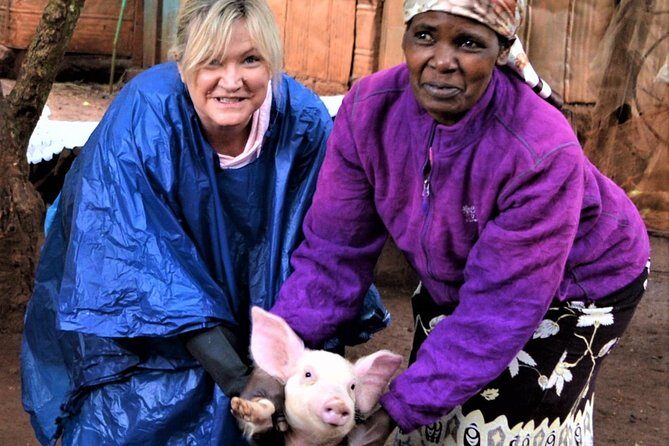
- Kikuyu matriarchs are the point: you meet the women who care for families and lead communities
- Hands-on pig-farm connection: you can pitch in with chores if you want
- Lunch and tea are included: it slows the pace and makes real conversation possible
- Small-group format (up to 9 people): better questions, less waiting, more connection
- One Horizon livelihood program context: you see how income supports grandmothers and their households
A Grandmothers-First Meet-and-Greet Near Nairobi
If you’ve done Nairobi sightseeing before, you know how easy it is to miss what’s actually happening in people’s lives. Go Granny Go flips the script. Instead of focusing on typical attractions, it centers on the Kikuyu grandmothers in a nearby village setting, where they’re often responsible for raising grandchildren when parents can no longer look after them.
The mood is warm, but it’s also grounded. You’re there to learn about history and culture from people who live it every day—community leaders, family carers, and pig farmers. The format matters: this is a meet-and-greet built around conversation, not a checklist of sites.
The tour also has a very specific strength: it ties culture to livelihood. When you hear how the grandmothers manage family responsibilities and household constraints, then you see a pig-farming business program that supports income, it gives the stories a practical shape. You’re not just hearing about struggle—you’re also seeing how a community is working toward stability.
You can also read our reviews of more historical tours in Nairobi

Price and Timing: What You’re Paying for in 6.5 Hours
The price is $265.00 per person for about 6 hours 30 minutes. That sounds steep at first glance, but you’re paying for several things that are hard to replicate on your own:
- Small group experience (maximum 9 travelers)
- Round-trip transfer from your hotel area (pickup and drop-off are offered)
- Included lunch and tea
- Time with community leaders rather than a brief pass-through stop
- A structured cultural program run by One Horizon Africa
For many visitors to Kenya, the “cost” of a cultural experience isn’t only transportation. It’s the cost of access—getting into the right setting, with the right approach, and with enough time to ask questions respectfully. This tour builds in that access and time.
On the schedule side, you start at 9:30 am. One major on-site block runs about 4 hours, then the rest of the day is mostly travel. If you like mornings with a purpose, this one fits well.
Ngong Hills Village Visit: Family Care, Tight Housing, and Pig Farming
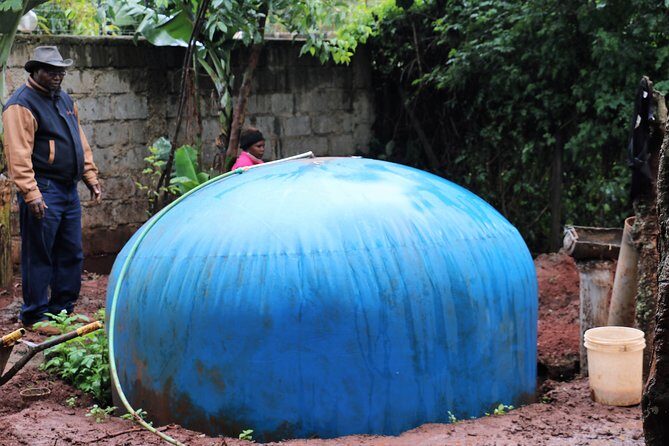
Your main stop happens around Ngong Hills, where you drive to a Kikuyu village near Nairobi. The tour’s focus is the role of older women in community life, especially where grandmothers raise grandchildren. In this setting, it’s possible to have up to 20 family members living in a grandmother’s one-room corrugated iron home. That detail is important because it explains why everyday life here is so tightly managed—space, schedules, food planning, and caregiving all get compressed into real constraints.
The tour doesn’t treat pig farming as an accessory. It’s presented as part of a livelihood pathway that helps the grandmothers feed their families. The pig-farming program is supported by One Horizon. In other words, you’re not only seeing animals—you’re seeing how income from pig-husbandry can be used in a household where multiple generations depend on the same caregivers.
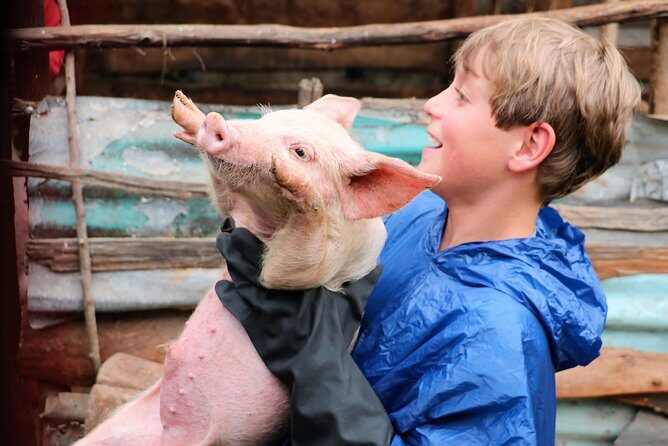
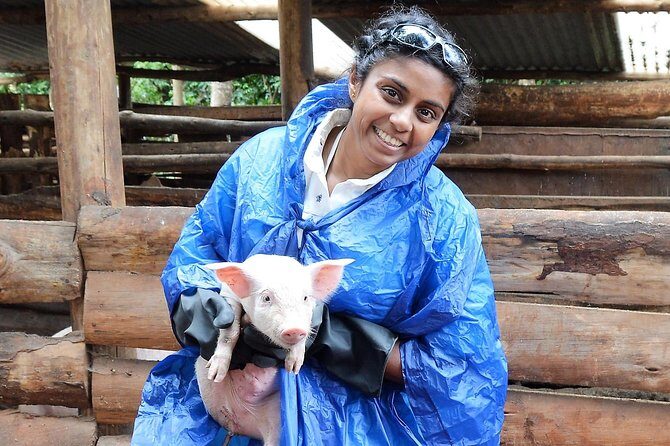
When you arrive, you’ll be shown around a pig farm. You may also be invited to participate in chores if you like. That “if you like” phrasing matters. Not everyone wants to join manual tasks, and not everyone will feel comfortable. The best way to treat this portion is as participation on your terms: observe carefully, follow instructions, and jump in only if it feels right.
You’ll also hear joyful singing during the visit. That’s not just background music. In a community context, singing often shows how people bond, share moments, and express identity together. It’s also a reminder that this is not all hardship—it’s people living, working, and celebrating life with what they have.
What you might find challenging: the topic is family caregiving under stress. If you’re expecting a feel-good photo tour only, you’ll miss the heart of why this program exists.
Lunch and Tea: The Slow Part That Makes the Tour Work
One of the best surprises about Go Granny Go is that it includes lunch and tea as part of the cultural flow. That means you’re not just meeting people at a doorway and then leaving. You get a shared meal moment, which naturally creates space for questions.
This matters because understanding culture usually requires more than listening to an overview. You need time to connect. When lunch and tea are included, the conversation can move past facts into personal experience—how caregivers balance responsibilities, how family networks work, and how the community thinks about support.
From the reviews, the standout emotion is often humbling. People describe the encounter with the grandmothers and their families as moving, and they remember it as a highlight alongside wildlife experiences. That makes sense. Wildlife tours show you the outside of Kenya. This one shows you the inside of family life and community leadership.
You’re also given a chance to talk during the included meal and general visit time. That’s a big deal for a small-group tour, because it’s where the experience becomes more than logistics. Food slows everything down, and it keeps the day from feeling like an obligation.
Practical note: you’ll likely be in a village environment, so your pace and comfort level may feel different than city plans. Go with curiosity, not urgency.
What the Small Group (Up to 9) Changes for You
Many “cultural” tours claim intimacy, but few actually control the group size tightly. Here, the tour caps at 9 travelers, which shifts the experience in a noticeable way.
With fewer people:
- You get more direct chances to ask questions
- You’re less likely to be stuck waiting for others
- The guide/provider can manage timing and attention better
- The grandmothers can engage in a calmer rhythm rather than in a crowd
It also changes the quality of the interaction. When there’s room to speak, you don’t just get surface explanations. You can ask follow-ups like how the pig-farming program helps feed families or what community leadership means when you’re caring for children as well.
The tone that comes through in the reviews is that the visit feels personal and human, not scripted. If you care about authenticity—and you want a tour that doesn’t turn people into scenery—this group size supports that.



Pickup, Mobile Ticket, and the Simple Way the Day Runs
From Nairobi, the tour is designed to be low-stress in the basic sense: pickup and drop-off are offered, and you don’t have to coordinate your own transport.
You’ll also use a mobile ticket, which is helpful if you’re juggling multiple reservations while traveling. Admission is listed as ticket free, which removes another layer of decision-making on your end.
Service animals are allowed, and most travelers can participate. Those details matter because they tell you the tour provider is set up for a broader range of visitors.
The bigger practical takeaway is this: the tour is built around one main stop and one community visit, which keeps the day from feeling like airport-style rushing. You’re out roughly half a day, and you come back with a clear story to remember.
Who This Tour Is Best For (and Who May Prefer Another Option)
This tour is a strong match if you:
- Want Kikuyu culture through real community leadership, not just general history
- Care about responsible community experiences
- Like small-group formats that make conversation possible
- Enjoy learning how livelihood programs connect to family stability
- Don’t mind that the setting is rural and working
It’s also a good fit for people who love Kenya beyond wildlife. Wildlife is often spectacular, but it’s also “external.” This experience is “relational.” You learn how older women support family life and how a pig-farming program supported by One Horizon supports that work.
Who might reconsider? If you strongly prefer polished, scenic attractions only, you may find the topic heavy. If you know you get overwhelmed by stories of hardship, you can still go—but go prepared. This is community life with real constraints, not a themed entertainment session.
How to Show Respect During a Community and Farm Visit
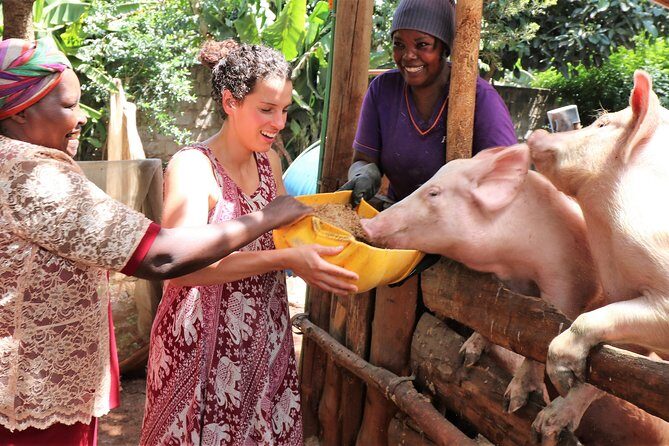
Because this tour centers on people and their daily work, your behavior matters more than on a standard sightseeing stop. Here’s how I’d handle it to keep things respectful and comfortable:
- Listen first, then ask. People appreciate questions that show you’re paying attention
- Be gentle with participation. If you’re offered a chance to join chores, do it only if you feel safe and willing
- Keep conversation thoughtful. Caregiving and poverty are personal topics; avoid turning them into shock-value stories
- Follow guidance from the host side. The tour’s value comes from a community-led approach
- Accept that the environment is real. One-room homes and working farms don’t feel like tourist facilities
In other words: treat this like a human visit, not a documentary shoot. The best experiences here are built on calm respect.
The One Horizon Connection: Why the Stories Land
One theme that comes through strongly is the program behind the tour: One Horizon has established a support pathway that helps women who’ve endured a great deal get back on their feet. In the review feedback, people describe the stories as compelling and the impact as meaningful, especially because it’s tied to breaking the cycle of poverty for families.
That matters because it reframes what you see. You’re not just watching someone else’s struggle. You’re learning how community-led initiatives can support livelihoods—like earning income from pig-husbandry—to feed families and help caregivers manage what life demands.
This is where the tour’s structure earns its price. The cultural learning and the livelihood context are not separated. They’re connected on purpose. That makes it easier for you to understand the full picture instead of collecting fragments.
Should You Book Go Granny Go?
I’d book this tour if you want a small, community-led experience that feels real and specific to Kikuyu life near Nairobi. The combination of meet-and-greet access, lunch and tea, and the pig-farming livelihood context supported by One Horizon is what makes it more than a generic culture stop.
Book it if you:
- like intimate group experiences (up to 9)
- want to talk with community leaders, not just observe
- are open to a day that includes both hard realities and warm human moments
I’d skip it if you only want light, surface-level sightseeing or you’d rather avoid situations involving poverty and family caregiving stories. If that’s you, look for a different kind of Nairobi day tour.
FAQ
What time does Go Granny Go start?
The tour starts at 9:30 am.
How long is the tour?
It runs for about 6 hours 30 minutes (approx.).
How much does it cost?
The price is $265.00 per person.
Is hotel pickup and drop-off included?
Yes, pickup is offered, and the tour includes round-trip transfer from your hotel area.
How many people are in the group?
The maximum group size is 9 travelers.
Is lunch and tea included?
Yes, lunch and tea are included.
Where does the tour take place?
The experience is in Nairobi, Kenya, with the main village visit associated with Ngong Hills.
Do I need an admission ticket?
Admission is listed as ticket free.
Are mobile tickets used?
Yes, the tour offers a mobile ticket.
Can I cancel for a refund?
Yes. You can cancel up to 24 hours in advance for a full refund.