REVIEW · NAIROBI
Kibera Chocolate City Tour
Book on Viator →Operated by Agape Hope for Kibera Tours · Bookable on Viator
Kibera isn’t a postcard, and that’s why this tour lands. You’ll walk through the Kibera Town Centre with local guides and visit places like Toi Market and the Agape school and library, all framed to challenge stereotypes and show everyday life. What I like most is the human pace and the way the guides, including Collins and Rama, talk about the community from the inside. The other big win is the structure: you see work, creativity, and education, not just hardship. One consideration: because you’re going into a real neighborhood, you should come with a respectful mindset and be ready for uneven paths and close contact.
In my book, the two best parts are the guides’ lived-in perspective and the built-in stops that explain how people actually make a living. Collins, in particular, comes across as someone who feels responsible for showing Kibera fairly, and the vibe is warm—people describe being cared for all the way through. I also love that the tour doesn’t end at a single viewpoint; it keeps moving from market life to crafts to school and library time for children.
The main drawback to think about is emotional contrast. Even when the experience is hopeful and well-organized, seeing children at school and watching daily life unfold in the same lanes you walk through can hit you hard. Go with patience and let the story be bigger than your first impressions.
In This Review
- Key things to know before you go
- A Respectful Look at Kibera’s Everyday Life
- How the 2–3 Hour Route Flows (and Why That’s the Point)
- Starting at Kibera Town Centre: Get Your Bearings Fast
- Toi Market: Where Work Looks Close and Personal
- Victoria Bones Craftshop: Creative Skill with a Story
- Agape School and Library: Education, Play, and Community Hope
- Walking By the Historical Railway: A Bigger View of Kibera
- Guides Who Make It Feel Safe and Human
- Price and Value: What $22 Really Buys You
- Who This Tour Is Best For (and Who Might Want to Think Twice)
- Practical Tips Before You Go
- Should You Book the Kibera Chocolate City Tour?
- FAQ
- How long is the Kibera Chocolate City Tour?
- What is the price per person?
- Where does the tour start and end?
- What stops are included during the tour?
- Do I need to buy a paper ticket?
- What group size should I expect?
- What days and hours does the tour operate?
- Can I get a confirmation after booking?
- Is the tour okay for most travelers, and are service animals allowed?
- What happens if the weather is bad or I need to cancel?
Key things to know before you go

- Respect-first approach: The tour is designed to challenge stereotypes and help you understand daily life and resilience.
- Market + crafts stops matter: Toi Market and Victoria Bones Craftshop help connect what you’re seeing to work and creativity.
- Agape school and library visit: You’ll visit the education and play spaces for children involved with Agape.
- Small-group feel: Maximum of 30 travelers, which usually keeps the experience manageable.
- Time-efficient city outing: Plan on about 2 to 3 hours, starting at Kibera Town Centre.
- Good-weather dependent: If weather is poor, you’ll be offered another date or a full refund.
A Respectful Look at Kibera’s Everyday Life

If you’re in Nairobi and you want more than a drive-by, this Kibera Chocolate City Tour is set up for real understanding. The goal is simple: help you see Kibera as a community with people, routines, businesses, and families—not just a headline or a reputation.
The tour’s framing is what makes it feel different. It’s built to break stereotypes and challenge what outsiders often assume, while still being honest about the challenges residents face. That balance matters. You’re not being fed a script that only focuses on struggle, and you’re not being asked to ignore hard realities either.
Two things I’d call out early. First, the guides’ presence is a major part of the value. Collins and Rama are mentioned as guides who share history and everyday life with confidence and care. Second, the itinerary is practical: you get a run of stops that connect to daily survival in a concrete way—market trade, crafts, and school-based community life.
The emotional impact is real. Even the most upbeat tour can make you think hard when children are playing nearby and adults are working in close quarters. I’d treat this as a learning walk, not a quick photo stop.
You can also read our reviews of more city tours in Nairobi


How the 2–3 Hour Route Flows (and Why That’s the Point)

This is a 2 to 3 hour experience that typically keeps you moving at a walking pace. The start and end are the same: it runs back to the meeting point at Kibera Town Centre (Kamukunji Grounds, Nairobi, Kenya). That matters because you’re not juggling transfers at the end of the day.
It also helps that it’s easy to fit into a Nairobi schedule. You can pair it with other city time—morning activities, midday plans, or an afternoon slot—without it eating up your whole day. And because it’s limited to 30 travelers, you should generally get enough attention from the guide to ask questions and understand what you’re seeing.
One more practical note: you’ll use a mobile ticket. That’s convenient for anyone trying to avoid paper chaos while moving through town.
Starting at Kibera Town Centre: Get Your Bearings Fast

The tour begins at Kibera Town Centre at Kamukunji Grounds. This opening is more than a checkpoint. It’s where the guide helps you understand the layout and rhythms of the area, so later stops make more sense.
Think of this as your orientation phase. When someone explains what the town centre means for daily movement, trade, and community life, you stop seeing the neighborhood as random scenery and start seeing it as a place with logic. Many people want that “what am I looking at?” clarity early, and this tour tries to deliver it right away.
You’ll spend time building context before jumping into specific places. That structure is one reason the experience feels more meaningful than a simple stroll.
Toi Market: Where Work Looks Close and Personal

One of the most useful stops is Toi Market. Markets can sound generic in a brochure, but this stop is about the texture of local business and daily buying and selling.
From a visitor’s standpoint, markets also help you understand how economies function outside major shopping centers. You’re seeing where transactions happen, how people interact, and how small enterprises fit into the neighborhood’s life. It’s also one of the best places to ask questions, because the environment naturally invites conversation about what’s sold and how work is organized.
A market stop is also a useful reality check. It reminds you that residents aren’t just surviving—they’re actively creating income and building systems that keep the community moving.
A practical thought: wear comfortable shoes. This is a walking tour through active neighborhood areas.
Victoria Bones Craftshop: Creative Skill with a Story

After the market, the route continues to Victoria Bones Craftshop. This is where the tour shifts slightly from day-to-day trade to craft and skill.
Craft workshops can be over-romanticized on tours. Here, the value is the connection between creativity and livelihood. You’re not just watching people make things—you’re seeing a part of how artistic work can become economic opportunity.
From what I’ve seen described, the guides do a good job of linking the craft stop back to broader community life. That keeps it from feeling like a detour or a showroom moment.
If you like buying small, meaningful items rather than typical souvenirs, this is the kind of stop that can make sense. Just go with a calm pace and ask questions if you want details about products or how the shop fits into local life.
A few more Nairobi tours and experiences worth a look




Agape School and Library: Education, Play, and Community Hope
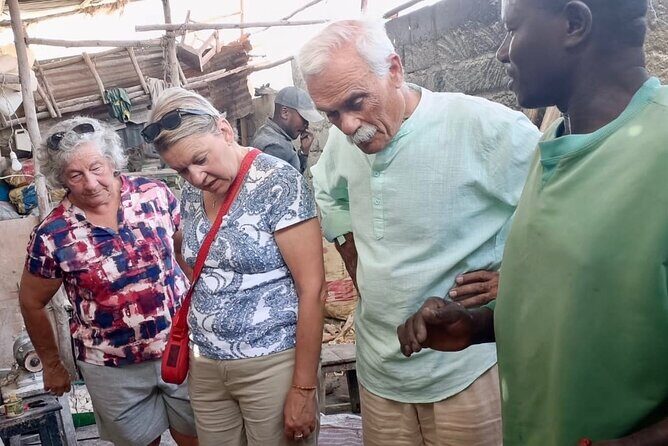
The tour includes a visit to the school and library connected with Agape, where children receive education and have time to play with friends.
This is arguably the emotional center of the whole experience. In the descriptions people share afterward, it’s often the part that sticks with them most—because education is immediate, visible, and personal. When you’re standing near kids being kids, it becomes hard to reduce Kibera to a single narrative.
It also changes the tone of your questions. Instead of asking only about hardship, you can ask about how learning happens, how community support works, and what the future efforts look like. Guides such as Collins are specifically praised for sharing a vision for the future alongside the history and present-day realities.
One consideration: don’t treat this as a performance space. If you’re taking photos, use discretion and be sensitive to the children and staff. If you don’t know what’s appropriate, ask your guide first.
Walking By the Historical Railway: A Bigger View of Kibera

The last major piece is a walk by the historical railway, where you’ll get a broader view of Kibera.
This stop helps you step back from the immediate scenes you’ve been in. It’s not just a photo moment; it’s a way to connect place to movement—how communities develop alongside infrastructure, and how routes shape daily life.
In a tour like this, you can sometimes get stuck in the emotion of close-up experiences. A broader “look-out” stop can give your brain a place to organize what you’ve learned. You see more of the edges and context, and the neighborhood starts to feel less like a set of individual stops and more like one connected system.
Guides Who Make It Feel Safe and Human

In every strong version of a neighborhood tour, the guide is the difference between a confusing walk and a meaningful experience. This one leans heavily on that.
Collins is a name that comes up again and again. People describe him as someone who grew up in the community and treats residents with the kind of respect that changes your whole posture as a visitor. Rama is also mentioned, along with Allan in some cases. The consistent theme: guides take care of you, explain clearly, and act like your questions matter.
That matters for safety and comfort, but also for understanding. A good guide doesn’t just tell you what you’re seeing; they help you interpret it without turning it into a spectacle.
If you worry about asking questions, this tour style can help. Your guide is there to connect the dots between daily life and the bigger background story.
Price and Value: What $22 Really Buys You
The price is $22 per person, with typical booking about 17 days in advance. On paper, it’s a friendly number for an itinerary that includes multiple stops and a local guide.
Where the value comes from is the combination: you’re paying for guided interpretation, walking access to several key places, and a structured visit that includes community education and local businesses. In some of the experiences people share, there’s also the point that a large share of what you pay supports the children and the Agape work. Even if you don’t know the internal math, the intent is part of why the tour feels different from a quick sightseeing loop.
So think of it as a short tour with real context—not a long day trip, but not a generic walk either. If you’re trying to manage costs in Nairobi, it’s also one of the more attainable ways to get a nuanced view.
Who This Tour Is Best For (and Who Might Want to Think Twice)
This tour suits you if you want to understand daily life in Kibera through guided stops like markets, craft work, and the Agape school and library. It’s also a strong choice if you like meeting locals, asking questions, and learning directly rather than relying on distant explanations.
It’s also a good fit if you’re comfortable with a reality-based visit. This is not “sit and watch.” It’s walking, interacting, and taking in close-to-the-ground scenes.
You might want to reconsider if you’re not ready for emotional contrast. The children’s presence and the visibility of daily challenges can be intense. If you’re traveling with someone who prefers strictly sanitized experiences, you may need to talk expectations ahead of time.
Practical Tips Before You Go
A few small things will make the whole experience easier and more respectful.
First, dress for walking and for the conditions you’ll meet on the way. Comfortable shoes are a must.
Second, come with questions you actually care about: how business works, what education support looks like, how community life is organized. The guides are there to explain, and thoughtful questions help you learn more than a quick checklist.
Third, keep your camera habits gentle. If you see children, let the guide steer you on what’s appropriate.
Finally, go in expecting a human experience, not a performance. The tour’s whole mission is to show real people and real resilience.
Should You Book the Kibera Chocolate City Tour?
If you want a Nairobi experience that goes beyond stereotypes and actually connects you to daily life—through markets, craft, and the Agape school and library—this tour is worth your time. The small-group feel, the consistent guide praise (especially for Collins and Rama), and the clear, practical itinerary all point to strong value for $22.
I’d book it if you can handle emotional moments with respect and you’re ready to learn from the community, not just observe it. Skip it only if you need a low-stimulation, strictly comfortable sightseeing day. Otherwise, this is one of the more direct ways to understand Kibera as a living neighborhood with people shaping their own future.
FAQ
How long is the Kibera Chocolate City Tour?
It runs for about 2 to 3 hours.
What is the price per person?
The tour costs $22.00 per person.
Where does the tour start and end?
It starts at Kibera Town Centre at Kamukunji Grounds, Nairobi, Kenya, and ends back at the same meeting point.
What stops are included during the tour?
You visit Kibera Town Centre, Toi Market, Victoria Bones Craftshop, the school and library connected with Agape, and you also walk by the historical railway.
Do I need to buy a paper ticket?
No. The tour uses a mobile ticket.
What group size should I expect?
The maximum group size is 30 travelers.
What days and hours does the tour operate?
It operates Monday to Sunday, with opening hours listed as 8:00 AM to 6:00 PM.
Can I get a confirmation after booking?
Yes. Confirmation will be received at the time of booking.
Is the tour okay for most travelers, and are service animals allowed?
The tour notes that most travelers can participate, and service animals are allowed.
What happens if the weather is bad or I need to cancel?
The experience requires good weather. If it’s canceled due to poor weather, you’ll be offered a different date or a full refund. You can cancel up to 24 hours in advance for a full refund.