REVIEW · NAIROBI
Ultimate 12 Days Private Safari Tour in Kenya and Tanzania
Book on Viator →Operated by Flexivel Kenya Safaris · Bookable on Viator
A long safari, but it stays purposeful. This 12-day private Kenya-and-Tanzania route packs the wildlife heavy hitters into a smooth, driver-led plan, from rhinos at Ol Pejeta to the Ngorongoro Crater. I especially like that you can shape the trip toward your group’s interests instead of being locked into one style of day.
Two things I really liked: the focus on game-viewing time (multiple early starts and unlimited-style days in the best reserves), and the fact that you’re traveling with a dedicated setup—so you’re not negotiating with other vehicles when the action heats up. One consideration: the schedule is intense, with big driving days and very early departures, so it’s not a “sleep in and wander” vacation.
Quick highlights: what you’ll remember
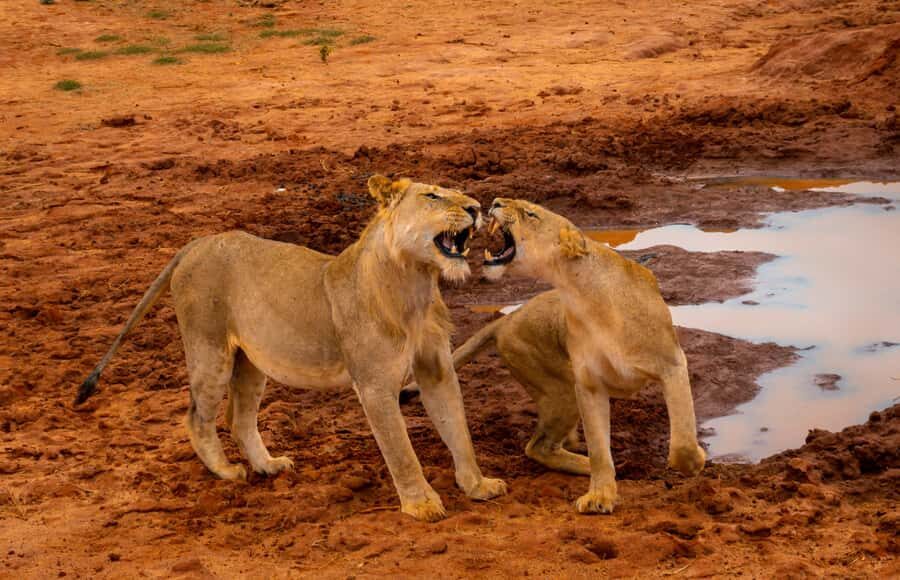
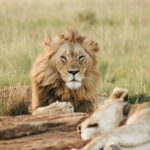
- Ol Pejeta Conservancy first day impact: lions on the plains, plus the endangered species enclosure for black rhino and rescued chimpanzees
- Naivasha boat safari + optional walk: easy water time for hippos and birds, then a chance to add a guided walking safari on Crescent Island
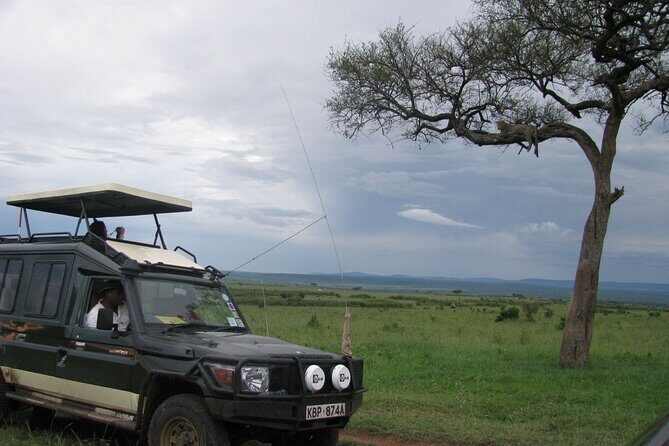
- Masai Mara mornings and unlimited drives: early light, acacia trees, and prime timing for migration season (July to October)
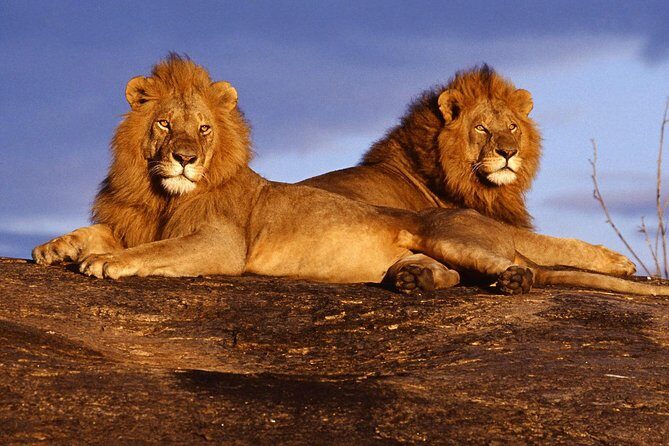
- Serengeti with predator tracking context: lions with radio-transmitter collars make the day feel more intentional when you’re scanning for big cat movement
- Ngorongoro crater day with picnic: descend for game viewing, eat at the crater floor, then sleep at the rim for sunrise and sunset views
- Amboseli Kilimanjaro weather window: early drives when clouds might clear, plus the option to climb Observation Hill for wide views
In This Review
- Kenya to Tanzania Safari: a private route built around wildlife time
- Price and what it really covers for a 12-day private safari
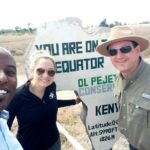
- Day 1: Ol Pejeta Conservancy from Nairobi, with rhinos and lions in sight
- Day 2: more Ol Pejeta time, private drives that let you slow down
- Day 3: Rift Valley drive, Thompson’s Falls, then Lake Naivasha by boat and on foot
- Day 4: Masai Mara arrival with afternoon drives in prime lion country
- Day 5: Masai Mara early start with unlimited game drives and migration timing
- Days 6 and 7: Serengeti, then full-day viewing with radio-collared lion tracking context
- Day 8: Ngorongoro Crater descent, picnic lunch, and rim sunsets
- Day 9: Lake Manyara with Karatu market stop and possible tree-climbing lions
- Days 10 and 11: Amboseli National Park for Kilimanjaro views and wide-open predator chances
- Day 12: pre-breakfast predator hunt and a final Amboseli drive back toward Nairobi
- Guides, pacing, and how to make the most of a 12-day swing
- Should you book this private Kenya and Tanzania safari?
- FAQ
- Where does the safari start and what time do you begin?
- Is this tour private?
- Which major parks are included?
- Does the itinerary include any optional activities or extra-cost add-ons?
- Are any admissions tickets included?
- Can I cancel and still get a full refund?
Kenya to Tanzania Safari: a private route built around wildlife time
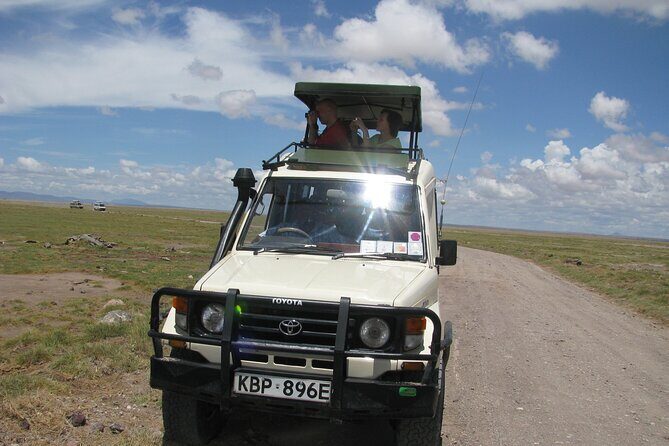
This is the kind of safari you choose when you want your days to be mostly about animals, not about bouncing between random stops. The itinerary moves from Kenya (Nairobi to Ol Pejeta, Naivasha, and Masai Mara) into Tanzania (Serengeti, Ngorongoro, Lake Manyara), then finishes at Amboseli with Mount Kilimanjaro in the picture when conditions cooperate.
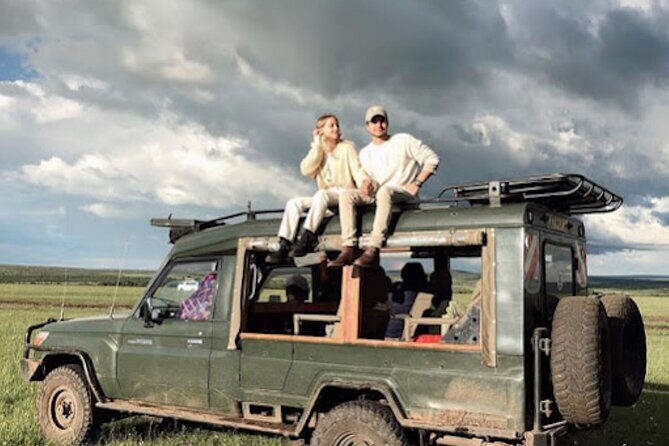
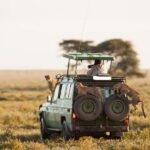
Because it’s private, your guide and driver can keep your timing tight. That matters in places like Masai Mara and Serengeti, where the best sightings often hinge on being in the right patch at the right time. You’ll also feel it in logistics: fewer handoffs, fewer “wait while everyone catches up,” and more flexibility to slow down when something is happening.
The route also has a clear rhythm: start with conservancy big-cat and rhino viewing, move into “classic” plains safari (Mara and Serengeti), then add the crater and lake parks for variety. You get sand, grass, and water-adjacent wildlife in about as compact a timeframe as you can do.
Price and what it really covers for a 12-day private safari
At $17,780 per person, this is a high-end safari price. It’s not just “transport and tickets.” You’re paying for a private vehicle and driver setup across two countries, with enough park time to do multiple game drives in the big name reserves.
Also, this itinerary isn’t only about the number of parks. It’s about what you’re likely to do inside them:
- Game drives that start early enough to catch fresh movement
- A Serengeti and Ngorongoro day where the terrain shapes how you view wildlife
- A Naivasha boat safari in addition to land viewing
- An optional add-on in Naivasha (guided walking safari on Crescent Island)
- Optional add-ons like Hell’s Gate in the Naivasha area (listed as extra cost)
That’s why the price can feel “worth it” if you care most about time in the field and prefer not to share your sightings with other groups. It may feel heavy if you’re hoping for a lighter pace, fewer long drives, or a more lounge-and-pool style vacation.
You can also read our reviews of more private tours in Nairobi

Day 1: Ol Pejeta Conservancy from Nairobi, with rhinos and lions in sight
You kick off with a morning start in the Nairobi area, then drive to Ol Pejeta Conservancy (about 220 km, roughly 4 hours). The drive includes stops along the way such as coffee and tea plantation views in the central highlands. That’s a nice warm-up because it gives context before you step into the wildlife focus.
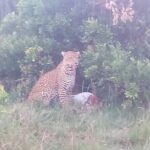
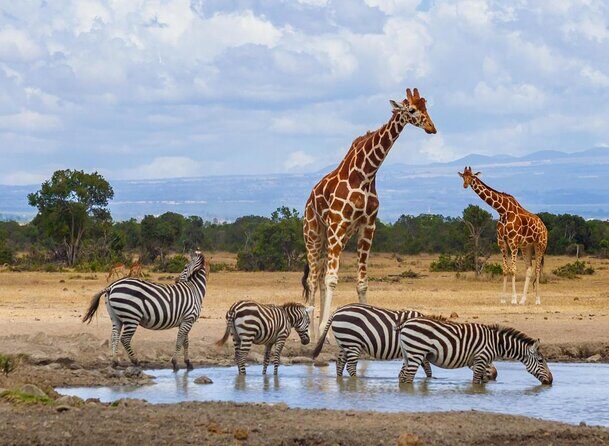
Once you arrive, the plan is straightforward: lunch, then your first game drive. Ol Pejeta is special here because it blends big predators with conservation in a way that’s easy to understand on the ground. The itinerary highlights six prides of lions roaming the plains, along with other big cats and African wild dogs. You’ll also be taken to the endangered species enclosure area, where you’re likely to see black rhino (and, in the same setting, rescued chimpanzees).
Practical note for your expectations: conservancies are often easier to navigate than some larger parks. You can get your bearings quickly, and the viewing feels manageable on day one, even if you’re still waking up from travel.
Day 2: more Ol Pejeta time, private drives that let you slow down
Day 2 stays in Ol Pejeta for additional private game viewing drives. This is a smart move. People often underestimate how useful it is to repeat a conservancy rather than rushing onward. You’ll get extra chances to spot animals that were just out of view the day before, and you can also enjoy the different light and movement patterns without feeling rushed.
The itinerary keeps it simple—breakfast, lunch, dinner, and game drives—and that simplicity is part of the value. You’re not juggling transfers during the moments when wildlife is most active.
Day 3: Rift Valley drive, Thompson’s Falls, then Lake Naivasha by boat and on foot
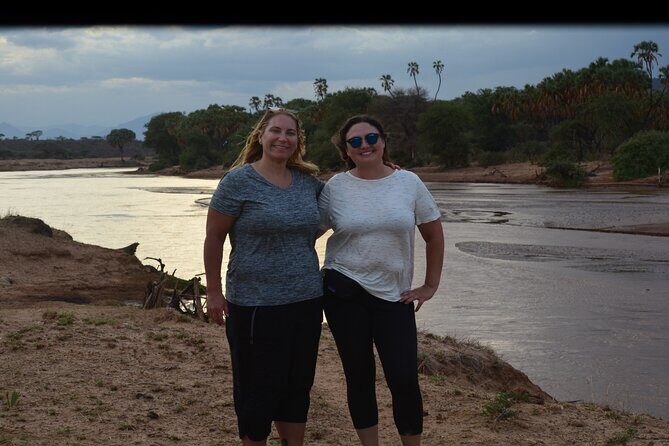
Today you transition toward the Rift Valley and Lake Naivasha. Along the way you stop at Thompson’s Falls (about 74 m / 243 ft). It’s a genuine break in the driving day, and it helps stretch the mental map between Kenya’s conservancy start and the lake-and-savannah mix that follows.
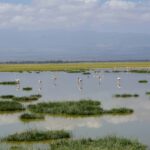
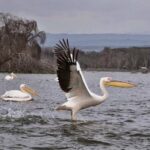
In the afternoon, you’ll do a boat safari on Lake Naivasha. This is one of the best ways to change your wildlife viewing style without adding exhaustion. From the water, you’re watching for hippos and birdlife along the lake and shoreline. The itinerary also notes you may spot grazing animals like antelope, zebra, buffalo, eland, and impala near the water’s edge.
If you want more variety, there’s time for a guided walking safari on Crescent Island Game Sanctuary (noted as an option). That kind of walk gives you a different connection to the ecosystem—smaller, closer wildlife signs, and a slower pace that helps you notice details.
Consideration: boat time and walking time require a bit more attention to comfort and footwear. Pack accordingly, because this is still a safari day, not a sightseeing stroll.
Day 4: Masai Mara arrival with afternoon drives in prime lion country
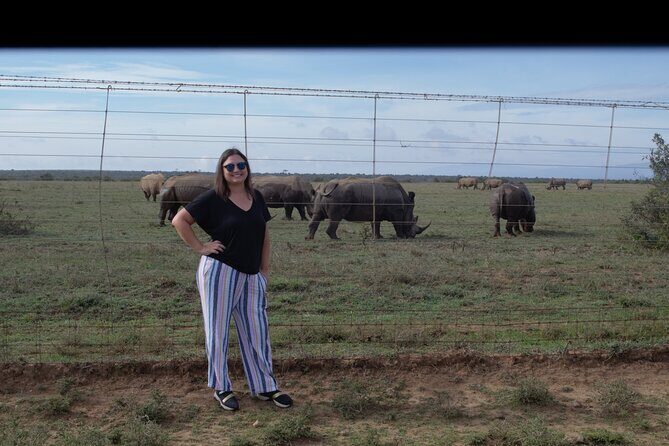
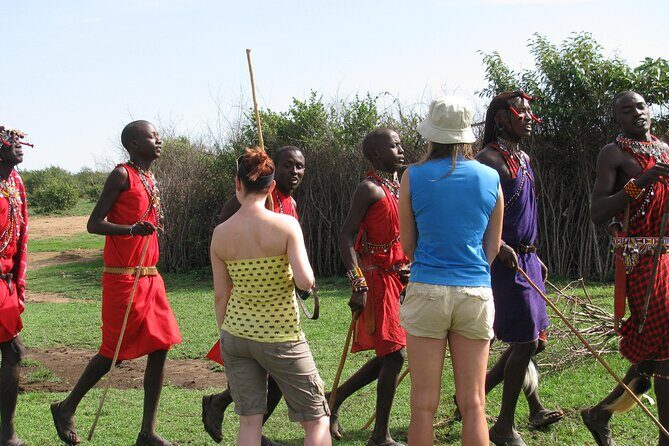
After breakfast, you head to Masai Mara National Reserve. The drive goes through the Great Rift Valley and Masai country, which adds cultural scenery even if the itinerary is focused on wildlife.
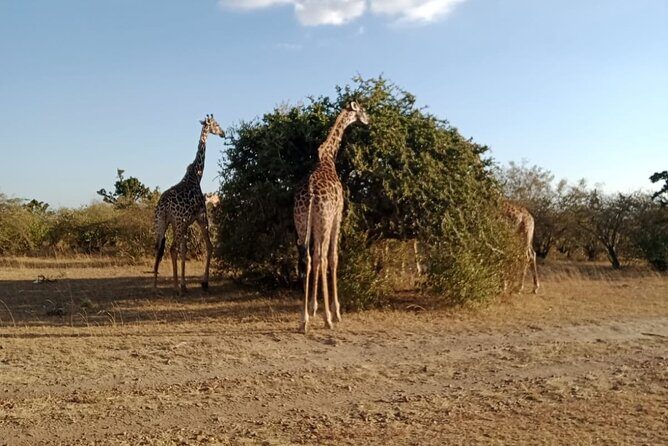
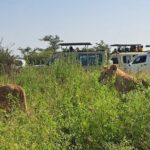
You’ll arrive with time for an afternoon game drive. Masai Mara is famous for a reason: the itinerary references its large spaces and notes it has standout lion visibility and densities. You’re scanning rolling green hills and golden savannahs for big cats, elephants, giraffes, ostriches, warthogs, and more.
Optional add-on appears here as well: Hell’s Gate National Park in the Naivasha area is listed as extra cost (USD 35 per person). If your group wants less vehicle time and more active sightseeing, this is the only clearly stated “stretch” outside the main safari parks.
A few more Nairobi tours and experiences worth a look
Day 5: Masai Mara early start with unlimited game drives and migration timing
Day 5 is a big wildlife day. You go out early enough to catch the sunrise glow and fresh tracks—prime viewing conditions when animals are still moving and the light is crisp on the plains.
The itinerary frames this as a day of unlimited game drives. That’s not a small detail. Unlimited-style structure usually means your guide can keep you out longer when you’re in the right zone, rather than cutting everything short at a fixed time because the schedule needs to move.
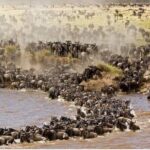
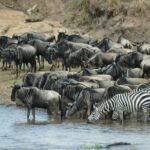
Masai Mara is also where migration season can change the whole feel of the trip. The itinerary calls out the Great Migration timing, especially July to October, when you might see thousands (and potentially tens of thousands) of animals moving across the landscape.
Even if you’re not there during migration, Mara is still the kind of place where action can show up quickly—acacia-tree cover, animal movement along ridges, and predator activity around prey concentrations.
Days 6 and 7: Serengeti, then full-day viewing with radio-collared lion tracking context
On Day 6, you leave Masai Mara and cross into Tanzania to the Serengeti. The itinerary notes Serengeti and Masai Mara share boundary areas and are connected in how animals move. The practical value of this for you: it reduces the “stopped at the border and started over” feeling. It’s more like you’re continuing the same ecosystem story with a new set of viewing rules.
You’ll do an afternoon game drive on Day 6. Then Day 7 is your longer hit: a full day game viewing drive with options for morning, afternoon, or full day. You’re given plenty of time to search for predators and herbivores across Serengeti’s huge scale.
The standout detail in the itinerary’s animal science angle: the lions in Serengeti have radio-transmitter collars, which helps tracking their movements. You’ll still be spotting visually, but that tracking can shape where your guide points the vehicle during the day.
The itinerary lists multiple animals you may see—cheetah, zebra, giraffe, Thomson’s and Grant’s gazelle, eland, impala, hippo, warthog, and more. In a place like Serengeti, it’s not just one animal you’re chasing. It’s patterns: where grazers cluster and where predators wait.
Day 8: Ngorongoro Crater descent, picnic lunch, and rim sunsets
Ngorongoro is a different kind of safari. Day 8 brings you to the Ngorongoro Conservation Area, then the plan is to descend to the crater floor for game viewing.
This matters because the crater creates a natural enclosed viewing bowl. You’re not constantly scanning across endless distance. Instead, you’re watching animal movement within a defined setting—where prey and predators can show up in a smaller visual frame.
You’ll have a picnic lunch on the crater floor, then later ascend to the crater rim for your overnight. The itinerary specifically highlights sunrise and sunset views from the crater rim, which is one of those “yes, the photo will look good” moments because the light is dramatic there.
Practical consideration: crater days are scenic, but they’re also physically demanding in a way. You’re going down and up. If your group has mobility limits, it’s worth planning how you’ll handle stairs, slopes, or any transfers during the descent and ascent.
Day 9: Lake Manyara with Karatu market stop and possible tree-climbing lions
Day 9 is your transition to Lake Manyara. You’ll stop at the Karatu market area on the way. The itinerary doesn’t list what you’ll do there, but the value of a quick market stop is that it breaks up the driving and gives you a chance to see everyday life without turning the day into a shopping trip.
Then you’re back into game and bird viewing around Lake Manyara. A signature Manyara feature is listed: tree climbing lions. Your chances depend on timing and animal behavior, but having that possibility in the day helps make it more than a generic “drive in savannah” outing.
If your group likes wildlife plus birdlife, Manyara is a good mid-trip change of pace. You can also expect that the lake environment changes the types of sightings you get.
Days 10 and 11: Amboseli National Park for Kilimanjaro views and wide-open predator chances
Amboseli is where the safari picture gains a giant centerpiece. Day 10 moves you to Amboseli National Park after border crossing and immigration formalities at Namanga. Then you’ll do an afternoon game drive.
The itinerary emphasizes Mount Kilimanjaro views from Amboseli when conditions permit. It also describes Amboseli as an international biosphere with a mix of dried lake bed, rolling savannah, and green swamps—so you get different habitat patches rather than only one type of scenery.
The animal list is long and practical, including elephants and a range of other species (cited: elephants, antelope, spotted hyena, jackal, warthog, baboons, monkeys, plus mentions of cheetah and other plains animals). The viewing hill is also highlighted: there’s an Observation Hill that’s easy to climb and gives stunning views of Kilimanjaro.
Day 11 is another early morning game drive, with a specific weather note: if clouds shear off, you may get a mesmerized view of Kilimanjaro’s snow-capped peaks. It’s a classic “wait for the sky to cooperate” moment, but the timing choice is why it’s worth it.
Day 12: pre-breakfast predator hunt and a final Amboseli drive back toward Nairobi
Your last day keeps the momentum. You start with an early pre-breakfast game viewing drive, focused on predators and grazers. The itinerary notes a then-further final drive at Amboseli.
This kind of final morning can feel like a big ask, but it often pays off. Predators and prey move differently during early daylight, and the light can also improve your visibility for spotting behavior.
After your final drives, you’re ending back in Nairobi, using the standard Nairobi departure zone implied by the tour’s start meeting point and the Nairobi-focused itinerary pattern.
Guides, pacing, and how to make the most of a 12-day swing
One pattern I see in the feedback for this style of safari is that the guide can shape the whole trip. Names that come up in past experiences include George and Vincent, with Joshua mentioned alongside the Tanzania portion. Other guide names that appear in the same set of experiences include Peter in Kenya and Ben in Kenya, plus Tuma and planners like Rachel.
If you have the option to request a guide, put those names into your inquiry. Even without a guaranteed match, it’s a useful way to steer the quality of your experience.
About pacing: this route is busy. You’ll have early starts, several long travel segments, and multiple “same day, different habitat” transitions. If you love the classic big-park safari feel, it’s a win. If you prefer slower days, you might find the constant movement tiring, even though the itinerary tries to give each park enough time to be worth it.
Should you book this private Kenya and Tanzania safari?
Book it if you want:
- A dedicated private setup and lots of time on game drives
- A route that hits Kenya icons (Ol Pejeta, Naivasha, Masai Mara) and Tanzania icons (Serengeti, Ngorongoro, Manyara, Amboseli)
- The chance for special moments like boat time on Naivasha and the crater rim sunrise/sunset
Skip or consider alternatives if:
- You need a low-key vacation with minimal driving
- You’d rather pay less and accept fewer days in the best wildlife zones
- Your group prefers lots of built-in free time rather than a structured day-by-day plan
FAQ
FAQ
Where does the safari start and what time do you begin?
The tour starts at Jomo Kenyatta International Airport area in Nairobi, Kenya (Embakasi), with a stated start time of 6:00 am.
Is this tour private?
Yes. This is listed as a private tour/activity, meaning only your group participates.
Which major parks are included?
The itinerary includes Ol Pejeta Conservancy, Lake Naivasha (with boat safari and an option for walking on Crescent Island), Masai Mara National Reserve, Serengeti National Park, Ngorongoro Conservation Area (Ngorongoro Crater), Lake Manyara, and Amboseli National Park.
Does the itinerary include any optional activities or extra-cost add-ons?
Yes. The plan lists an optional visit to Hell’s Gate National Park (extra USD 35 per person) and an optional guided walking safari on Crescent Island near Lake Naivasha.
Are any admissions tickets included?
The schedule indicates admissions are included on several days, and lists some activities as free on other days (for example, Ol Pejeta days and Masai Mara days show admission ticket included; some Serengeti and crater related days show admission ticket free).
Can I cancel and still get a full refund?
Yes. Free cancellation is offered if you cancel up to 24 hours in advance for a full refund, based on the experience’s local time.