REVIEW · NAIROBI
Nairobi: Horseback Riding Tour Through Maize Plantation
Book on GetYourGuide →Operated by Nairobi equestrian stables · Bookable on GetYourGuide
If you want Nairobi to feel a little wilder, this ride does it. A short trek on horseback takes you past maize fields, into a forest stretch, and out toward a village on the outskirts—so you get more than just a spin around the yard.
Two things I really liked: the horses and the way they handle riders. The horses are well kept, and when you’re new, the guide support is steady and calm. In one great example, I met David (Maina) as the guide, and he kept things controlled with quiet patience—plus Beatrice at the stables was warm from the start.
One consideration: this is a real horse ride, not a leisurely walking tour. If you’re sensitive to motion or you’re uncomfortable in riding gear, you’ll want to dress and prepare for a proper session, not a casual stroll.
In This Review
- Quick take: what makes this horseback ride worth your time
- Horseback riding in Nairobi’s maize fields and forest paths
- From New Muthaiga stables to your assigned horse: how the ride starts
- Maize plantation, natural dam, and the outskirts village: what you’ll see
- Canter, gallop, or a calmer pace: how they match your riding level
- The real value: guides who keep first-timers confident
- How long is 90 minutes, and what you actually do in that time
- Price and value: is $90 a fair deal for this kind of ride?
- Practical tips: what to wear, what to bring, and how to prepare
- Who this Nairobi horseback tour is best for
- Should you book this Nairobi horseback riding tour?
- FAQ
- What’s the duration of the horseback riding tour?
- Where do I meet the guide?
- Do I get a helmet?
- Is this tour suitable for beginners?
- Can experienced riders go faster?
- What route areas will we pass through?
- Is food or drinks included?
- Is transportation to and from the stables included?
- How many people are in the group?
- What if I need to change plans?
Quick take: what makes this horseback ride worth your time
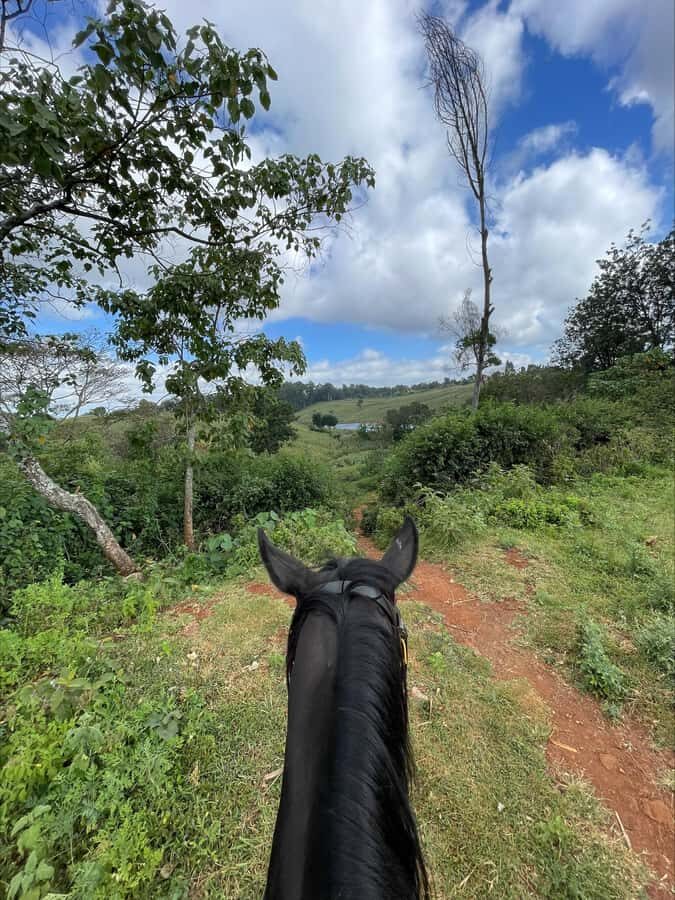
- Maize plantation + forest + village edge in one 90-minute outing
- Canter options if you’re comfortable, with gentler routes for beginners
- Small group (up to 10) so your guide can actually manage the pace
- Helmet included, plus a trained guide for inexperienced riders
- Natural dam stop gives the route a scenic “pause” moment
- Friendly, flexible staff—timing can be adjusted if needed
Horseback riding in Nairobi’s maize fields and forest paths
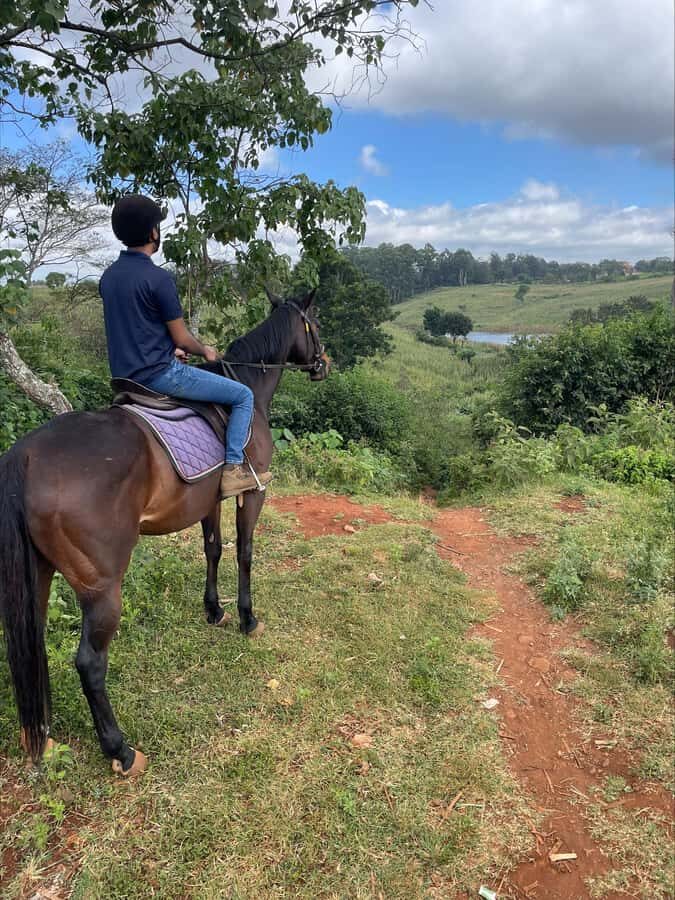
This is one of those Nairobi activities that feels like a mini getaway without the hassle of planning a full day trip. You start at the stables, then ride out through working countryside—maize plants, shaded stretches, and quieter village edges. The overall vibe is practical: get on, follow the guide, and enjoy what’s around you at horse speed.
The route structure matters. When you mix open fields with tree shade and then move toward village life, the ride stays interesting. You’re not just repeating the same track, and you’re not stuck looking at only one type of scenery.
It also helps that the timing is flexible. So if your day has a few moving parts—especially if you’re juggling a flight schedule—you’re more likely to find a workable slot.
A few more Nairobi tours and experiences worth a look
From New Muthaiga stables to your assigned horse: how the ride starts
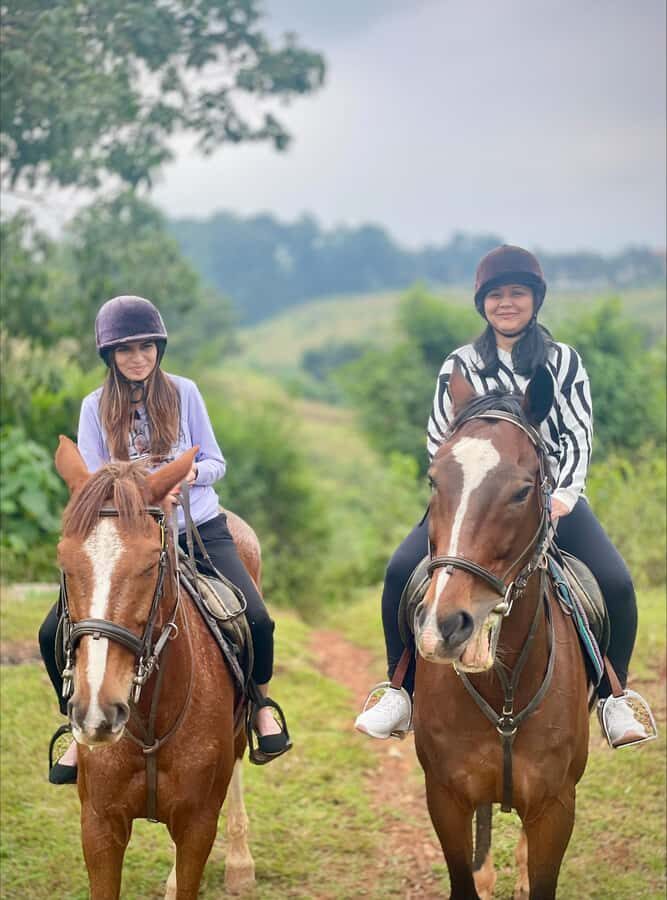
The meeting point is at New Muthaiga riding stables, at the end of the road. Plan on arriving a bit early so you have time to check in, get fitted, and feel settled before you mount.
Once you’re at the stables, you’ll be matched with a horse and saddle up. Helmet use is included, which is a big deal for comfort and peace of mind—especially if you’re new to riding. After that, you follow your guide along the route.
The tour is designed to fit both beginners and experienced riders, but the first difference you’ll notice is how the ride length and route choice get handled. Newer riders get a similar route that’s shorter, while experienced riders may be offered extra speed opportunities on specific patches.
Maize plantation, natural dam, and the outskirts village: what you’ll see
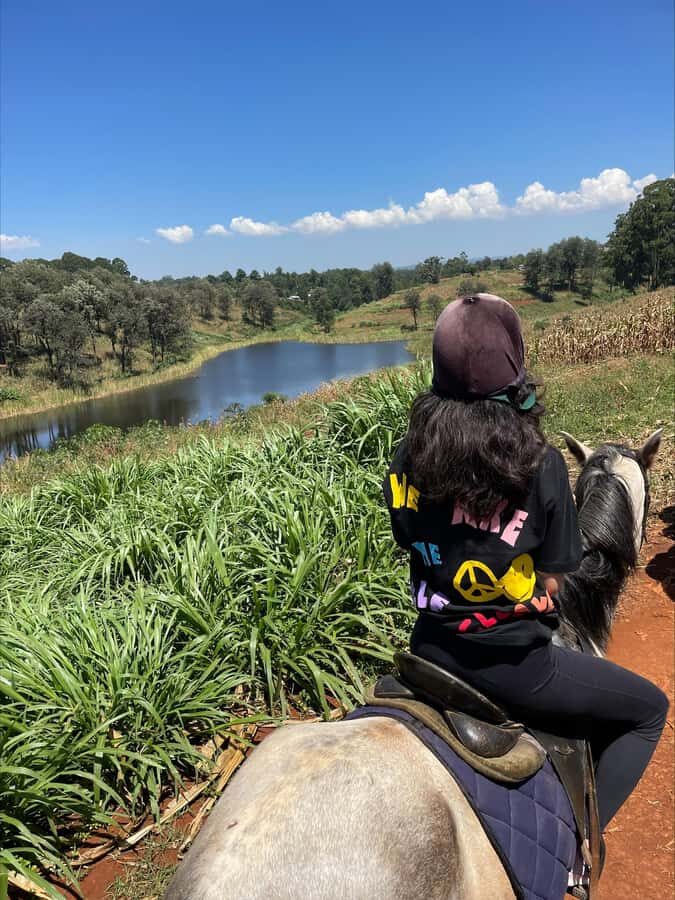
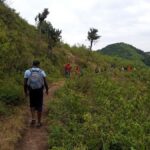
The ride’s big promise is variety, and it delivers. You’ll spend time moving through a maize plantation, then transition into a forest area. Along the way, you pass a natural dam, which breaks up the ride with a natural focal point.
Then you move toward a village on the outskirts. It’s not presented as a formal cultural tour with a staged program; it’s more like you’re riding close enough to see daily life from the right angle—slower, quieter, and more personal than a car window.
This is also one of those experiences where the “small moments” matter. You’ll feel the changes in air and light when you move from fields into trees. And once you’re near the village edge, the ride becomes less about scenery alone and more about atmosphere—people, paths, and the sense of place around you.
Canter, gallop, or a calmer pace: how they match your riding level
You get a choice in how you ride. The tour lets you pick between a faster option (canter) or a slower pace. That choice matters if you’re trying to tailor the experience to your comfort level and energy.
If you’re experienced, there are specific patches of the route where you can canter or gallop. That’s important: it’s not an all-or-nothing situation. You’re not being pushed into maximum speed for the entire ride.
If you’re inexperienced, the approach is different. Your guide will be holding the horse or otherwise supporting you, and your route will be shorter but still similar. In practice, this is how you keep the session fun instead of stressful—especially for people who want the feeling of riding without the anxiety of figuring things out mid-ride.
The real value: guides who keep first-timers confident
The biggest strength here isn’t just the route. It’s the way the staff supports different skill levels. When you’re riding for the first time, you don’t just need a horse—you need calm leadership and clear cues.
In one standout experience, the guide David (also known as Maina) showed exactly that. He spoke to the rider and to the horse with a calm, steady tone. You can feel the difference when the guide isn’t rushing, and when you’re given reassurance that you can actually relax into the ride.
There’s also the helpful stables welcome from Beatrice, who was warm and practical at check-in. Those small touches reduce friction. When you’re not distracted by confusion, you enjoy the actual riding.
If you’re someone who’s thinking about improving, there’s also mention of regular training sessions for people staying longer. So if you get hooked on horseback life, you have a pathway beyond a single outing.




How long is 90 minutes, and what you actually do in that time
The activity is listed as 90 minutes, but the riding time itself is typically 1 to 1.5 hours. Realistically, that’s enough time to feel like you rode through real countryside, not just a quick loop.
You’ll meet your guide at the stables, get matched to your horse, and then ride out through the main route areas: fields, forest, natural dam, and village outskirts. Then you return to the stables.
Flexible timing is part of the experience too. If you’re on a tight schedule, that flexibility can be the difference between fitting this in or skipping it.
A practical point: bring water even if you think it’ll be short. Horseback time adds up, and Nairobi weather can shift during the day.
Price and value: is $90 a fair deal for this kind of ride?
At about $90 per person for an around-90-minute experience, the value comes from three things: time on a real horse route, included safety gear, and guided support that covers both beginners and experienced riders.
Helmet and guide support are included. That’s a baseline cost you’d otherwise have to account for on many activities. The small group size—limited to 10 participants—also matters. Smaller groups tend to move more smoothly, which keeps your ride feeling personal instead of chaotic.
You’re also not just buying “time near horses.” You’re buying a route with specific scenes: maize plantation, forest stretch, natural dam, and village edge. That variety is what makes this feel like more than a basic stable activity.
If you’re comparing options, a simple way to judge value is this: how much of the session is actual riding, and how much is waiting, setup, or repeating the same area? Here, the riding time is a major chunk, and the route changes.
Practical tips: what to wear, what to bring, and how to prepare
You don’t need fancy gear, but you do need comfort. For what to bring, plan for:
- Comfortable shoes (you’ll want grip and stability)
- Water
- Comfortable clothes suited to riding
Dress in a way that lets you move. Clothes should be comfortable enough for sitting and adjusting during the ride. Avoid anything you’d hate to stretch in or fidget with. If you wear something too stiff or too slippery, you’ll feel it once you start riding.
And yes, the guide will help. If you’re new, your guide can support you by holding the horse on the rider-friendly route. Still, you’ll have a better time if you arrive feeling prepared instead of rushed.
Who this Nairobi horseback tour is best for
This ride fits a wide range of people because the pace and route can be handled for your level. If you’re a complete beginner, you’ll likely appreciate the guided support and the shorter beginner-friendly routing. If you’re more experienced, you’ll probably like the chance to canter—and potentially gallop on specific patches.
It’s also a good choice if you want something outdoorsy but not physically extreme. You get countryside scenes close to Nairobi without committing to a full-day hiking plan.
If you’re traveling as a couple or small group and you want everyone to feel included, the small-group setup helps. You’re not likely to be lost in a crowd.
Should you book this Nairobi horseback riding tour?
Yes—if you want a real horse experience in a countryside setting with a guided plan that adapts to you. I’d especially recommend it if you’re either riding for the first time or you want a straightforward way to add speed (like canter) without turning the whole outing into a technical exercise.
Book it if:
- You want maize fields + forest + dam + village edge in one ride
- You prefer a guided pace with a safety-first mindset
- You want a short, practical activity that still feels like an escape
Skip it if:
- You’re uncomfortable with the idea of sitting on a horse for up to about 90 minutes total
- You’re hoping for a food-and-culture package (food and drinks aren’t included, and this is primarily a riding route)
If that sounds like you, this is a strong pick for a memorable Nairobi day that feels genuinely local rather than staged.
FAQ
What’s the duration of the horseback riding tour?
The activity runs about 90 minutes, with 1 to 1.5 hours of horseback riding time.
Where do I meet the guide?
Meet at New Muthaiga riding stables, at the end of the road.
Do I get a helmet?
Yes. A helmet is included.
Is this tour suitable for beginners?
Yes. There’s an experienced guide for inexperienced riders, and the guide will support you and ride a similar but shorter route.
Can experienced riders go faster?
Yes. There are options to canter, and specific patches for cantering or galloping are available for experienced riders.
What route areas will we pass through?
You’ll ride through a maize plantation, a forest area, and a village on the outskirts, passing a natural dam along the way.
Is food or drinks included?
No. Food and drinks are not included.
Is transportation to and from the stables included?
No. Transportation to and from the starting point is not included.
How many people are in the group?
The group is small, limited to 10 participants.
What if I need to change plans?
You can cancel up to 24 hours in advance for a full refund.