REVIEW · NAIROBI
Nairobi: Karura Forest Horseback Riding Tour
Book on GetYourGuide →Operated by Nairobi equestrian stables · Bookable on GetYourGuide
You can hear monkeys before you see them. This Karura Forest horseback ride is a peaceful way to explore Central Kenya from Nairobi, passing rivers and ponds with a real chance to spot animals. I especially loved the well-cared-for horses and the way guides (like David, Moffats, and Mwangi) slow things down and teach you how to ride comfortably, even if it’s your first time.
Before you go, one thing to budget for: the tour price is $90, but forest entry fees are extra (100–400 KSH depending on status), and you might be asked for additional entry costs related to the horse and guide at the gate.
In This Review
- Key highlights worth your attention
- Karura Forest on horseback: why this 90-minute ride feels special
- Finding the right gate: Sigiria is where the horses wait
- Quick route tip
- Getting to know your horse: the pre-ride rhythm
- The ride plan: what happens during the 1.5 hours in the forest
- What you’ll likely pass
- The wildlife odds you should actually care about
- Beginner-friendly riding: how you stay safe without killing the fun
- If you’re intermediate or advanced
- Scenic value: why rivers, ponds, and turns matter more than you think
- Wildlife without rushing: how close you can get
- Money and value: the $90 tour price plus park fees
- Is it good value?
- What to bring and what to do before you arrive
- Clothing tip
- Weather reality check
- Who should book this horseback ride from Nairobi
- Should you book the Nairobi Karura Forest horseback tour?
- FAQ
- FAQ
- How long is the horseback riding tour in Karura Forest?
- Where do we meet for the tour?
- What’s included in the price?
- Do I have to pay a forest entry fee?
- Do I need to bring ID?
- What should I wear to ride safely?
- Can beginners ride?
- Can experienced riders canter or gallop?
- What language is the tour guide?
- Is there free cancellation?
Key highlights worth your attention
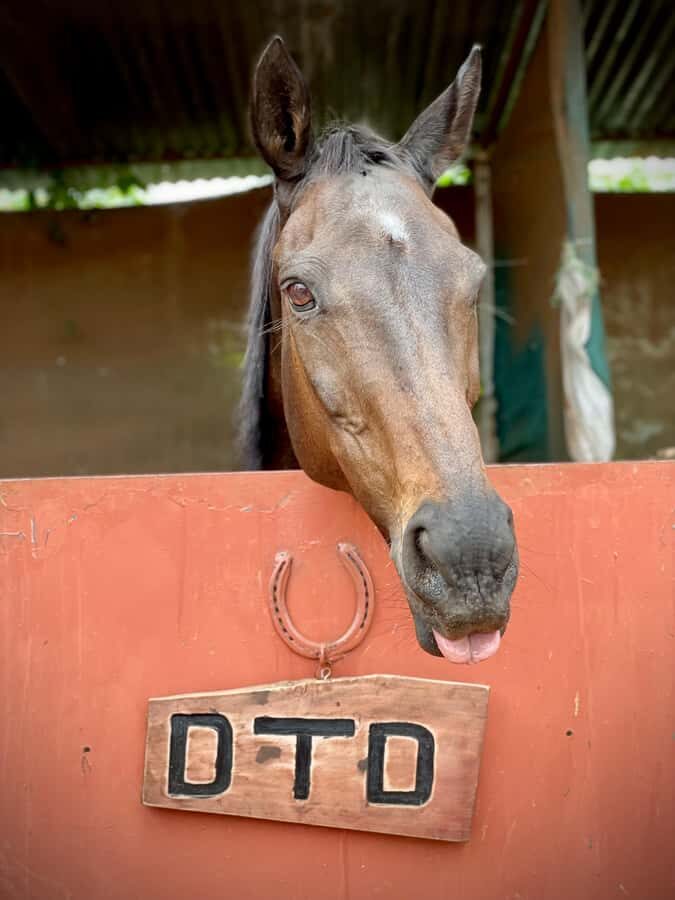
- Sigiria Gate start point: you meet the team at Sigiria, not another entrance, so double-check your location in Google Maps
- Wildlife on the trail: you may spot bushbucks, duikers, genet cats, civets, bush babies, porcupines, Sykes monkeys, squirrels, and hares
- Rivers and ponds close to the route: the scenery changes as you pass water and thick forest cover
- Guides who match your skill level: experienced riders can canter or gallop on designated paths, while beginners get extra help
- Helmet and real instruction: helmets are included, and the coaching feels hands-on rather than rushed
Karura Forest on horseback: why this 90-minute ride feels special
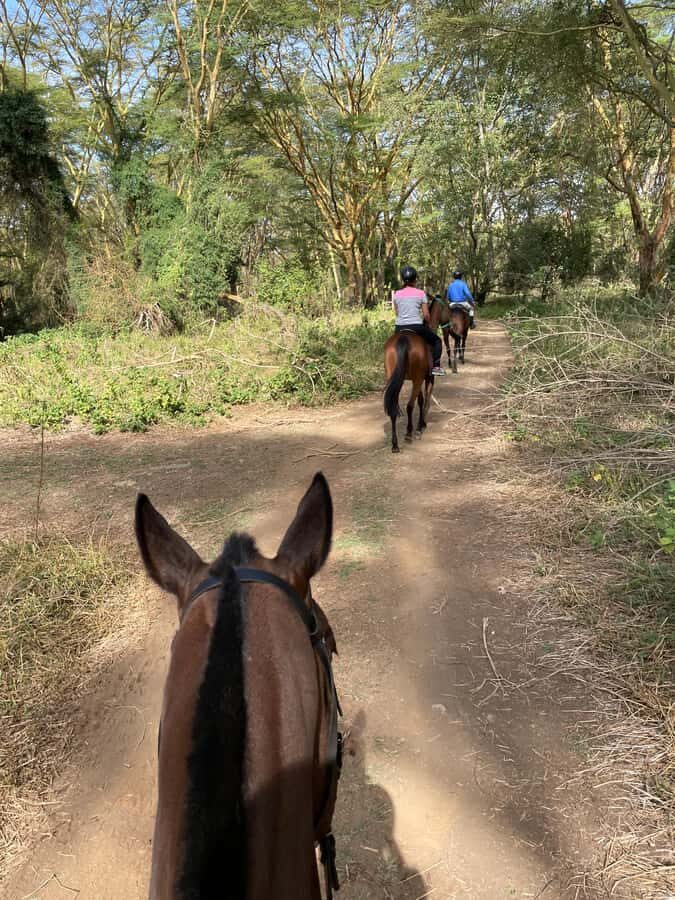
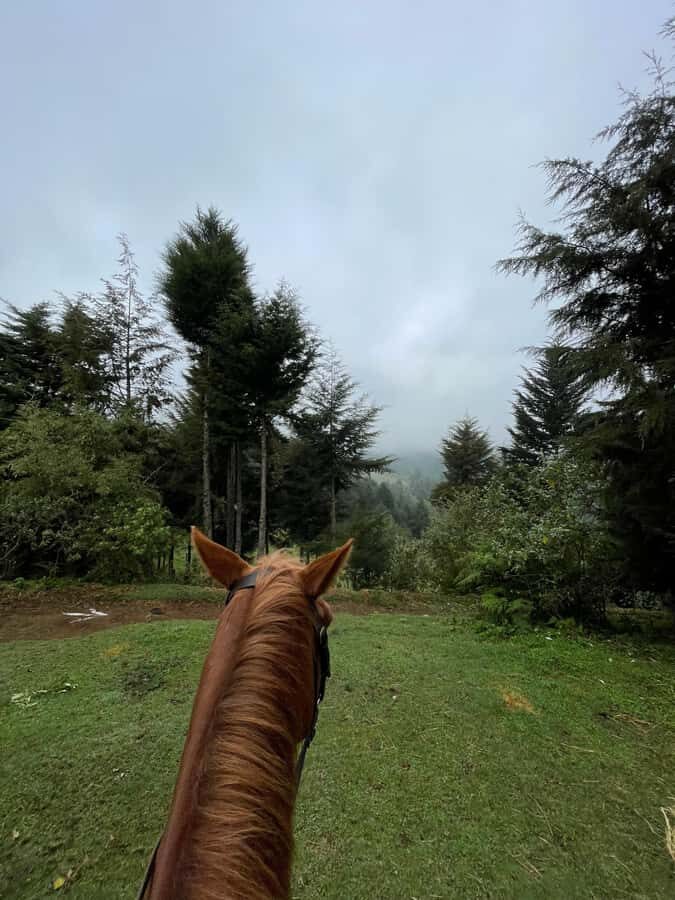
Karura Forest is one of those places you hear about in Nairobi, then forget to actually do. Seeing it from horseback changes the pace fast. The trail narrows, turns often, and stays lush under trees, so the ride feels like moving through a living tunnel of green rather than just passing scenery.
The best part is that you’re not stuck staring out a window. You’re in control of your speed, you pass quiet water along the way, and you have multiple opportunities to slow down when the forest offers wildlife signs. Even if you do not see a specific animal on your wish list, the forest still delivers that steady, calming feeling.
You also get the practical side covered. Helmets are included, and a guide is with you the whole time. That matters because this is not a theme-park ride. It’s real riding on forest paths, which means attention and good guidance are part of the value.
A few more Nairobi tours and experiences worth a look
Finding the right gate: Sigiria is where the horses wait
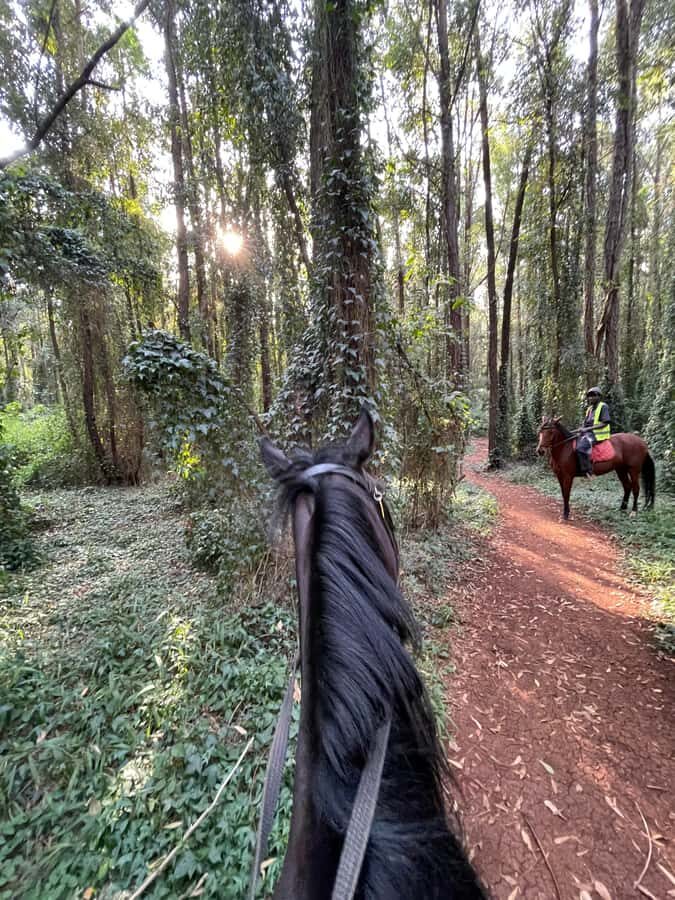
Your tour meets at Sigiria Gate inside Karura Forest. The forest has multiple gates, and this is not the kind of detail you want to wing. When you arrive, look for the horses and the guide team waiting at Sigiria.
If you’re using a map, search for Sigiria – Karura Forest. The exact meeting point is key because the stables and guides are organized around that entrance. Show up early enough to park, check in, and still feel relaxed before you meet your horse.
Quick route tip
If you’re traveling from central Nairobi, plan for normal city traffic. Nothing ruins a calm start like arriving stressed and rushed. Build in a buffer so you can take a breath at the gate and get fitted properly.
Getting to know your horse: the pre-ride rhythm
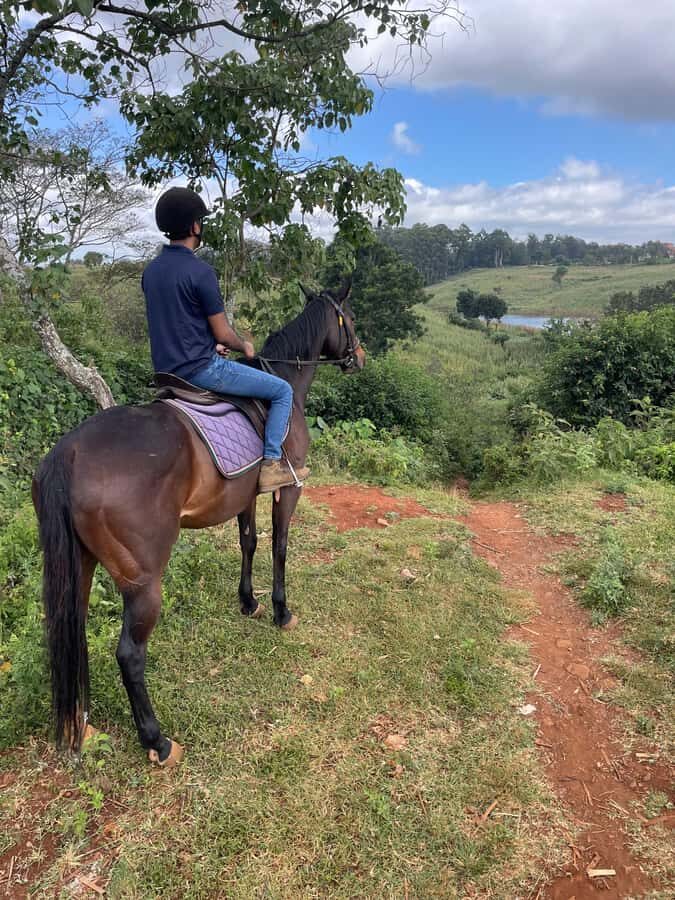
At the gate, you meet your guide and spend a short moment getting familiar with your horse before you set off. The tour includes a helmet, which you’ll want to adjust snugly. A good fit helps you focus on riding and not on gear shifting during turns.
This is also where your skill level matters. If you’re experienced, the guide can point you toward designated parts of the route where you may be able to canter or gallop. If you’re new to riding, you’ll get added support, including times when the guide holds the horse so you can stay balanced and learn without panic.
This setup is one reason the experience works for beginners. Instead of dumping you onto a path and hoping for the best, the instruction is meant to reduce stress and build confidence.
The ride plan: what happens during the 1.5 hours in the forest
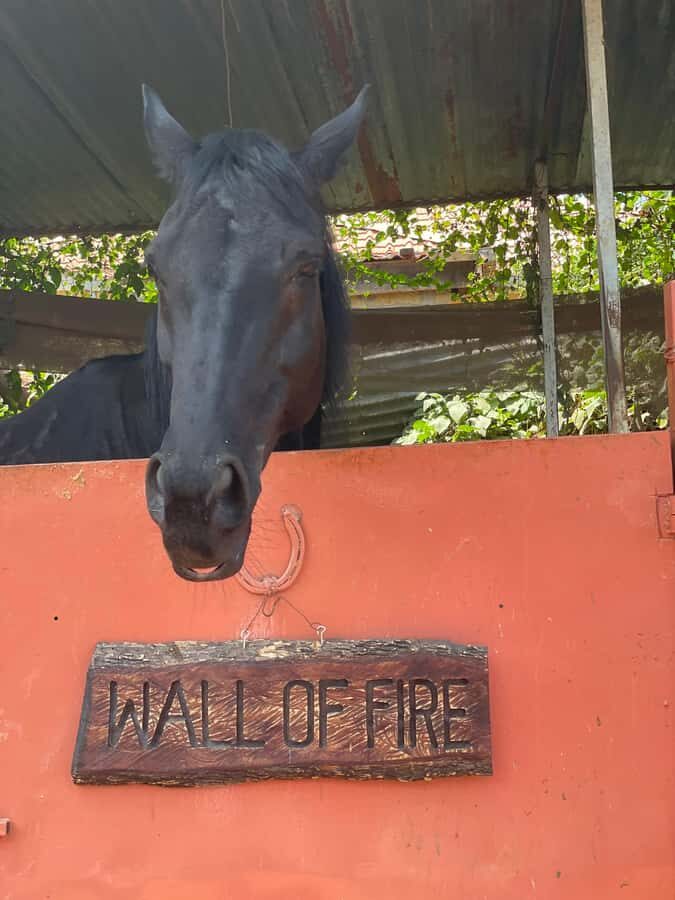
The ride itself runs about 1.5 hours, then you return to Sigiria Gate to finish. There’s no long bus transfer described here, so the time goes straight into riding and seeing the forest from horseback.


What you’ll likely pass
As you ride, you’re moving through Karura’s interior with chances to pass:
- rivers and ponds along or near the route
- dense sections of forest with narrow trail stretches
- areas where animals may be present and visible from your position on the horse
The wildlife odds you should actually care about
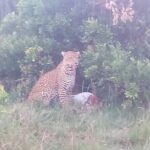
This tour is built for the chance to see wildlife, not guaranteed wildlife viewing. The list includes bushbucks, duikers, genet cats, civets, bush babies, porcupines, Sykes’ monkeys, squirrels, and hares. You might also notice animal movement in the canopy even when you don’t get a clear sighting.
A key point: your guide can help you interpret what you’re seeing. The forest is thick, and animal sightings can be quick. The value is not just spotting something, but doing it safely and calmly while you stay on your horse.
Beginner-friendly riding: how you stay safe without killing the fun
If you’re new to horses, this ride can work well because the team adapts to you. When you’re inexperienced, the guide can hold the horse so you don’t have to manage every detail on your own. That takes the edge off the most difficult part of beginner riding: staying steady through turning and uneven ground.
You can also expect a relaxed pace. One rider experience highlighted how guides stayed close and patient, walking alongside at times so first-timers felt comfortable. Another rider emphasized that the whole ride can feel unhurried and calm, even when the forest trails are narrow and green.
And yes, you should bring long pants. That’s not just a comfort thing. Forest trails can brush your legs, and long pants help prevent irritation from branches and natural bumps.
If you’re intermediate or advanced
If you’re experienced, you may get canter or even gallop on designated paths. That’s important. It keeps the ride fun while staying controlled. You’re not guessing where speed is allowed, and the guide’s direction matters for safety on a narrow trail.
Scenic value: why rivers, ponds, and turns matter more than you think
It’s easy to think horseback riding is just transportation from point A to B. Here, the trail design and water features make a difference.
Passing rivers and ponds changes the way light hits the trail. The forest also opens up visually in short stretches, giving you brief moments to breathe and look around. Then it closes back into dense cover with turns that keep you engaged. The result is a ride that feels like a sequence of small scenes rather than a single long straight line.
One extra practical benefit: water areas tend to be more active zones for wildlife movement. That doesn’t guarantee sightings, but it increases the odds you’ll notice animal behavior while you ride.
Wildlife without rushing: how close you can get
The tour includes an opportunity to approach animals, but the guiding principle is calm movement. You’re on a horse, moving carefully through a living space. So you should not expect a forced, nose-to-tail animal show.
Instead, think of it as: you might see animals on or near the trail, and your guide can position you so you get a look without spooking the area. That’s also why helmets, long pants, and guide direction matter. Safety isn’t separate from wildlife viewing; it’s part of making it possible.
If you get lucky, monkey sightings are a real possibility. Several ride experiences noted seeing monkeys in the forest. Even if the monkeys are just calling or moving through trees, the sound and motion are part of the Karura feeling.
Money and value: the $90 tour price plus park fees
The listed price is $90 per person for about 90 minutes total. That includes:
- helmet
- professional guide
- scenic views
- opportunity to approach animals
Not included is the forest entry ticket: 100–400 KSH depending on your status, with citizens listed at 100 KSH.
Here’s the practical mindset I recommend: treat the $90 as the riding service plus guide and safety gear, then expect additional park-related costs at the gate. One important real-world note from an actual riding experience: you may also be asked for entry connected to the horse and guide.
So if you want zero surprises, bring enough KSH to cover the ticket and any added entry requests that come up on-site.
Is it good value?
For Nairobi, a guided horseback ride through a forest like Karura is not a casual activity. The value is strongest when you want:
- a calmer pace than walking
- guidance that helps beginners feel safe
- the chance of wildlife sightings without needing to be a wildlife expert
If you already love riding and want maximum speed, you might still enjoy this, but be aware the forest is not a race track. It’s about controlled riding, looking around, and staying relaxed.
What to bring and what to do before you arrive
You don’t need much, but you do need a few basics.
Bring:
- long pants
- ID
The ID requirement is specifically called out. Don’t count on being able to pay and ride without it, especially if the gate process checks details.
Clothing tip
If you can, wear long sleeves too. The forest path can be grown and natural, so extra coverage helps with comfort as branches brush past.
Weather reality check
A ride was still possible when it was raining earlier in the day, with the guide confirming you could go ahead and ride. You should still expect that conditions can affect the trail feel. Wear clothing that won’t freeze you, and keep your expectations realistic if weather makes footing slick.
Who should book this horseback ride from Nairobi
This tour fits best if you want a guided, scenic horseback experience close to Nairobi, with wildlife chances and a clear plan for riders of different comfort levels.
You’ll likely enjoy it if:
- you’re a beginner and want patient instruction
- you want a peaceful ride rather than a high-adrenaline safari
- you like forests, animals, and quiet time outdoors
- you’d rather do it your way, at your own pace, on horseback
You might want to think twice if:
- you want guaranteed wildlife sightings (this is chance-based, and the forest is thick)
- you dislike paying extra on arrival for park entry
- you’re expecting a ride that feels like a straight, fast trail the whole time
Should you book the Nairobi Karura Forest horseback tour?
If you’re deciding between a basic nature walk and something more playful, I’d lean toward this ride. The combination is hard to beat: helmeted safety, real guides, and a forest trail with water and animal odds. Even better, the team adapts to your riding level, so beginners are not left to fend for themselves.
Just go in with your head screwed on about costs. The $90 covers the riding experience, and the forest entry fees come separately at the gate, with possible additional entry costs tied to the horse and guide. If you plan for that, you’ll have a smoother start and a happier finish.
Finally, if you’re returning to Karura on foot a bunch of times, this is a different angle on the same forest. And if you want a reason to come back with a friend or a family member, this is one of the easier Nairobi outdoor activities to share.
FAQ
FAQ
How long is the horseback riding tour in Karura Forest?
The duration is 90 minutes, and the horse riding time is about 1.5 hours.
Where do we meet for the tour?
You meet at Sigiria Gate in Karura Forest. It’s important to be at Sigiria because the forest has multiple gates.
What’s included in the price?
The tour includes a helmet, a professional guide, scenic views, and the opportunity to approach animals.
Do I have to pay a forest entry fee?
Yes. Forest entry tickets are not included and cost 100–400 KSH depending on your status (citizens are listed at 100 KSH).
Do I need to bring ID?
Yes. Bring ID.
What should I wear to ride safely?
Bring long pants. This helps with comfort on a natural forest trail.
Can beginners ride?
Yes. If you are inexperienced, the guide can hold the horse for you during parts of the ride.
Can experienced riders canter or gallop?
Yes, if you are experienced you may canter or gallop on designated paths of the route.
What language is the tour guide?
The live tour guide is in English.
Is there free cancellation?
Yes. You can cancel up to 24 hours in advance for a full refund.