REVIEW · NAIROBI
Historical City Walk Tour in Nairobi
Book on Viator →Operated by Michoore Tours & Travel · Bookable on Viator
Nairobi in two hours is quick and smart. This private walk tour strings together five classic Central Business District stops, so you get a sense of how Nairobi grew from planning and trade to faith and views. You’ll spend time in Jeevanjee Gardens and the City Market, plus a look at landmarks tied to Kenya’s independence era.
What I like most is the way the private guide turns small details into a clear picture of the city. In feedback I’ve seen, guides like Michael and Alex are praised for fitting a lot of Nairobi history into the short 2 hours without making it feel rushed.
One consideration: you’ll get free admission at some stops, but tickets at Nairobi Gallery and KICC aren’t included, so budget a little extra if you want to go up and see the rooftop views.
In This Review
- Key Highlights for Your Nairobi Walk
- Getting Oriented Fast: Why This 2-Hour Route Works
- Jeevanjee Gardens: The Park Donated to Nairobi’s People
- City Market Near the Old Rails: Shopping With Real Neighborhood Context
- Jamia Mosque in the Central Business District: Faith and Community Presence
- Nairobi Gallery, Kenya Zero, and Jomo Kenyatta’s Resting Place
- KICC Tower: 360-Degree Views and Independence-Era Architecture
- Price and Value at $29: What You’re Paying For (and What You Aren’t)
- How to Make the Most of the Walk (Practical Tips)
- Who Should Book This Nairobi City Walk Tour
- Should You Book It? My Take
- FAQ
- How long is the Historical City Walk Tour in Nairobi?
- What does the $29 price include?
- Which admissions are free, and which tickets cost extra?
- Is this a private tour?
- What is the cancellation policy?
- What happens if weather is poor?
Key Highlights for Your Nairobi Walk

- Jeevanjee Gardens: a public park with a trust story tied to Nairobi’s people
- City Market (1930s building): shopping with a rail-era history backdrop
- Jamia Mosque area: a major Islamic center in East and Central Africa
- Nairobi Gallery and Kenya Zero: a civil service building turned museum and national monument
- KICC rooftop views: 360-degree perspectives from a tower linked to post-independence Nairobi
Getting Oriented Fast: Why This 2-Hour Route Works

If you want a Nairobi introduction that actually helps you plan the rest of your trip, this is a solid choice. The walking pace is built for a short visit: enough time to see key landmarks, but not so long that you’re exhausted before you even get your bearings. Because it’s a private tour, your guide can slow down for the parts you care about and speed up when you don’t.
The route also makes practical sense. You start with a green pause, move into the shopping-and-life energy of City Market, then shift into major religious and civic landmarks. That mix matters. Nairobi can feel like a city of separate worlds, and this walk connects them into one timeline you can remember.
At $29 per person for about 2 hours, this isn’t a luxury experience, but it’s good value if you’re the type of traveler who prefers learning the city’s structure early. You’ll also get a bottle of water, which sounds small, but it helps when you’re walking in warm conditions.
You can also read our reviews of more walking tours in Nairobi



Jeevanjee Gardens: The Park Donated to Nairobi’s People

Your first stop is Jeevanjee Gardens, a park that has a very specific meaning in Nairobi. This is a resting area that was donated to the people of Nairobi and held in trust. The story traces back to A.M. Jeevanjee, an Asian-born entrepreneur in Kenya, and the park is described as the only one in the city directly owned by the public in this way.
What I find useful about starting here is how it changes your pace. Instead of jumping straight into buildings and streets, you begin with a calmer space. It’s easier to notice details, ask questions, and understand what the tour is aiming for: Nairobi as a place with decisions, donations, and public purpose—not just traffic and skyscrapers.
Admission is free, and the time on site is about 35 minutes, so you’re not just passing by. Try using this time to ask your guide what the trust story means in everyday life, not just as a fact. Even without a lot of formal signage, this stop can be the emotional anchor of the walk.
City Market Near the Old Rails: Shopping With Real Neighborhood Context
Next up is City Market, housed in a monumental building built in 1930 close to the railway line that once ran along what is now Loita Street. City Market used to be Nairobi’s main retail outlet for cultural souvenirs, fruits, and vegetables. Later, the railway line was relocated in the 1940s, which helped shift the role of the market building.
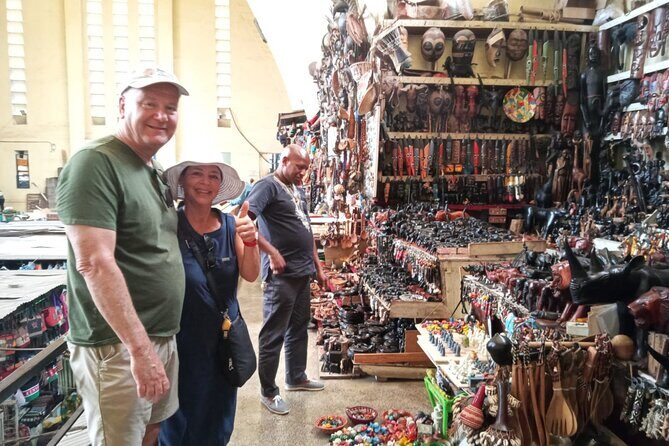
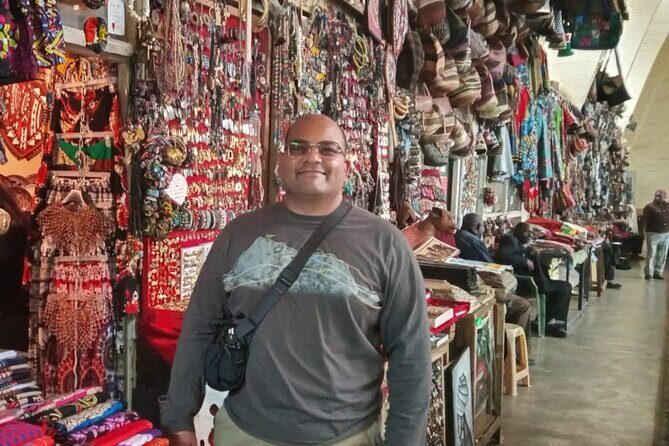
Why this stop works is that you’re not only looking. You’re in a place where shopping and street culture overlap. You can browse for cultural souvenirs, clothing, and fresh food, and that matters because it’s part of how Nairobi still functions day to day.
The practical timing helps too. You’ll have about 25 minutes here. That’s usually enough to find one or two items you genuinely want, without turning the tour into an all-out market marathon.
Admission is free, but you should bring a little extra cash/card readiness for purchases. The tour doesn’t include souvenir photo costs either, and those can add up if you plan to buy a lot of branded keepsakes.
Jamia Mosque in the Central Business District: Faith and Community Presence
Then the route takes you to Jamia Mosque, founded by Syed Maulana Abdullah Shah in 1902 in Nairobi’s Central Business District. The mosque is described as an important center of Islamic practice in East and Central Africa, and it later became the center of Muslim religious organization through the pre-independence and independent years.
Construction is dated between 1925 and 1933, which is a useful detail because it signals how long institutions like this shaped Nairobi’s identity as the city developed.
A walking tour is one thing; visiting an active religious site is another. Dress and behavior matter. You’ll want to be respectful, move quietly where appropriate, and follow your guide’s direction. Even if you don’t go inside, being there in the central district gives you a better sense of Nairobi’s mix of everyday life and long-standing community institutions.
Nairobi Gallery, Kenya Zero, and Jomo Kenyatta’s Resting Place

After the mosque area, you’ll visit the Nairobi Gallery, built in 1913. The building previously served as a civil service structure, often referred to with the playful idea of recording births, marriages, and deaths. Today it functions as a museum and a national monument.
Two reasons this stop can be more than just a quick photo moment:
- It’s one of those places where you can see how record-keeping and governance shaped urban life.
- It’s identified as Kenya Zero, the point where distances are calculated from.
That Kenya Zero detail is practical. It helps you understand why Nairobi feels like a reference point on the map. When you leave, you’ll likely notice distances elsewhere on your trip more clearly, because your brain already has an origin point.
You’ll also pass by the Right Honourable Mzee Jomo Kenyatta resting place. This is one of those moments where the tour shifts from buildings to national story. Even if you only glimpse it briefly, it’s a reminder that many Nairobi landmarks are connected to independence-era identity, not only colonial-era infrastructure.
Time here is about 20 minutes. Admission for Nairobi Gallery is not included, so if you want museum time, keep that in mind. If you’re trying to stay efficient, you can still get a lot from the exterior and guided context, but your experience will depend on how much you choose to see inside.
You can also read our reviews of more city tours in Nairobi




KICC Tower: 360-Degree Views and Independence-Era Architecture

The final main stop is the Kenyatta International Conference Center (KICC), locally called KICC. This building was commissioned by Mzee Jomo Kenyatta in 1967, and it’s described as one of the first buildings constructed after independence. It also features a statue related to the first President of Kenya.
The big draw for many people is the tower. The KICC is described as offering 360-degree views of Nairobi from the tower, with a rooftop vantage point. If the weather is clear, this is where the city becomes easier to understand from above. You can connect the neighborhoods you’ve walked past with broader patterns: how the center sits, how roads run, and where major landmarks cluster.
Time on this stop is about 40 minutes, which is generous for taking photos, hearing historical context, and—if you choose—to go up for views. The admission ticket for KICC is not included, so consider that as part of your budgeting.
One more note: the experience requires good weather. That matters because rooftop and skyline viewing are exactly where clouds, rain, or haze can reduce what you’ll actually see.
Price and Value at $29: What You’re Paying For (and What You Aren’t)
At $29 per person for a private 2-hour city walk, the value is mostly in the guide time. You’re paying for someone to translate Nairobi into a story: why these buildings matter, what the donation and rail history mean, and how religious and civic landmarks sit side by side.
You also get a bottle of water, which is a small but thoughtful inclusion. And the guide experience is the part that seems to earn the strongest praise. In feedback, guides were highlighted for turning the tour into a quick crash course—meaning you leave with more context than you would by wandering on your own.
What you’re not paying for is also important. Nairobi Gallery and KICC admissions are not included, and souvenir photos can be purchased separately. So if those are must-dos, you’ll want to factor in extra cost.
The timing also plays into value. The tour is designed to fit into a short window, ideal when you’re landing with limited days or when you want to understand Nairobi before choosing other activities.
How to Make the Most of the Walk (Practical Tips)

This is a walking tour, so your comfort matters. Wear shoes you can walk in for the full 2 hours, and plan for movement between Central Business District landmarks. Since the experience depends on good weather, also bring a light layer or a small umbrella just in case your day gets iffy.
If you’re the type who likes taking notes, this tour is a good one to do early. The stop sequence gives you a mental map of Nairobi’s themes: public spaces and trust (Jeevanjee Gardens), commerce and supply chains (City Market and the rail context), community institutions (Jamia Mosque), then official identity and measurements (Nairobi Gallery and Kenya Zero), and finally a modern skyline and independence-era symbolism (KICC).
For shopping at City Market, decide ahead of time what category you want. If you browse for everything, you can lose time that would be better spent enjoying the guided context. This is also a good place to pick up one clothing item or one or two souvenirs that feel meaningful rather than random.
Who Should Book This Nairobi City Walk Tour
This tour fits best if you want a guided, no-fuss orientation. I’d especially recommend it if:
- You’re visiting Nairobi for the first time and want a quick sense of how the city works historically and socially.
- You like seeing a mix of public, religious, and civic landmarks in one route.
- You prefer learning from a guide rather than jumping between attractions alone.
- You’re short on time and want a structured path through the city center.
It’s also a smart match for travelers who enjoy photos, because there are obvious visual anchors—City Market, Nairobi Gallery, and the KICC tower views. And it’s private, so you won’t have strangers setting your pace.
Should You Book It? My Take
Yes, I’d book it if you want an efficient Nairobi primer with real context. The combination of Jeevanjee Gardens, City Market, Jamia Mosque, Nairobi Gallery (Kenya Zero), and KICC gives you a full-city feel without turning your day into an all-day tour.
You should book with a small caution: plan for extra admission costs at Nairobi Gallery and KICC, and keep an eye on the weather since rooftop viewing depends on it. If you’re ready for that, this is a strong way to start your Nairobi days with better understanding and a cleaner route plan for the rest of your trip.
FAQ
How long is the Historical City Walk Tour in Nairobi?
It runs for about 2 hours.
What does the $29 price include?
The tour includes a professional guide and a bottle of water.
Which admissions are free, and which tickets cost extra?
Admission is free for Jeevanjee Gardens and City Market. Admission for Nairobi Gallery and the Kenyatta International Conference Center (KICC) is not included.
Is this a private tour?
Yes. It’s a private tour/activity, and only your group participates.
What is the cancellation policy?
You can cancel for a full refund if you cancel up to 24 hours in advance. If you cancel less than 24 hours before the start time, you won’t get a refund.
What happens if weather is poor?
The experience requires good weather. If it’s canceled due to poor weather, you’ll be offered a different date or a full refund.