REVIEW · NAIROBI
Nairobi Down Town & Walking City Tour
Book on GetYourGuide →Operated by MICHOORE TOURS & TRAVEL · Bookable on GetYourGuide
The KICC tower view is a strong reason to go. This 3-hour Nairobi downtown walking tour strings together key CBD landmarks with a private guide, so you’re not just passing buildings—you’re learning what they mean. I like that the pace works well for first-timers, and you get a clear sense of Nairobi’s public spaces and religious heritage.
Two things I especially like: Jeevanjee Gardens feels like a real break in the middle of the city, and City Market gives you a hands-on look at everyday shopping and crafts. For the views, the KICC tower is the kind of payoff you can’t easily recreate on your own.
One consideration: you’ll likely need extra cash for the KICC entrance fee (it’s not included), so budget a little beyond the $10 tour price.
In This Review
- Key things to know before you start
- Nairobi downtown on foot: what this tour really delivers
- Jeevanjee Gardens: a donated public refuge in the CBD
- City Market at Koinange Street: shopping with context
- Biashara Street and Moi Avenue: streets that explain Nairobi’s CBD
- Jamia Mosque on Banda Street: a historic landmark in use today
- Quick passes that add up: library, archives, and finance buildings
- KICC tower at Kenyatta International Conference Centre: your 360° Nairobi moment
- Culture and the Bomas of Kenya question
- Price and value: how $10 turns into a real day plan
- Pickup, timing, and how to make the most of 3 hours
- Who this tour is best for (and who should skip it)
- Should you book this Nairobi Downtown & Walking City Tour?
- FAQ
- FAQ
- Is the Nairobi Downtown & Walking City Tour a private tour?
- How long is the tour?
- What does the tour price include?
- Do I need to pay extra for the KICC tower?
- Which major stops should I expect?
- What language is the guide?
- Is food included in the tour?
- Can I cancel?
Key things to know before you start

- Private guide, downtown pace: You move as a group with a guide who can explain what you’re seeing.
- Jeevanjee Gardens’ public story: A donated private property turned into a longtime city stop.
- City Market in a 1930s-style landmark: Lots of goods, plus context for what you’re looking at.
- Jamia Mosque as a historic CBD landmark: Architectural heritage right in the center of Nairobi.
- KICC tower for 360° Nairobi aerial views: The rooftop perspective is the big “wow” moment.
- Some cultural dancing may depend on your exact tour format: Highlights mention cultural experiences, so confirm what’s included on your date.
Nairobi downtown on foot: what this tour really delivers

If you want Nairobi’s center of gravity—religion, commerce, public life, and skyline views—this is an efficient way to get it in one private walking tour. You’ll be in the CBD zone where landmarks are close enough to connect by foot, and where Nairobi’s mix of local and international influence shows up fast.
I like that this isn’t just photos and place names. The route is built around spaces people actually use: gardens for breaks, markets for daily shopping, and major civic buildings where you can step into the story behind the city.
Also, the tour is only 3 hours, which is great if you’re fighting jet lag or just don’t want a half-day commitment. On a tight schedule, this kind of “high density” city intro can save you from doing extra trips later.
You can also read our reviews of more walking tours in Nairobi



Jeevanjee Gardens: a donated public refuge in the CBD

Your walk starts with Jeevanjee Gardens, a special Nairobi stop because it’s not just another patch of green. It’s described as the first and only private property donated to the public by Abudulahi Jeevanjee, and it plays a big role in daily city life—especially during lunch hour breaks.
Here’s what I think makes it valuable for you: when you enter a city and immediately seek a garden or square where locals rest, you get a better feel for rhythm than you do from monuments alone. You’re seeing Nairobi as a working city, not only a sightseeing destination.
The details are part of the charm. The gardens also function as a public smoking zone, since smoking elsewhere is illegal. That’s the kind of practical “how the city works” information that turns a quick stop into something memorable.
City Market at Koinange Street: shopping with context

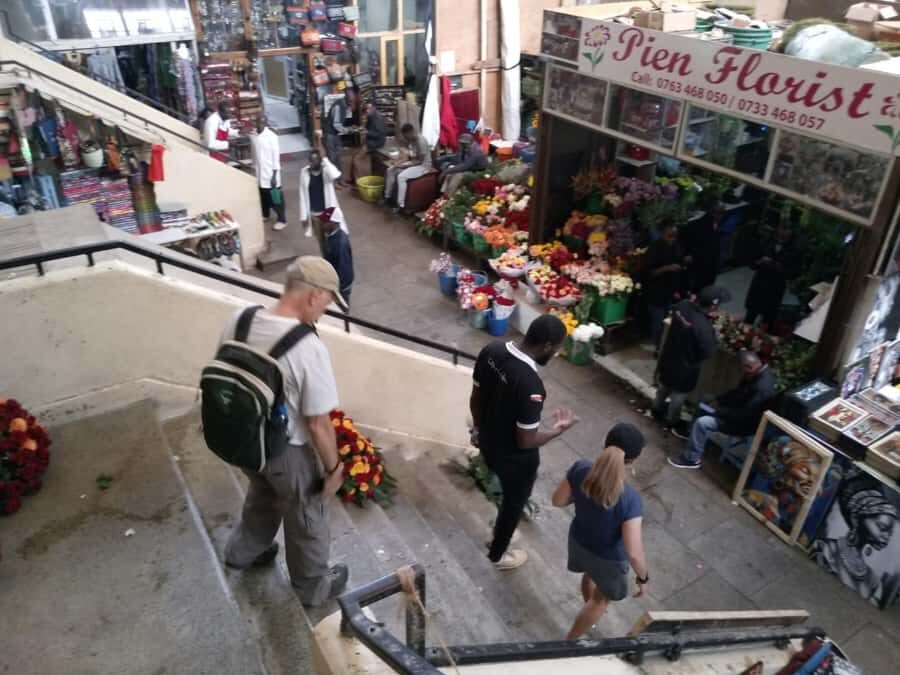
Next is City Market on Koinange Street, in a monumental building from the 1930s. The tour focuses on the variety of stalls and products—masks, paintings, garments—and the different sections for meat selling.
This stop is useful even if you don’t plan to buy. Markets are where culture shows up in plain sight: who sells what, how goods are grouped, and what travelers and locals both want to take home. With a guide, you’ll get more meaning from what you see than you would scrolling photos on your phone.
What to watch for: this is a commercial area, so expect sales energy and lots of movement. If you’re hoping for a quiet stroll, go into it knowing City Market is about activity. Use it as a cultural orientation point, and set your expectations like you would in any busy market.
Biashara Street and Moi Avenue: streets that explain Nairobi’s CBD
On the way between major landmarks, you pass key downtown corridors like Biashara Street and Moi Avenue. These streets matter because they help you understand Nairobi’s layout: this is a city where commerce, institutions, and public life overlap in a compact center.
I like this portion because it’s not wasted time. Even short passing segments help you get oriented—where landmark clusters sit and how you might move around the CBD later.
If you’re the type who wants a city intro that doesn’t feel rushed, these “pass by” sections are often where you notice the city’s character. Look for building styles, signage, and the flow of pedestrians. Your guide can point out what to focus on.
Jamia Mosque on Banda Street: a historic landmark in use today
One of the strongest heritage stops is Jamia Mosque on Banda Street in Nairobi’s Central Business District. The tour treats it as both a landmark and a major center of Islamic practice for East and Central Africa.
It’s also described with real historical specifics: founded by Syed Maulana Abdullah Shah in 1902, and constructed between 1925 and 1933. That timeline helps you see the mosque as more than architecture—it’s a living institution with roots in the region’s social history.
Why this matters for your visit: Nairobi’s CBD is a mix of faiths and communities, and a mosque at the heart of the city tells you something about how long those communities have shaped the urban core. With a guide, you’re more likely to notice features and understand why this building is still significant.
Practical note: be respectful with clothing and behavior. Even on a guided walk, religious sites are not sightseeing props. If the timing is right, you’ll get the kind of cultural clarity that makes the city feel real.
You can also read our reviews of more city tours in Nairobi




Quick passes that add up: library, archives, and finance buildings

As you continue, you’ll pass several notable institutional buildings, including McMillan Memorial Library, Bank of India, and the Kenya National Archive. These stops are short on the clock, but they add an important layer: Nairobi’s modern identity is tied to education, record-keeping, and national institutions—not only street life and markets.
I like that you don’t get stuck for hours in one place. With passing stops, you get enough to connect the dots: this is the civic spine of the city, and it sits close to where people shop and worship.
Because you’re not given long “stand and read” time, your guide’s explanations matter here. Pay attention to what they highlight—years, roles, and why these buildings exist where they do.
KICC tower at Kenyatta International Conference Centre: your 360° Nairobi moment

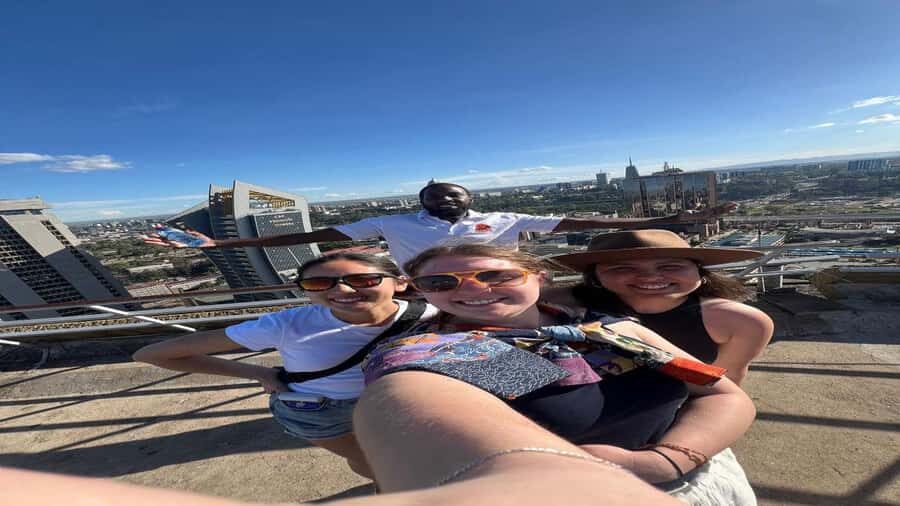
The big payoff comes at the Kenyatta International Conference Centre (KICC) on Harambee Avenue. The tour is built around getting you rooftop views, with a chance to see Nairobi aerially in 360°.
This is one of those experiences where the overhead perspective changes how you understand everything you saw on the ground. Streets become patterns. Districts become readable. You start to see where the CBD sits in relation to wider Nairobi.
The KICC area is also described as iconic for its history and symbolism, including a statue of Kenya’s first president and the fact that the building was among the first constructed after independence. That’s a meaningful connection for you: it ties modern government and international meeting culture to the early post-independence era.
One key planning point: the KICC entrance fee is not included and is listed at $5. If you want the tower view, count that into your budget from the start so you’re not making last-minute decisions.
Time check: the KICC stop is listed for around 30 minutes, so you should use that time efficiently—arrive ready to look around, not rummage for your phone first.
Culture and the Bomas of Kenya question

The highlights mention cultural experiences like Bomas of Kenya, cultural dances, and home-related stades. However, the downtown-focused route centers on gardens, markets, mosques, and the KICC tower.
Here’s the best way to handle this as a traveler: treat cultural dancing as a “confirm” item. Ask your guide (or the operator, MICHOORE TOURS & TRAVEL) whether Bomas is actually included in your specific tour format on your date, or whether it’s part of another matching experience.
That way, you’ll protect your expectations and avoid the common frustration of arriving for one thing and getting another.
Price and value: how $10 turns into a real day plan
At $10 per person for about 3 hours, the value is strongest if you care about two things: interpretation and efficiency. You’re not paying for a private driver for hours around town; you’re paying for a guide to connect Nairobi’s major landmarks into a coherent story.
Included items make it feel fair:
- Professional guide
- Mineral water
- Pickup and drop-off
You’ll also be in a private group, meaning it’s just your group. That matters because it keeps the conversation flowing and helps the guide tailor the pace.
The main cost you need to add is the KICC entrance fee ($5). So for most people who want the full tower experience, you’re likely looking at about $15 total for the core sightseeing highlights.
If you’re traveling solo or as a small group, a per-person price like this can be a smart “starter tour” that reduces the guesswork for the rest of your Nairobi days.
Pickup, timing, and how to make the most of 3 hours
Pickup is available with included options such as hotels or vocational homes, and there are also drop-off locations at Nairobi and Jeevanjee Gardens. Confirmation is received at booking, and the tour is described as English-language with a live guide.
Because the tour is only 3 hours, you’ll want to show up ready to walk. Wear comfortable shoes and keep your time buffer tight, especially if you’re coming from a hotel pickup.
Also, plan your expectations around how the stops are weighted:
- City Market gets around 20 minutes
- KICC gets around 30 minutes
- Several landmarks are pass-by segments
That structure usually works well for first-time orientation. It’s less ideal if you want long, slow, museum-style time in one place.
Who this tour is best for (and who should skip it)
This tour fits you if you want:
- A first taste of Nairobi’s CBD without multiple separate tickets
- A walking route explained by a guide
- The KICC tower 360° view as your main visual souvenir
- A mix of public spaces (gardens), everyday life (markets), and major heritage landmarks (mosque and institutional sites)
You might want to skip or consider a different format if:
- You want a deep, museum-level dive at one single site
- You’re primarily chasing cultural dance performances and nothing else
- You don’t plan to pay the extra KICC entrance fee, because the tower is the signature feature
Should you book this Nairobi Downtown & Walking City Tour?
I think this is a strong choice if you’re trying to get oriented fast and you want a skyline moment at the end. The private guide setup, the included water and pickup, and the blend of market life plus heritage landmarks all point to good value for a short visit.
Book it if:
- You want a practical CBD walk with context
- You care about the KICC 360° view enough to budget the extra $5
- You’d rather walk with guidance than figure out routes and history on your own
Pass or compare options if:
- Your main goal is cultural dancing at Bomas and you need it guaranteed
- You need long time at fewer stops
FAQ
FAQ
Is the Nairobi Downtown & Walking City Tour a private tour?
Yes. It’s described as a private group, meaning only your group participates.
How long is the tour?
The tour is listed as valid for 3 hours.
What does the tour price include?
The tour includes a professional guide, mineral water, and pickup and drop-off.
Do I need to pay extra for the KICC tower?
Yes. The KICC entrance fee is $5 and is listed as not included.
Which major stops should I expect?
You’ll pass or visit places including Jeevanjee Gardens, City Market, Jamia Mosque, and you’ll stop at the Kenyatta International Conference Centre for views.
What language is the guide?
The live tour guide is listed as English.
Is food included in the tour?
No. Food and drinks are listed as not included.
Can I cancel?
Free cancellation is listed as available up to 24 hours in advance for a full refund.