REVIEW · NAIROBI
Nairobi 3 Museums and Bomas of Kenya day tour.
Book on Viator →Operated by Benson Kungu Jungleman · Bookable on Viator
Four stops, one fast Kenyan story. This Nairobi 3 Museums and Bomas of Kenya day tour is built for first-timers who want context fast, without bouncing around town. I especially liked having Benson Kungu as the English-speaking driver guide, because he kept the day moving and explained what I was looking at in a way that actually stuck. I also loved the smart mix of stops: the National Museum, the Railway Museum, the Karen Blixen Museum, and then the cultural performances at Bomas of Kenya.
The one thing to watch is that it’s a long day with no lunch included, so you’ll want to plan for food between stops (or keep snacks handy). Also, the itinerary includes a fixed window for the Bomas performances, so you’ll get less wiggle room than on a purely flexible self-guided plan.
In This Review
- Key highlights you should care about
- Why this Nairobi museums and Bomas tour works
- Private pickup and timing: 7–9 hours without the stress
- Nairobi National Museum: the human story, plus a snake park add-on
- The Railway Museum and the Lunatic Express in 1 hour
- Karen Blixen Museum: the Out of Africa connection that goes beyond the film
- Bomas of Kenya: traditional dances, acrobatics, and 40 ethnic groups
- Price and value: what $130 includes (and why it matters)
- The “little things” that make the day smoother
- Who this tour fits best
- Should you book this Nairobi museums and Bomas tour?
- FAQ
- What is included in the Nairobi 3 Museums and Bomas of Kenya day tour?
- How long is the tour?
- Do I need to buy museum tickets?
- Is lunch included?
- What time are the Bomas of Kenya performances?
- Is there an extra cost for the snake park?
Key highlights you should care about
- A private driver-guide experience with hotel pickup and dropoff, plus entrance tickets handled for you
- National Museum plus snake park access right next to it, with an easy walk on the museum grounds
- Railway Museum focused on the Lunatic Express and its 1895 British-built story
- Karen Blixen Museum at Karen near the Ngong hills, with a guided tour inside the historic farm house
- Bomas of Kenya performances based on traditional dances from Kenya’s ethnic groups, ending with high-energy acrobatics
- A schedule that works as one coherent day: history in the morning, culture in the afternoon
Why this Nairobi museums and Bomas tour works
This tour is made for people who land in Nairobi and immediately want answers. Not just facts, but the why behind them: where Kenya’s people and cultures came from, how the country was shaped by outside forces, and what life looked like in different periods.
What I like is the pacing. You’re not cramming five tiny stops. You’re doing three museums that each cover a major theme, then closing with Bomas of Kenya, where the culture becomes something you can see and hear on the spot. It’s a “get your bearings fast” kind of day.
You also get a guide-driver who can connect dots. In this case, Benson Kungu stands out in the reviews for being professional, friendly, and willing to explain what matters as you go. That matters in Nairobi, where museums can feel like a lot of rooms unless someone helps you read the story.
You can also read our reviews of more museum experiences in Nairobi


Private pickup and timing: 7–9 hours without the stress
The total day runs about 7 to 9 hours, and hotel pickup and dropoff are included. That sounds simple, but in Nairobi it’s the difference between relaxing and spending energy on logistics.
The Bomas portion runs on a clear schedule: performances begin at 14:30 and run until 16:30. So you’ll want the morning stops to go smoothly, and you’ll want to keep your group moving when it’s time to transition.
Also note the tour runs between 5:00 AM and 6:00 PM. That wide window helps if you want an early start, but the day still feels full. Plan on steady walking at museums, plus some waiting time as you shift between buildings.
Nairobi National Museum: the human story, plus a snake park add-on
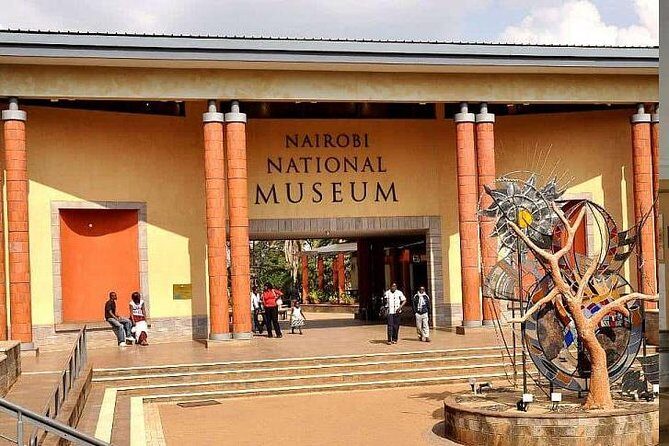
At the National Museum, you’re set for about 2 hours. This is a strong first stop because it gives you the big picture before you move into more specific stories.
Inside, you’ll see exhibits covering ethnology, paleontology, and archaeology, with thousands of historical pieces preserved there. There’s also material that helps you understand the evolution of man, local cultures and customs, and Kenya’s colonial and political history. In other words, it helps you answer: what came before, and what changed.
What’s practical here is that the museum grounds are described as well kept, with a pleasant walk as part of the experience. Museums in Nairobi can be hot and bright, so having some outdoor time that isn’t just standing around is a plus.
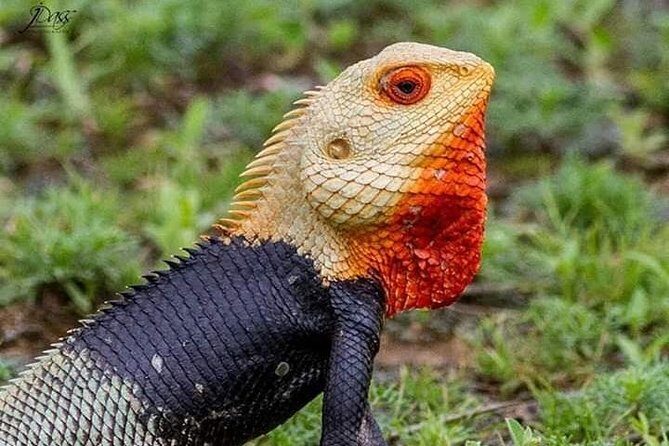
Then there’s the snake park, attached to the museum in a separate building. The entrance to the snake park is described as optional. If you’re curious about it, it’s easy to tack on during your National Museum time. If you’re not, you can focus on the main museum collections without feeling stuck.
Potential drawback: if you’re the kind of visitor who likes to read every label in detail, two hours may feel short. The National Museum is the kind of place where you could easily spend longer. On this tour, you’re getting a curated sweep, not a full academic marathon.
The Railway Museum and the Lunatic Express in 1 hour
Next is the Nairobi Railway Museum for about 1 hour, and it’s the kind of stop that often surprises people. It’s not just a room of model trains. It’s framed around Kenya’s rail past and the old railway system known as the Lunatic Express, built by the Imperial British East Africa company in 1895.
You’ll see remnants and artifacts housed in an older railway building, plus train models on display and photographs. There are also odd bits of history—like an engine seat used by visiting dignitaries (including Theodore Roosevelt) to take rifle shots from the front of the train at wildlife.
I like this museum because it shows how infrastructure can shape everyday life, travel, and even the way people thought about the land. It’s history with a physical, mechanical feel.
The tradeoff is the time. One hour means you’ll likely focus on the most important pieces rather than studying everything carefully. If railway history is your passion, you might wish you had more time here. But for most visitors, it’s a satisfying “taste with context,” especially because it sits between two other longer stops.
Karen Blixen Museum: the Out of Africa connection that goes beyond the film

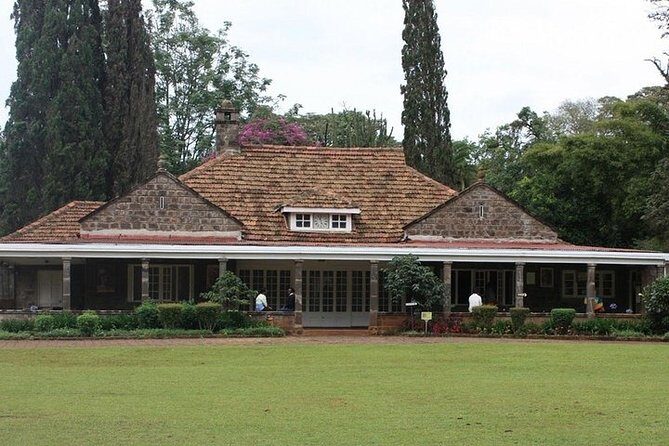
For many people, the Karen Blixen Museum is the emotional highlight. You get about 2 hours, and it’s located at the foot of the Ngong hills, in the area known as Karen.
This is the former home of writer Karen Blixen, also known as Isaak Diensen, made famous by Out of Africa. The film is part of the draw, but the museum experience is about the person behind the story and her life there as a pioneer coffee farmer.
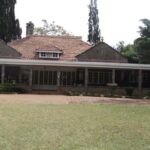
Expect to see period furniture, artifacts, and photographs from her time. The structure is important: the tour includes a guided visit around the original farm house, so you’re not only looking at displays—you’re walking through the setting.
If you’re a film fan, this stop gives you a useful reality check. Instead of only remembering scenes, you start connecting the movie to how people lived day to day: work, possessions, and the rhythm of farm life.
One consideration: if you’re not interested in literary history or coffee-farm life, it may feel slower than the Railway Museum. But even then, it’s still a memorable Nairobi-area perspective because of its setting and the way the farm house layout helps you picture the past.




Bomas of Kenya: traditional dances, acrobatics, and 40 ethnic groups
After the museums, the day shifts gears. Bomas of Kenya is the cultural center stop, and it’s scheduled in the afternoon for about 2 hours, lining up with the performance block that runs 14:30 to 16:30.
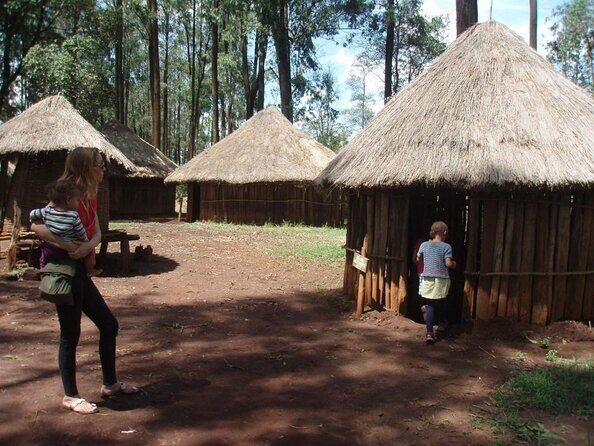
Here, a key idea is that Bomas is arranged as a traditional homestead concept, used to represent Kenya’s different ethnic groups. The program is based on traditional dances, and the performances build to a closing sequence with energetic acrobatics and tumbling.
What I find valuable is that this isn’t just “watch a show.” It’s structured as a cultural snapshot. You get multiple dances and styles in one sitting, which helps you understand how performance traditions can vary across communities in Kenya.
In a tight day, this stop also does a good job of giving you something memorable that isn’t a museum label. If you want a sense of Kenya’s living culture—something you can feel in your body as much as your brain—this is where it happens.
Possible drawback: shows depend on timing. If you get delayed earlier in the day, you could feel rushed at Bomas. The private transport helps, but this is still a fixed schedule segment.
Price and value: what $130 includes (and why it matters)
At $130 per person, this tour isn’t the cheapest way to see Nairobi. But it does include the most expensive part of a day like this: private transportation, hotel pickup and dropoff, and entrance tickets to all the attractions.
You also get a dedicated English-speaking driver guide, which is a real value-add. A museum ticket alone is one thing. Having someone help interpret what you’re seeing—especially in stops like the National Museum and Karen Blixen—turns tickets into understanding.
Your day also avoids the common Nairobi problem of spending energy on figuring out routes and timing. Three museums plus Bomas on your own can become a patchwork of taxis and missed opening times. Here, the tour is built around a working flow.
What’s not included is also clear. Lunch isn’t included, and tips and gratuities are not included. The snake park entrance is optional, meaning you might pay extra if you choose that add-on.
My take: if you want a structured intro day and you’d rather pay once than manage multiple bookings, this price starts to make sense fast.
The “little things” that make the day smoother

A tour like this works best when you show up prepared to move. You’ll do multiple museum visits, and some buildings are in separate areas (like the snake park building). That means comfortable shoes help, and it helps to keep your day organized.
A practical mindset: treat the itinerary like chapters, not like a checklist. The National Museum gives you the background; the Railway Museum shows a specific thread of colonial-era infrastructure; Karen Blixen narrows in on a household and its setting; Bomas gives you culture as a performance.
Because lunch is not included, I recommend planning your food strategy before the tour day. Either plan a nearby meal after the museums, or bring a way to tide you over so you’re not hungry when you get to Bomas.
If the snake park matters to you, decide early. Since it’s optional, you don’t want to spend time deciding on the spot in the middle of your limited schedule.
Who this tour fits best
This tour fits best if you’re:
- visiting Nairobi for the first time and want a high-meaning day rather than random stops
- the type who likes museums but also wants at least one live cultural experience
- traveling with people who prefer a structured plan, not constant decision-making
It may be less ideal if you:
- want deep, slow study of every museum item (the time per stop is limited)
- don’t like fixed show timings and prefer open-ended flexibility
- need a full lunch break in the middle of the day without adjusting expectations
Should you book this Nairobi museums and Bomas tour?
I’d book it if you want one day that meaningfully connects the dots between Kenya’s past, its colonial-era influences, and its living culture—without you having to manage tickets, routes, and timing. The big selling points are the private setup, the included admissions, and the fact that Benson Kungu brings the story to life in a friendly, practical way.
If you’re price-sensitive, you could try to build this yourself. But if you value time, interpretation, and a smooth day, this tour is built for that. Just go in knowing it’s a full day with no lunch included, and accept that the museums are a focused sweep rather than an all-day study session.
FAQ
What is included in the Nairobi 3 Museums and Bomas of Kenya day tour?
The tour includes private transportation, a dedicated English-speaking driver guide, entrance tickets to all attractions, and hotel pickup and dropoff.
How long is the tour?
It runs about 7 to 9 hours total.
Do I need to buy museum tickets?
No. Entrance tickets to all the attractions are included.
Is lunch included?
No. Lunch is not included.
What time are the Bomas of Kenya performances?
The shows begin at 14:30 and run until 16:30.
Is there an extra cost for the snake park?
The snake park is attached to the National Museum, but entrance to the snake park is optional, so you might have an extra cost if you choose to visit it.