REVIEW · NAIROBI
vibrant kibera slum tour
Book on GetYourGuide →Operated by Kibera tours · Bookable on GetYourGuide
Kibera teaches fast, on foot. This one-day Nairobi tour takes you into Kibera with local guides and a practical mix of street walking, photo stops, and community-based stops that help explain daily life beyond stereotypes.
What I like most is having guides like Daniel (and often Elijah) who are trusted in the area and focused on keeping you grounded and safe. I also like that you don’t just pass by buildings; you spend time learning how community projects support children and youth, so the experience feels purposeful instead of performative.
One thing to consider: you’re walking through tight neighborhood lanes, so wear sturdy shoes and go in with a calm mindset. Some parts can feel intense emotionally, even when the people you meet are warm and welcoming.
In This Review
- Quick take: why this Kibera walk feels different
- Entering Kibera from Equity Ayani: what your day is built around
- The walk itself: photo stops, viewpoints, and a short self-guided pocket
- Learning with Daniel and Elijah: history, daily life, and why safety matters
- Community-based organization stops: what you’re actually funding with your ticket time
- Your 10-minute break: small pause, big difference
- Price and value: is $22 a fair deal for this kind of access?
- Languages and group setup: what this means for your comfort
- Practical etiquette: how to make the visit respectful and easy
- Who this tour is best for
- Should you book this Kibera slum tour?
- FAQ
- How long is the Kibera slum tour?
- How much does it cost?
- Where do I meet for the tour?
- What’s included in the price?
- What’s not included?
- What languages are available for the live guide?
- Is the tour wheelchair accessible?
- Can I reserve and pay later, and what’s the cancellation window?
Quick take: why this Kibera walk feels different

- Local guides with real connections: Daniel and Elijah guide you and explain what you’re seeing.
- A structured 1-day route: about 2 hours of sightseeing/walking, then a short break before heading back.
- Community organization visits: your tour time is tied to local youth-support efforts.
- Safety-focused pace: guides emphasize secure, comfortable movement around the area.
- Good value for $22: a professional guide plus water is included, with transport/donations left on you.
Entering Kibera from Equity Ayani: what your day is built around

This is a 1-day experience based out of Equity Ayani, with the start and finish happening at the same point. Your meeting spot is described as next to the bank, so I’d plan to arrive a few minutes early, then confirm you’re at the right corner before your group sets off.
The core idea here is simple: get you into the neighborhood safely and give you context while you’re walking. Instead of a long, chaotic day, you’re given a clear slice of time that balances guided time with a little room for your own observations.
You should also know the tour is designed for real people meeting real people. This isn’t a drive-by “look and go” situation. Expect conversations, questions, and moments where you’ll realize how much daily life depends on community networks and practical problem-solving.
You can also read our reviews of more tours and experiences in Nairobi.



The walk itself: photo stops, viewpoints, and a short self-guided pocket

Once you’re in Kibera, the itinerary gives you about 2 hours of active time. That includes a photo stop, sightseeing, and guided walking, plus some scenic views along the way. There’s also a self-guided element built into this stretch, which I like because it gives you a chance to slow down and take in details without constantly being coached.
Here’s how I’d approach it: when the guide pauses for photos or explanations, listen and look. The best moments come when you link what you hear to what you see right in front of you. Then, during the self-guided portion, focus on safe, respectful observation rather than trying to “hunt” for sights.
One small rhythm point matters too: the tour isn’t an all-out sprint. The pace is set to let you process what you’re learning, not just to cover ground.
Learning with Daniel and Elijah: history, daily life, and why safety matters
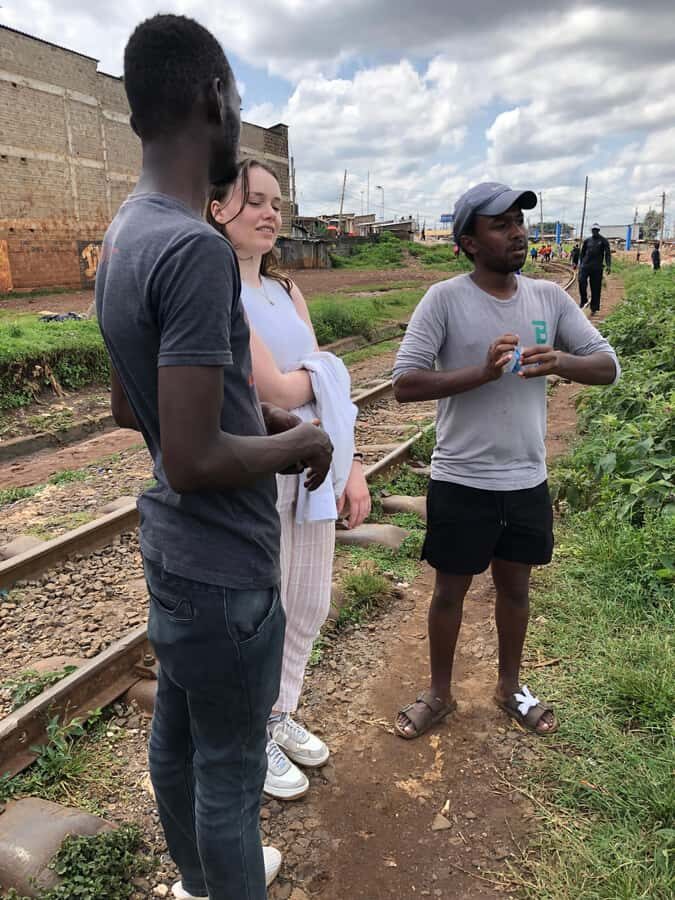
The standout pattern in the feedback is how strongly guests mention feeling secure with the guides. Daniel is frequently described as friendly, local, and careful about making sure you’re comfortable while moving through the neighborhood. Elijah also shows up often, and the pair dynamic comes across as both organized and relaxed.
What you’re gaining is context you can’t easily pick up on your own. The guides share information about how Kibera developed and how residents live today, but they also explain the social fabric that holds the community together. That means when you see schools, youth programs, or community spaces, you have a reason for why they exist and what they do.
This is also where the tour becomes more human. In the experiences shared, the guides don’t just point; they connect. You hear personal stories and learn how local projects support kids’ development, with mentions of activities like soccer and dancing through youth support efforts.
And yes, the “felt safe” theme shows up repeatedly. That matters in a neighborhood where you shouldn’t treat streets like an amusement park. A guide who knows the area well helps you move with common sense, not bravado.
Community-based organization stops: what you’re actually funding with your ticket time
A big selling point here is that you spend time visiting different community-based organizations. That’s not a random checkbox. It changes what you come away with.
Instead of leaving with a photo album and a vague impression, you get a clearer picture of how local initiatives work in the real world—especially for children and youth. The tour experiences described include places connected to youth support, and you may encounter activities that show kids learning and building confidence.
In a few accounts, the route included extra cultural and community elements such as a local gym-type stop, schools, and even a football match involving kids connected to the project. Other accounts mention ending at a barbershop where Daniel and Elijah work. Those aren’t guaranteed for every group, but they do underline the core concept: you’re seeing community life, not just looking at it.
The practical takeaway for you: if you care about outcomes (how kids are supported, what programs exist, who runs them), this tour structure gives you a better “why” than most quick city walks.
Your 10-minute break: small pause, big difference

After the initial 2-hour Kibera walk segment, there’s a 10-minute break. It’s short, but it’s smart. When you’re learning in a high-stimulation environment, a quick reset helps you stay attentive rather than overwhelmed.
Also, you’ll have a bottle of water included. That matters more than people think. Dehydration makes everything feel harder, especially when you’re walking and asking questions for most of the day.
Use the break like this: check in with your group, take a breath, and decide what you want to ask next when you rejoin the guide. If you’ve been taking photos, this is a good time to confirm you’ve captured what you need without turning your attention into a nonstop camera mission.


Price and value: is $22 a fair deal for this kind of access?

The tour price is $22 per person, for a 1-day experience. What’s included is straightforward: a tour guide and a bottle of water.
What’s not included is also straightforward: transport and community donations. That’s normal for this type of tour, and it’s the main “watch your budget” point. You’ll need to get yourself to the meeting area next to the bank and factor in how you’ll get back.
So is $22 value? For me, the value comes down to access plus interpretation. You’re paying for safe guided movement, context you can’t realistically improvise, and time spent at community-based stops connected to youth support. If you want the neighborhood explained by people with local ties, $22 feels reasonable for what you’re getting. If you only want photos and you plan to move through the area independently, you may feel like you overpaid.
The best move: treat it as a learning visit with community stops. Then plan your extra costs (transport, and any donations you personally choose to make) separately, so you’re not scrambling.
Languages and group setup: what this means for your comfort

The guide availability is listed in multiple languages: Cambodian, Catalan, Chinese, Croatian, English, German, Italian, Portuguese, and Spanish. That matters because good communication is the difference between watching and understanding.
The tour also offers a private group option. That can be a major comfort factor if you’re traveling as a family, a pair of friends, or a small group who wants questions answered without feeling rushed.
Wheelchair accessibility is listed. I’d still think practically: the neighborhood is walked-on foot, with narrow spaces likely involved based on how Kibera street layouts are typically described. So if you or someone in your group uses a wheelchair, I’d plan to ask about pacing and route suitability rather than assuming every path will work smoothly.
Practical etiquette: how to make the visit respectful and easy

I’ll be direct here. If you want this tour to feel good for you and for the community, follow the guides’ lead.
- Keep your camera use polite. If people look uncomfortable or the guide says to pause, pause.
- Ask before you photograph people up close.
- Stick to the group boundaries during the self-guided portion, and treat that time as observation, not wandering.
- Don’t turn the experience into a performance. You’re there to learn, and the guides are there to help you do it safely.
One more practical point: donations are not included. If you’re the type who worries about what’s expected, bring that anxiety down by remembering the tour price is already paying for guiding and the time spent at community stops. If you choose to donate, do it thoughtfully and only when it feels appropriate through the guide’s direction.
Who this tour is best for

This is a strong fit if you:
- Want a guided, structured 1-day visit rather than a random self-walk.
- Like local voices and want the context behind community programs.
- Prefer safety-forward guidance and clear pacing.
It’s also a good match for families who want to see and understand community life with a guide who’s described as careful about safety. One account specifically mentions a parent traveling with a 7-year-old, which suggests the experience can work across ages when guided appropriately.
If you don’t like walking in close quarters, or if you’re very sensitive to emotional realities, you’ll want to weigh whether the trade-off is worth it. The guides can help, but you’ll still be present in real places with real circumstances.
Should you book this Kibera slum tour?
If you want a guided, respectful view of Kibera that includes community-based organization stops—and you’re okay with walking and absorbing difficult realities—then yes, I think this tour is worth considering. The repeated themes around safety with local guides like Daniel and Elijah are meaningful, and the structure (2 hours out, short break, then return) keeps the day from getting chaotic.
But if your plan is mainly photos without learning, or you’re not prepared for the emotional weight of seeing where people live, you may find the experience heavier than you expected.
My advice: book it if you’re curious, calm, and willing to listen. Skip it if you want a superficial “check-the-box” stop.
FAQ
How long is the Kibera slum tour?
It lasts 1 day.
How much does it cost?
The price is $22 per person.
Where do I meet for the tour?
The meeting point is next to the bank, and the tour starts and ends at Equity Ayani.
What’s included in the price?
A tour guide and a bottle of water are included.
What’s not included?
Transport isn’t included, and community donations are not included.
What languages are available for the live guide?
The tour guide is available in Cambodian, Catalan, Chinese, Croatian, English, German, Italian, Portuguese, and Spanish.
Is the tour wheelchair accessible?
Yes, it is listed as wheelchair accessible.
Can I reserve and pay later, and what’s the cancellation window?
You can reserve now & pay later, and you can cancel up to 24 hours in advance for a full refund.
If you want, tell me your travel dates and group size (and whether you need a specific language), and I’ll help you think through whether the private group option makes sense for your situation.