REVIEW · NAIROBI
Urban Forest Tour in Nairobi
Book on Viator →Operated by Samsons Safaris · Bookable on Viator
Karura Forest is Nairobi’s quick nature escape. In just a few hours you get a guided stroll through wetlands and trails, a shot at over 200 bird species, and context on the forest’s social and political story, all without going far from the city.
What I like most is how practical the day feels: hotel pickup and drop-off mean you spend time moving through the forest, not negotiating transport. I also like that the guide keeps the pace friendly, so you can walk or go a bit harder depending on your group.
One thing to plan for: this is a moderate walking experience in a big reserve, and wildlife sightings are never guaranteed. If the weather turns, the tour may be rescheduled or refunded, since it runs in good conditions.
In This Review
- Key things to know before you go
- Why Karura Forest feels like a quick reset from central Nairobi
- Your 3-hour half-day plan inside the forest
- Bird and wildlife spotting: what you’re actually aiming for
- Waterfalls, caves, and quiet paths you can feel in your legs
- Walking versus optional bike riding: choose the day’s vibe
- Getting there smoothly: hotel transfers and the Gate C start
- Price and value: is $100 per person worth it?
- Guides who make it click: Lewis, Martin, Nadesh, Boniface, Kimani, Richard
- Who this tour suits best (and who might not love it)
- Quick practical advice before you go
- Should you book this Urban Forest Tour?
- FAQ
- How long is the Urban Forest Tour in Nairobi?
- How much does the tour cost?
- Does the price include hotel pickup and drop-off?
- Is this a private tour?
- Can I choose between early morning and late afternoon?
- Where does the tour meet?
- Is bike riding included?
- What is the cancellation policy?
Key things to know before you go
- Over 200 bird species to look for in Karura Forest, plus other small animals like bush babies and porcupines.
- Hotel pickup and drop-off are included, so the start at Karura Forest Gate is stress-free.
- Early morning or late afternoon options help you choose cooler temps and your best light for spotting.
- Optional bike riding lets you cover more ground or switch to a leisure walk at the gate.
- Moderate fitness level is enough, but comfortable shoes matter in a large, active forest.
- Private tour for your group, with guided time in English and entry fees handled for you.
Why Karura Forest feels like a quick reset from central Nairobi

Karura Forest sits close enough to Nairobi that it can feel unreal. You’re in the city one moment, then you’re stepping into a greener world with birds calling overhead and trails that lead you away from street noise. It’s the kind of half-day plan that works even when you want nature but don’t want to lose a whole day to travel time.
This tour is built around a simple idea: walk the forest with a guide who can point out what you’re seeing and give it meaning. You’re not just collecting photos. You’re learning how this place connects to Nairobi’s wider story, then you’re getting rewarded with wildlife opportunities along the way.
And the pacing options are a big part of why this works. You can do it as a calm walk, or push it a bit like a light jog if your group wants movement.
You can also read our reviews of more tours and experiences in Nairobi.


Your 3-hour half-day plan inside the forest
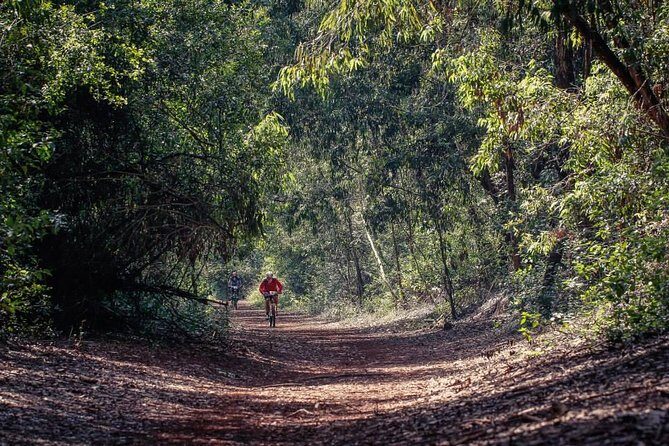
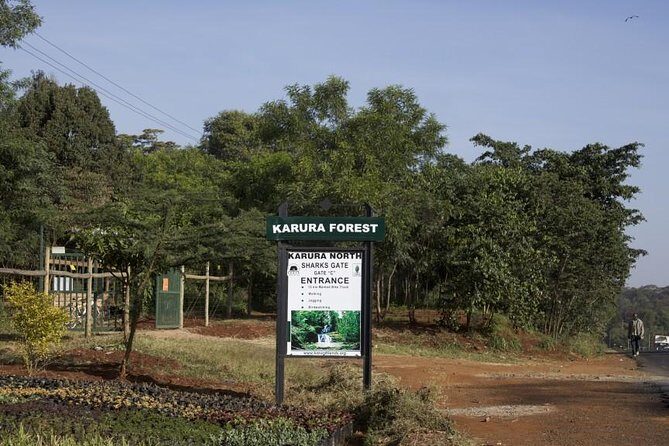
The experience is about 3 hours total, and it runs as a guided walk (with the option to ride a bike part of the time). You start at Karura Forest Gate (the meeting point is listed at Karura Forest Gate CQR6V+3G8 Shark’s Palace, Nairobi), and the activity ends back at the same meeting point.
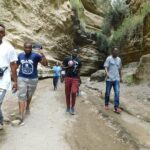
Once you’re inside, the day usually follows a loop through different forest areas and paths. Expect time on walking trails and wetlands, plus viewpoints that can include waterfalls. Some routes also include stops around caves and quiet water features, so the scenery can change from one stretch to the next rather than feeling like one long straight line.
What makes the guide-led format worthwhile is how the route feels “explained.” You’ll get background on the forest’s social and political history as you walk, so you understand why certain areas matter, instead of just hearing facts at the start and then hiking in silence.
A good sign here is that the tour supports different energy levels. The reserve is big, so you’ll move steadily, but it’s designed as a half-day for real people, not marathon athletes.
Bird and wildlife spotting: what you’re actually aiming for
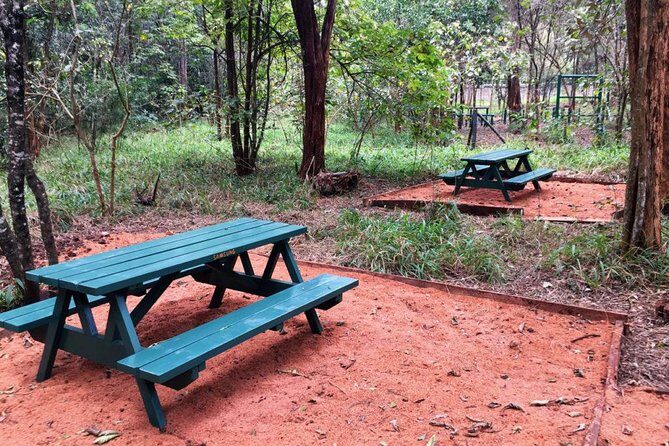
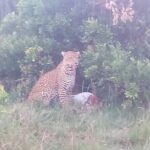
This is a bird-focused tour in the real sense of the word. The highlight is a chance to spot dozens of animals and over 200 bird species while you hike through Karura’s habitats. On top of birds, you may also see bush babies, porcupines, monkeys, and other small forest animals.
Still, keep your expectations grounded. Even with a great guide, you can’t force wildlife sightings. The best mindset is to plan for birding opportunities and enjoy the walk itself, then treat animal sightings as a bonus that can happen when conditions are right.
Here’s a practical tip that helps on tours like this: slow down your eyes. When you stay “on the move” every minute, you miss the quick moments—feather flashes in the canopy, a sudden call, or movement near water. With a guide guiding your attention, you get a higher chance of spotting what matters without constantly stopping to guess.
Also, the tour’s structure helps. You’re on trails, so you’re not wandering randomly through thorny areas. That means more time looking, less time recalibrating.
Waterfalls, caves, and quiet paths you can feel in your legs
Karura Forest is known for the way it mixes water features with walking paths. A big part of the experience is the chance to see waterfalls and enjoy views as you move. Several guide-led routes also include points connected to caves and falls, plus quieter pockets that can include lily pond-type scenery depending on the day and route.
If you’re coming from Nairobi, these stops can feel like a real sensory change. You get a break from the city heat, you hear birds instead of traffic, and the forest floor underfoot changes as the route shifts.
One realistic drawback: this isn’t a flat stroll. Even when it’s comfortable for a moderate fitness level, you’ll still be walking in a reserve with uneven ground and longer stretches than you might expect. In one review, a simple recommendation stood out: wear comfortable shoes, because the park is big and you’ll want your feet to last.
If you’re traveling with kids or you want an easy pace, this tour can still work, but you’ll want to stick to the “walk, stop, look” style rather than speed-walking the entire time.
Walking versus optional bike riding: choose the day’s vibe
Bike riding is optional, and that flexibility is smart. If you want more distance for the time you have, riding can help you cover more ground without turning every minute into a grind. If you want a calmer experience—more stops, more photos, more birding attention—a leisurely walk can still be the right choice.
One extra practical detail: bike pickup can happen at the gate area (one review pointed out taking a bike at gate C). So if bike riding appeals to you, plan to check how it fits into your start time and route on the day.
There’s no wrong choice here. It depends on your group’s energy and how you want to experience the forest—staying fully immersed on foot, or mixing movement styles to see more in less time.

Getting there smoothly: hotel transfers and the Gate C start
This tour includes hotel pickup and drop-off from Nairobi, which is a big value-maker. You don’t have to figure out how to get from where you’re staying to the forest gate, and you don’t have to worry about being late because of Nairobi traffic surprises.
The meeting point is at Karura Forest Gate, and the tour also references updates tied to Gate C along Kiambu Road. In practice, that means you’ll want to confirm your exact pick-up point when your confirmation message arrives, so you don’t waste time searching on arrival.
There are also time options. You can choose early morning or late afternoon, which matters because it changes the feel of the forest. Early hours often feel calmer, and late hours can be great for atmosphere and light for wildlife watching.
Finally, timing matters for planning. The tour is commonly booked about 15 days in advance, so if you’re traveling around a busy season, don’t wait until the last minute.
Price and value: is $100 per person worth it?
At $100 per person, this isn’t a bargain-basement activity, but it also isn’t priced like a luxury safari. Here’s what you’re paying for, and why it can make sense.
You’re getting:
- Entry fees included for Karura Forest
- An English-guided experience with a local guide
- Hotel pickup and drop-off
- A half-day of guided walking (about 3 hours)
- Optional bike riding
In Nairobi, transport and park entry can add up fast if you arrange everything separately. With this tour, you’re packaging the hard parts. That’s what turns it from “I paid for a walk” into “I paid for a smooth half-day with access, guidance, and less hassle.”
Group discounts are also offered, so if you’re traveling with friends, you may be able to lower the effective cost per person.
Is it always the best value? If you’re the type who wants to wander solo and doesn’t care about birding or history context, you might not need a guide. But if you want the wildlife focus and someone to help you interpret what you’re seeing, the price starts to feel fair.
Guides who make it click: Lewis, Martin, Nadesh, Boniface, Kimani, Richard
A huge part of why people recommend this tour is the guide experience. You can feel the difference between a guide who simply leads a route and a guide who keeps the group comfortable and interested.
One guide, Lewis, gets repeated praise for energy and enthusiasm, and for sounding genuinely happy to share the forest. Another comment highlighted that Lewis was patient and always checked in to make sure the person felt okay. That matters because a forest walk can be more physical than it looks on a map.
Other names show up in the same way: Martin and Nadesh were described as great guides during a full day plan that started with pickup and included Karura Forest time. Boniface was noted as perfectly on time at the hotel, which helps the whole day start on the right foot. Kimani earned praise too, with a cool, open approach and an interesting, fun way to talk about the experience.
Also, the tone of the guidance seems to be: you can be serious about wildlife, but you don’t have to be stiff. If you want a relaxing walk with real explanations, this is the kind of guided setup that tends to fit.
Who this tour suits best (and who might not love it)
This tour is a strong match if you want:
- A nature outing close to Nairobi, not a long-day excursion
- A guided bird-and-wildlife focused walk
- A half-day plan that also includes social and political context
- A group-friendly activity where you can bond, talk, and look around
- Flexibility to walk, jog a bit, or ride a bike
It can be less ideal if:
- You’re expecting a guaranteed lineup of specific animals. Wildlife sightings depend on the forest and the day.
- You dislike walking in a big space. Even at a moderate fitness level, you’ll be on your feet.
A simple way to decide: if you love quiet trails and you enjoy paying attention to small details—calls, movement, and changing scenery—you’ll probably come away satisfied even when you don’t spot every hoped-for creature.
Quick practical advice before you go
From what people highlight, the basics make the biggest difference.
First: wear comfortable shoes. The reserve is large, and you can easily cover around a few kilometers even on a relaxed pace, so your feet matter more than your plans to take quick rests.
Second: choose your time slot based on how you like wildlife watching. Early morning and late afternoon both work, but your comfort matters, too. Pick the option that fits your energy and the rest of your day in Nairobi.
Third: decide whether you want to walk the whole time or mix in bike riding. If your group includes different fitness levels, offering bike time can keep everyone feeling good rather than stretched thin.
Should you book this Urban Forest Tour?
I’d book it if you want a real-feeling nature break close to Nairobi, with a guide who can point out birds and other wildlife and explain why the forest connects to more than just scenery. The hotel pickup and entry fees handled for you make it feel efficient, and the guide-led route helps you get more value from the time you’re in the reserve.
I’d skip or rethink it if you’re only looking for a quick photo stop and you don’t care about wildlife spotting or context. Also, if your group is very new to walking or struggles with moderate hikes, you’ll want to choose an easier pace and be honest about limits before you start.
If you want a calm, guided day where the city fades behind you, this one is a smart pick.
FAQ
How long is the Urban Forest Tour in Nairobi?
The tour lasts about 3 hours.
How much does the tour cost?
The price is $100.00 per person.
Does the price include hotel pickup and drop-off?
Yes. Hotel pickup and drop-off from Nairobi are included.
Is this a private tour?
Yes. It’s a private tour/activity, and only your group will participate.
Can I choose between early morning and late afternoon?
Yes. The tour offers early morning or late afternoon options.
Where does the tour meet?
You start at Karura Forest Gate (CQR6V+3G8 Shark’s Palace, Nairobi, Kenya), and the tour ends back at the meeting point.
Is bike riding included?
Bike riding is optional. The tour includes optional bike riding, depending on what you choose.
What is the cancellation policy?
Free cancellation is available up to 24 hours in advance for a full refund. If it’s canceled due to poor weather, you’ll be offered a different date or a full refund.