REVIEW · NAIROBI
Half Day – Nairobi City Walking/Bus Tour Museums, Monuments & Rooftop City View
Book on Viator →Operated by Expedition Happy Hour · Bookable on Viator
Nairobi’s best stories move on wheels. This small-group city tour mixes matatu/minibus rides with hands-on stops at the National Archives and Railway Museum, then closes on the KICC rooftop for citywide views. It’s a smart way to understand Nairobi beyond the usual photo stops, without spending a full day on logistics.
Two things I really like: the max group size of 7 makes it feel personal, and the pace blends museum time with street-level transport so the history sticks. You also get a guide who knows how to connect what you see inside to what you notice outside.
One consideration: several admissions are paid separately (National Archives, Railway Museum, and the KICC rooftop). So check your budget before you go, especially if you want to keep spending relaxed and predictable.
In This Review
- Key things you’ll notice on this Nairobi half-to-full-day tour
- A small-group Nairobi mix of museum stops and matatu rides
- Starting at Moi Avenue: the National Archives and what you’ll actually see
- Kasarani matatu ride: how transport becomes city culture
- Nairobi Railway Museum: why rail matters to Kenya’s story
- Kenyatta International Conference Center rooftop: the 360° Nairobi reality check
- Price and value: what your $61 buys (and what doesn’t)
- Timing, pace, and what “moderate fitness” really means
- How the guide-led format changes the experience
- Who should book this Nairobi tour, and who might skip it
- Should you book this Nairobi City Walking/Bus Tour?
- FAQ
- FAQ
- How long is this Nairobi tour?
- What is included in the tour price?
- What are the main stops during the tour?
- Are admission tickets included?
- How much are the separate admission fees?
- Where does the tour start, and when?
- What fitness level do I need?
- Can I cancel for a full refund?
Key things you’ll notice on this Nairobi half-to-full-day tour
- A small group capped at 7 people for more Q&A and less waiting around
- Matatu rides that feel like moving city culture, not just transportation
- National Archives with paintings, tribal photography, and independence-era exhibits
- Railway Museum storytelling through Kenya’s growth (rail as a national driver)
- KICC rooftop with a 360-degree view over the central business district
A small-group Nairobi mix of museum stops and matatu rides
If you want Nairobi with context, this is the kind of tour that works fast. You start with museums that explain how the city formed, then you ride through the neighborhoods on matatus/shared minibuses—the real soundtrack of daily life. It’s not a lecture-only outing. It’s more like: see a thing, talk about it, then watch the city around it.
The group size matters here. With up to 7 people, you’re less likely to feel rushed through exhibits or stranded at the roadside while everyone’s reorganizing. You also get more chances to ask questions that come up mid-walk—especially about culture, independence, and how public transport shapes Nairobi’s rhythm.
Also, the tour is built around a half-to-full-day flow (about 5 to 7 hours). That’s long enough to get something meaningful from the museums and the rooftop view, but not so long that you feel wrecked by the afternoon. If you’re trying to balance “see Nairobi” with “still have energy to explore after,” this is a good fit.
You can also read our reviews of more walking tours in Nairobi

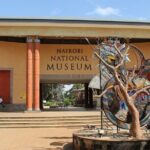

Starting at Moi Avenue: the National Archives and what you’ll actually see

Your morning begins at 8:30 AM at the National Archives on Moi Avenue. This matters more than it sounds. Starting early gives you calmer entry and better light for walking segments, and it keeps the day from turning into a scramble.
At the National Archives, you’re not just seeing a generic paperwork museum. You’ll spend about an hour looking at a mix that’s unusually visual:
- Paintings and tribal photographs from throughout Africa
- A large collection of tribal weaponry, instruments, masks, and related paraphernalia
- Exhibits focused on independence and the history of Nairobi
Here’s why this stop is valuable: it helps you understand that Nairobi’s story is not one straight line. Cultural identity, colonial-era shifts, and independence-era change all show up in different ways. The archives setting makes it feel grounded and real, not like you’re ticking boxes in a hurry.
A small practical note: this is an art-and-history mix, so plan for slower looking time. If you rush, you’ll miss the details that make the independence and Nairobi story click. Take a breath, then move on.
Kasarani matatu ride: how transport becomes city culture
After the archives, the tour shifts from indoor learning to street movement. You’ll take a two-way matatu ride (about 2 hours total time at this stage).
Matatus aren’t just buses in Nairobi—they’re moving expressions. The tour highlights how their designs can feature hip-hop artists, international pop stars, athletes, political icons, and even religious imagery. The effect is like riding through a visual radio station. You’re absorbing style, identity, and pop culture at the same time.
This is one of the most fun parts of the day, and it’s also useful. A matatu ride gives you a quick lesson in how Nairobi actually moves. You see how people share space, how routes serve daily needs, and how a city’s personality shows up in its vehicles.
What to consider: a matatu ride can mean more sensory input—noise, motion, and crowds depending on timing. If you’re sensitive to that, you might want to keep your expectations realistic. Think of it as part travel, part cultural experience, not a quiet commute.
Nairobi Railway Museum: why rail matters to Kenya’s story
Next comes the Nairobi Railway Museum, where you’ll spend about 45 minutes. The emphasis here is on Kenya Railways and how the rail network ties into the country’s growth. The museum frames this in a straightforward way: the rail didn’t just transport goods and people—it helped shape the country Kenya became.
What makes this stop work on a guided tour is that you’re not walking through random displays. You’re getting a story thread. Even in a short visit, you can connect the exhibits to what you saw earlier in the archives: shifts in independence, infrastructure, and the push for nation-building all show up in the rail story.
Value tip: if you only know Nairobi as a modern city, the rail museum adds a longer timeline. It answers a big question that most casual visitors skip: how did the country’s movement networks help create its modern shape?
Admisson is not included here (listed as $3), so budget for it ahead of time if you want to avoid the “we’ll figure it out later” feeling.
Kenyatta International Conference Center rooftop: the 360° Nairobi reality check
The last major stop is the Kenyatta International Conference Center (KICC) rooftop (around 30 minutes). The rooftop also doubles as a helipad, and that’s part of what makes it feel distinct: you’re up high, looking over a central landscape packed with key buildings.
From the KICC rooftop you’ll get 360-degree views of the central business district. It’s also a chance to spot monumental sites and landmarks connected to national institutions, including:
- The office of the president
- Kenya’s parliament
- Other major buildings in the area
Why this works as a finale: the day has been about background—archives and rail, then street transport. The rooftop view is where everything snaps into place. You can look out at the layout of central Nairobi and connect what you learned to what you’re physically standing near.
Practical consideration: since this rooftop stop has an additional paid entry ($5 listed), it’s worth planning the timing. If you arrive expecting a casual “look and go,” you’ll still get the view, but you may not fully enjoy the sense of scale. Take the full time available and let your eyes move slowly.
You can also read our reviews of more city tours in Nairobi



Price and value: what your $61 buys (and what doesn’t)
The tour price is $61 per person, and the included item is the guiding fee. That’s not a complaint—just the reality of how this tour is structured.
Admissions are separately priced, listed as:
- National Archives: $3
- Nairobi Railway Museum: $3
- KICC rooftop: $5
If you add those together, you’re looking at about $14 in entrance fees on top of the base tour price. So a rough total to plan for is around $75 per person (before any small personal extras).
Here’s why I think the value is still solid. You’re getting:
- A small-group format (max 7)
- A full guided flow across multiple Nairobi “layers” (archives, transport experience, museum, skyline viewpoint)
- Time with a guide at key stops rather than leaving you to figure things out alone
If you’re the type of person who likes to understand the “why” behind what you see—this structure earns its keep. If you just want a quick photo list with minimal pay-for-entry, then the separate admission fees might feel less convenient. But if you want meaning, you’re paying for it, and you’re paying with fewer hassles.
One more value detail: the tour mentions mobile ticket use and group discounts. Those can reduce friction and cost if you’re coming with friends or family.
Timing, pace, and what “moderate fitness” really means
The itinerary times look compact on paper:
- National Archives: about 1 hour
- Matatu ride segment in Kasarani: about 2 hours
- Railway Museum: about 45 minutes
- KICC rooftop: about 30 minutes
The remaining time to reach the 5 to 7 hour total goes to transfers, grouping up, and a bit of buffer. That’s important. Nairobi traffic and city movement can slow things down, so the tour is designed with realistic spacing.
The tour calls for moderate physical fitness. In practical terms, that usually means you should be comfortable with walking in town and staying on your feet through museum visits and stop-to-stop movement. You’re not signing up for a hike, but you also shouldn’t plan for a totally sedentary outing.
What I recommend:
- Wear comfortable walking shoes with grip.
- Bring a light layer; mornings can be pleasant and afternoons can shift.
- Carry some payment ready for admissions so you’re not stuck looking for an ATM at the last minute.
How the guide-led format changes the experience
A big reason people enjoy this tour is the human part: the guide steers you through the “so what.” One review highlight described a pleasant young guide with strong area knowledge and a route that avoids the most obvious tourist lanes. That’s the kind of difference you can feel right away.
When a guide explains what you’re seeing in the National Archives, it’s easier to recognize what the museum is trying to communicate—especially around independence and how Nairobi’s story is tied to wider African identity. The rail museum also benefits from narration; a short visit turns into a coherent storyline instead of a set of disconnected rooms.
And on the street, the guide keeps the experience safe and efficient, especially when you’re on shared minibuses or moving through neighborhoods.
Who should book this Nairobi tour, and who might skip it
This tour is a great match if you:
- Want a guided Nairobi introduction that mixes museums with real transport
- Like history, culture, and the “how things connect” feeling
- Prefer a small-group outing over big coach tours
- Are staying central and want an efficient plan from the morning into afternoon
You might skip it if you:
- Hate any walking time or want a strictly low-mobility format
- Only care about skyline photos and don’t want museum context
- Don’t want to handle separate ticket costs during the day
Should you book this Nairobi City Walking/Bus Tour?
Yes—if you want Nairobi with context and you enjoy a guide-led route. The best reason to book is the combination: archives + rail story + a matatu ride + a rooftop view. That sequence builds understanding in a way that feels practical, not abstract.
If you’re on a tight budget, plan for the separate admissions (about $14 total listed). If you’re okay with that, the tour’s small group size and tight, story-based itinerary make it good value.
FAQ
FAQ
How long is this Nairobi tour?
It runs about 5 to 7 hours.
What is included in the tour price?
The guiding fee is included. Admission tickets are purchased separately.
What are the main stops during the tour?
You’ll visit the National Archives, take a matatu ride in Kasarani, visit the Nairobi Railway Museum, and end at the Kenyatta International Conference Center rooftop for views.
Are admission tickets included?
No. The National Archives, Nairobi Railway Museum, and KICC rooftop entry are listed as not included.
How much are the separate admission fees?
National Archives is listed at $3, Nairobi Railway Museum at $3, and KICC rooftop at $5.
Where does the tour start, and when?
The meeting point is at the National Archives on Moi Avenue, with a start time of 8:30 AM. The tour ends back at the meeting point.
What fitness level do I need?
The tour suggests a moderate physical fitness level, since it includes walking and time spent moving between stops.
Can I cancel for a full refund?
Yes. Free cancellation is available up to 24 hours before the experience’s start time for a full refund.