REVIEW · NAIROBI
11 Days Private Tour to Explore Amboseli and Samburu
Book on Viator →Operated by APODIFORMES ADVENTURES · Bookable on Viator
Your safari starts in remote Samburu. This private, 11-day circuit strings together six-plus parks with real wildlife time, from leopards in Samburu to Kilimanjaro-backed elephants in Amboseli.
I especially like the private pace—you’re not squeezed into a big public-group shuffle, and the day-to-day rhythm is built around game drives and getting you back to your lodge to reset.
The best part is also the trade-off: you’re looking at a lot of long days and early wake-ups, plus cross-park transfers. If you hate early mornings or long road time, this one can feel like work.
In This Review
- Key things that make this safari worth your time
- The big picture: a private park-hopper with a wildlife-first schedule
- Samburu National Reserve: Elsa’s legacy and a quieter safari
- Lake Naivasha and the equator stop: birds, boats, and easy scenery
- Hellsgate National Park on the way to Maasai Mara: the walk-and-cycle difference
- Maasai Mara: big herds, big cats, and long day game viewing
- Lake Nakuru: flamingos, frequent leopards, and rhino options
- Amboseli National Park: Kilimanjaro views and elephant herds all day
- Tsavo East: Big Five search plus Aruba Dam and bird-heavy days
- How the driving, meals, and timing really work
- Service quality: the guide-driver matters on long days
- Price and value: what you’re paying for at $5,000 per person
- Who should book this safari, and who should think twice
- Should you book this 11-day private Amboseli and Samburu safari?
- FAQ
- How long is the safari?
- What does the tour include?
- What parks are covered?
- What about the boat ride on Lake Naivasha?
- What time does the tour start?
- Is this a private tour?
- Is pickup offered?
- How much does it cost?
- Can I cancel and get a refund?
- Is the tour suitable for most travelers?
Key things that make this safari worth your time
- Samburu’s quieter vibe: fewer vehicles than the big-name parks, with great odds for leopards and elephants
- Morning energy is real: early starts at 5:50 am in Samburu and 5:00 am before Lake Naivasha
- Hellsgate is the odd one out: you can cycle or walk with animals (a rare chance in Kenya)
- Maasai Mara in high season: July to March can line up with the big wildebeest migration action
- Amboseli’s classic photo setup: Kilimanjaro views plus elephant herds in one frame
- Tsavo East adds more variety: Big Five search, plus over 500 bird species and Aruba Dam
The big picture: a private park-hopper with a wildlife-first schedule
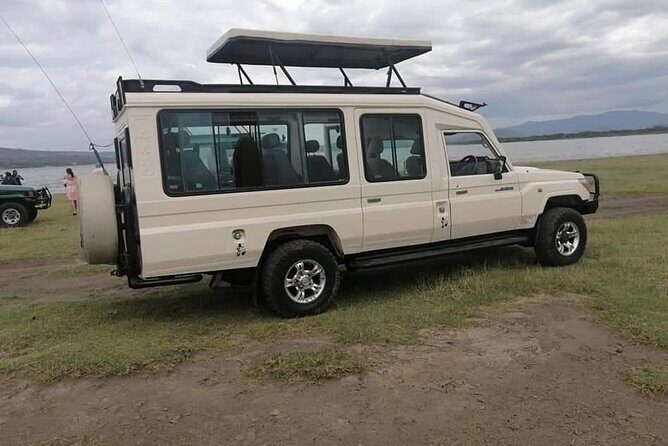
This is the kind of safari route I recommend when you want to see several Kenyan ecosystems instead of only one. You start with Samburu’s dry, remote feel, then move through Lake Naivasha and Hellsgate’s animal-filled scenery, before hitting the heavyweights: Maasai Mara, Lake Nakuru, Amboseli, and finally Tsavo East.
Your days run long—often described as around 10 hours—because the driving between parks isn’t quick. You’ll also notice a pattern: early morning game drive, then breakfast or a lodge break, then more driving or a second drive later. It’s not “sit on a bus all day.” The route is structured so the road time buys you actual wildlife time in different places.
Meals are handled for you: breakfast every day (11), lunch (11), and dinner (10). That matters more than it sounds. When you’re bouncing between parks, having food already planned helps you keep your energy up and your schedule from getting messy.
You can also read our reviews of more private tours in Nairobi
Samburu National Reserve: Elsa’s legacy and a quieter safari
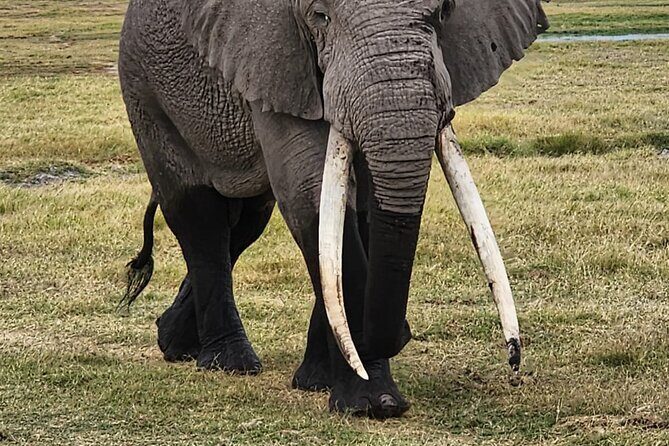
Samburu is a smart first stop if you want wildlife without the constant roar of massive crowds. It’s remote, and the reserve tends to have fewer safari vehicles than the most famous parks. That alone can make your spotting feel calmer and less chaotic.
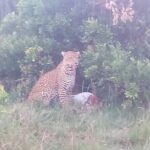
Wildlife here is built around the “specials” of Kenya’s northern areas. Elephants are plentiful, and you can look out for antelope such as the greater and lesser kudu. Leopards show up often enough that people talk about habituated leopards, meaning chances are better than average if you get out early and stay patient.
One detail I find useful for expectations: Samburu is missing rhino from the Big Five mix. So if rhino is your top priority, you’ll want to plan for later stops like Lake Nakuru and Tsavo East, where rhinos are specifically part of the Big Five list.
Samburu also has a story element that gives context to conservation. Researchers Joy and George Adamson became known here for raising lioness Elsa, the subject of Born Free. Even if you only catch the background briefly, it adds weight to why this reserve is worth protecting.
Your first day ends with a late-evening game drive, which is a great way to adjust to the sights without forcing a full early start on day one.
Lake Naivasha and the equator stop: birds, boats, and easy scenery
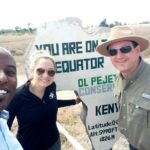
From Samburu you shift into a wetter, more dramatic setting at Lake Naivasha. The timing is built around early starts: you wake up around 5:00 am for breakfast before heading toward Naivasha, with a stop in Nanyuki to see the equator line.
That equator stop is more than a photo stop. It breaks up the driving and adds a little geography to the trip, which I find helps on longer safari routes. You’re not just “moving from one park to another.” You’re also getting a feel for how Kenya changes from region to region.
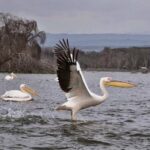
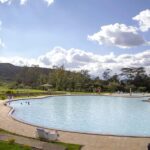
You arrive at Naivasha in the evening and are dropped at your guest house. Then you can take an optional boat ride (listed at $30 per person). If you do it, you’re choosing a calmer, bird-focused complement to all the big-cat and elephant scanning from the savanna drives.
A practical note: evenings at Naivasha are a nice reset. After days that can be all lights-out-and-next-drive, having a guest-house drop makes it easier to shower, stretch, and get real rest.
Hellsgate National Park on the way to Maasai Mara: the walk-and-cycle difference
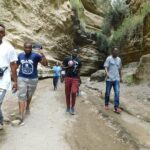
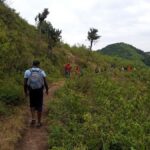
This is one of the most fun logistical surprises in the whole route. After breakfast, you drive to Hellsgate National Park, and this is noted as the only Kenyan park where you can cycle or walk while seeing animals.
That changes how you experience wildlife. You’re still on safari rules—stay aware, don’t wander off, follow your guide—but your brain treats it differently. Speed drops. Sounds matter more. You start noticing movement in the grass and around rock formations instead of just watching from a vehicle.
Then you travel from Naivasha toward Maasai Mara, a drive described as around 4 hours. This move is part of why the safari feels like a progression: you go from water and birds, to a park where animals concentrate heavily and roads keep you in constant search mode.
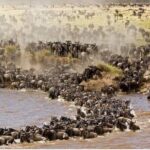
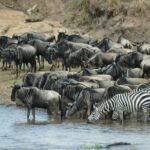
If timing matters to you, Maasai Mara is where the schedule can pay off. July to March is called the high season for the wildebeest migration event, and that timing is specifically mentioned as a chance to see dramatic movement in the reserve.
Maasai Mara: big herds, big cats, and long day game viewing
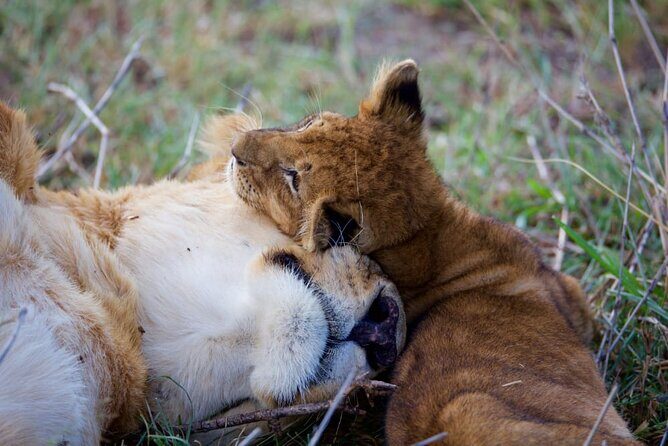
Two days in Maasai Mara give you real breathing room. It’s not one quick drive and a goodbye.
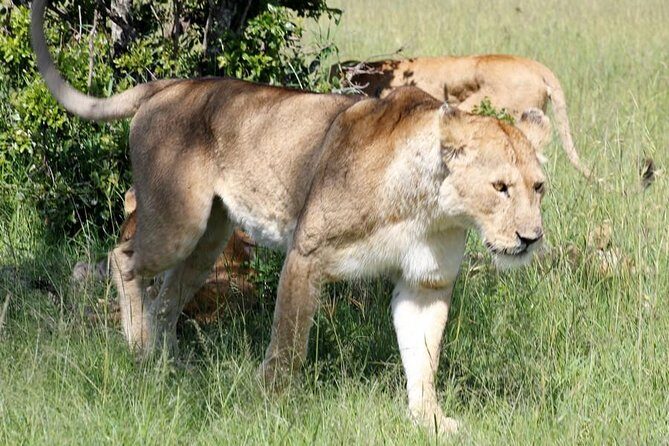
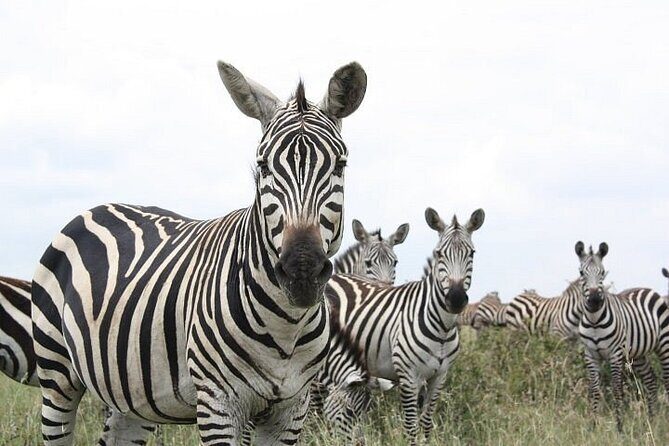
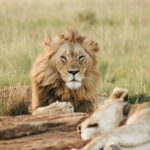
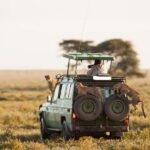
You’ll do a full day of game viewing through the Mara’s tree-studded grassland and rolling hills. Expect the focus to be on predators and the ecosystem that supports them. The reserve is known for great herds, plus lions, leopards, and cheetahs. Elephants are also part of the mix.
One thing I like about having two Mara days instead of one: it helps you deal with the reality that wildlife isn’t on a timetable. If you miss certain sightings on day one, day two often gives you another shot, especially if your guide adjusts your driving based on where animals are moving.
Then, on the next travel day, you’ll catch an early morning game drive and head toward Lake Nakuru afterward. The goal is to keep the Mara experience strong right up to the moment you switch ecosystems.
Lake Nakuru: flamingos, frequent leopards, and rhino options
Lake Nakuru is a great “gear change” from Mara. It’s known for frequent leopard sightings and for rhino—both black and white rhino are mentioned. So if your previous parks didn’t line up for rhino, Nakuru is one of the stops that can fix that.
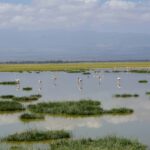
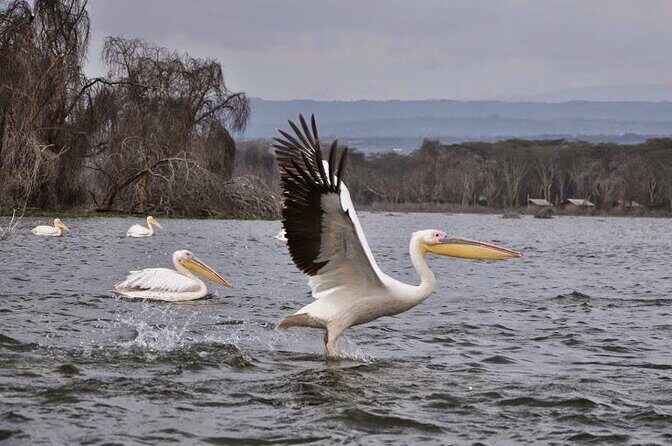
It’s also famous for birds, including thousands of flamingos. That bird intensity is a real contrast to the more predator-centered savanna scanning. If you love wildlife but also love the “smaller motion” of nature, Nakuru can feel satisfying fast.
Because the route is built around distance, you should expect a late arrival. You’ll leave after early morning game drive, then reach Nakuru late and tired. The plan is straightforward: you’ll freshen up, have dinner, and prepare for the next early game drive.
If you’re the type who gets cranky when travel eats the day, this is where having dinner handled for you matters. You still get your next morning started right.
Amboseli National Park: Kilimanjaro views and elephant herds all day
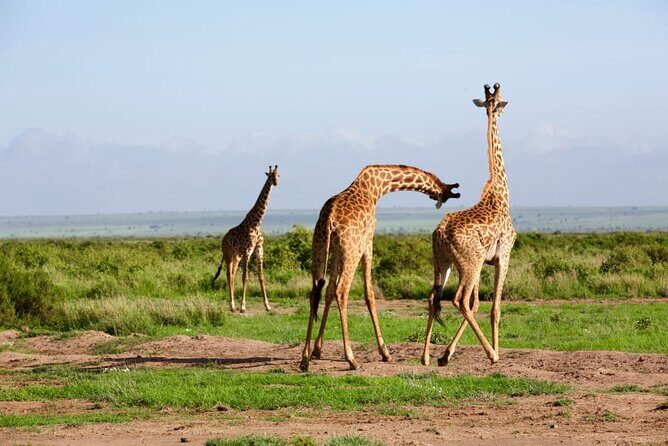
Amboseli is where the trip really turns iconic. It’s famous for scenery with snow-capped Mount Kilimanjaro in the background, and it sits in open plains that make scanning for wildlife feel more straightforward than in thick bush.
Your first Amboseli day is a late arrival, then possibly a late-evening game drive if time allows. That’s normal for a park transfer day. The real payoff is the full-day drive.
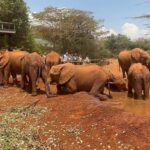
Amboseli is described as about 360 sq. km and is noted for the largest herds of elephants. That elephant focus shapes everything you do—your eyes go wide, and your patience pays off when groups cross open areas.
The park is also linked with Kilimanjaro photography. It’s specifically described as a place where you can capture the Kibo peak snow-capped backdrop with elephants in the foreground. If you care about photos, this is one of the most practical parks on the route because the scenery setup is consistent.
One extra detail that makes Amboseli feel more grounded: the views include Maasai villages outside the park. Even from a distance, it reminds you that this is lived-in country, not just a wildlife set.
Tsavo East: Big Five search plus Aruba Dam and bird-heavy days
Tsavo East is the last big wildlife chapter, and it packs a lot of different targets in one place. It’s described as the largest protected area in Kenya, and it’s listed as home to the Big Five: black rhino, Cape buffalo, elephant, leopard, and lion.
That Big Five list matters because it tells you where rhino and the wider predator mix might show up by the end of your safari. You’re not just cruising for scenery; you’re on a structured search route.
Tsavo East also adds variety in the “medium-sized and birds” category. You might look for eland, gerenuk, impala, and Masai giraffe. And the bird count is huge—over 500 species—with examples like black kite, lovebird, and sacred ibis.
Two parts of Tsavo East get called out:
- The Galana River creating a lush line of greenery through the park. That kind of water-driven change can concentrate animals.
- Aruba Dam, mentioned as a place where you can see lots of wildlife, plus a lunch stop, plus another evening drive afterward.
Your last full day is a classic pattern: morning game drive, Aruba Dam, lunch, then an evening game drive when animals can feel more active.
How the driving, meals, and timing really work
This safari is built around game drives, not “free time.” That’s good if your main goal is wildlife. Each day is heavy: long drives, early wake-ups, and the kind of patience safari rewards.
Meals are a big part of keeping the schedule sane. Breakfast is covered every day (11), lunch is covered (11), and dinner is covered (10). So you’re not constantly hunting down food in random towns. That matters on a route that includes multiple park transitions.
Also notice the handoffs:
- You’re dropped at your guest house at Lake Naivasha so you can freshen up.
- You’re driven to the hotel at Lake Nakuru late, then dinner and prep for the next early drive.
That “reset moment” is underrated. On safaris, your best wildlife watching usually happens when you’re rested enough to stay alert.
If you’re planning your own strategy, think of each day as two phases: a wildlife search phase in the morning, and a second phase that could be more driving, a second drive, or a reset depending on where you are on the route.
Service quality: the guide-driver matters on long days
A safari like this lives or dies on comfort and communication during long drives. In the feedback, the operator’s team comes up repeatedly for doing the basics well: staying on good routes, avoiding rough patches, and making room for your needs like restroom stops.
Specific names show up in past experiences, including Dixon as a guide and driver, and Gibson as a guide. Silas also gets mentioned as part of how the trip was managed, with prompt responses and flexibility.
That kind of service is valuable because it directly affects what you experience out in the parks. A smoother ride means less fatigue. Better route choices mean you reach game areas at the right time window.
Price and value: what you’re paying for at $5,000 per person
$5,000 per person is not a “budget safari.” It’s a premium price, and you should judge it by what’s included and how much private time you gain.
Here’s the value logic that makes sense for this route:
- Private touring means your days are organized around your sightings, not around fitting into a larger schedule.
- The route covers multiple major parks: Samburu, Maasai Mara, Lake Nakuru, Amboseli, Tsavo East, plus Lake Naivasha and the Hellsgate detour.
- Your core costs are handled: accommodations, game drives, and meals (breakfast + lunch daily, dinner most nights).
Where the price can feel heavy is if your main priority is only one park or only one type of wildlife. This safari shines when you want variety and you’re okay with the road time that comes with it.
Also remember: the optional boat ride is extra at $30 per person. So if you want the boat experience, budget that line item.
Who should book this safari, and who should think twice
This is a strong match if:
- You want multiple ecosystems in one trip, not just one park.
- You’re okay with early mornings and long days.
- You’re motivated by both big predators and “other wildlife” like birds and antelope.
You should think twice if:
- You hate long transfers between parks. This route includes significant driving days.
- You want a slow, laid-back trip with lots of downtime. This is a wildlife-focused schedule.
One more thought: the route includes rhino potential at Lake Nakuru and Tsavo East, while Samburu is noted as missing rhino. If rhino is a must-have, that’s a useful expectation-setting detail.
Should you book this 11-day private Amboseli and Samburu safari?
I’d book it if you want a private, wildlife-first safari that hits Samburu’s quieter character, Mara’s predator focus, Nakuru’s flamingo-and-rhino options, Amboseli’s Kilimanjaro elephant magic, and Tsavo East’s Big Five search.
I’d pause before booking if you need lots of quiet time, or if you have zero patience for early starts and long road days.
If you do book, do this simple planning move: decide what you want most—rhino, big cats, or elephant-and-Kilimanjaro views—then lean on your guide’s ability to adjust your game drive priorities around what the parks are doing.
FAQ
How long is the safari?
It’s an 11-day private tour, with the duration listed as approximately 11 days.
What does the tour include?
The tour includes game drives and accommodations, plus breakfast (11), lunch (11), and dinner (10).
What parks are covered?
The route includes Samburu National Reserve, Lake Naivasha (with a stop in Nanyuki for the equator line), Hellsgate National Park, Maasai Mara National Reserve, Lake Nakuru National Park, Amboseli National Park, and Tsavo National Park East, with Nairobi at the start/end.
What about the boat ride on Lake Naivasha?
The boat ride is optional and not included. It’s listed at $30 per person.
What time does the tour start?
The start time is listed as 7:00 am.
Is this a private tour?
Yes. It’s a private tour/activity with only your group participating.
Is pickup offered?
Pickup is offered.
How much does it cost?
The price is $5,000.00 per person.
Can I cancel and get a refund?
No. The experience is non-refundable and cannot be changed for any reason.
Is the tour suitable for most travelers?
The tour data says most travelers can participate.