REVIEW · NAIROBI
Giraffe Center & Elephant Orphanage Guided Day Tour From Nairobi
Book on Viator →Operated by Gracepatt Safaris · Bookable on Viator
Giraffes and elephants in one tight day. This small-group Nairobi outing stacks two top conservation stops plus Kazuri Beads in about half a day, and you’ll get real-guided context on how these animals are cared for. I like the combo of hands-on giraffe feeding at the Giraffe Centre and the up-close elephant baby routine at Sheldrick, all with door-to-door pickup from your hotel. One watch-out: the elephant orphanage visit requires an extra $45 per person Nairobi National Park fee, so the all-in cost is higher than the $95 headline price.
What makes this day plan work is timing. You start at 8:00am, then you’ll spend around an hour at the Giraffe Centre before the elephant viewing window begins (Sheldrick’s entry is typically in the late-morning slot). You’ll also stop at Kazuri Beads Factory, where the jewelry is hand-painted by women, which is a nice cultural add-on between the animal moments.
Overall, it’s built for people who want a concentrated Nairobi highlights day without bouncing around on your own. Just know there can be some retail-style stops along the way (a gift shop detour shows up in at least one account), and your guide can make a big difference in whether the day feels smooth or rushed.
In This Review
- Key things to know before you go
- Giraffe Centre: Daisy’s legacy and the feeding wall
- Feeding giraffes plus real education (not just selfies)
- Sheldrick Wildlife Trust: milk bottles, rope fences, and tiny elephant routines
- The Kazuri Beads Factory stop: what you’ll actually take away
- Price and logistics: the real cost, the real value
- Small-group format and the guide makes the day
- How long is the day, and where you’ll feel the schedule
- Who this tour suits best (and who should think twice)
- My booking checklist for this Nairobi conservation day
- Should you book this Nairobi guided day tour?
- FAQ
- How long is the Giraffe Center & Elephant Orphanage guided day tour?
- What’s included in the $95 per person price?
- Is lunch included?
- Do I need to pay extra to access the elephant orphanage?
- What time does the tour start?
- How many people are in the group?
Key things to know before you go
- Small group capped at 7 people for a more personal, less chaotic feel
- Early start at 8:00am, with time to reach the Giraffe Centre around opening
- Sheldrick’s milk-bottle elephant window, typically 11am–12pm, with a short viewing burst
- Kazuri Beads Factory to see hand-painted jewelry made by women
- Entrance fees included, but Nairobi National Park is an extra $45 per person
- Private-vehicle transport with hotel pickup and drop-off
Giraffe Centre: Daisy’s legacy and the feeding wall
The Giraffe Centre is the kind of place where your brain immediately shifts from sightseeing mode to conservation mode. It’s the headquarters of the African Fund for Endangered Wildlife, made widely known through Daisy Rothschild, a rescued giraffe calf from the Soi region on the Western Kenya border. Daisy and her family live at Giraffe Manor in a semi-wild setting, so the story connects Nairobi visitors to Kenya’s wider conservation picture.
At the centre, you learn giraffe behavior and traits—things like how they move, how they interact, and what to expect around people. Then comes the highlight: you’ll approach the feeding wall where the giraffes come close, letting you feed them. That feeding moment is why most people book this tour, and it’s also where you get the most emotional payoff: the animals feel calm, and you’re close enough to notice their gentleness up close.
Practical tip: if you’re sensitive to long close-up animal contact, be ready. Feeding means you’re right at the animals’ level, and they can be bold in a playful way. If you’re traveling with kids, this is usually a win, but it’s smart to set a simple rule: steady hands, no sudden moves, listen to the guide.
You can also read our reviews of more guided tours in Nairobi



Feeding giraffes plus real education (not just selfies)
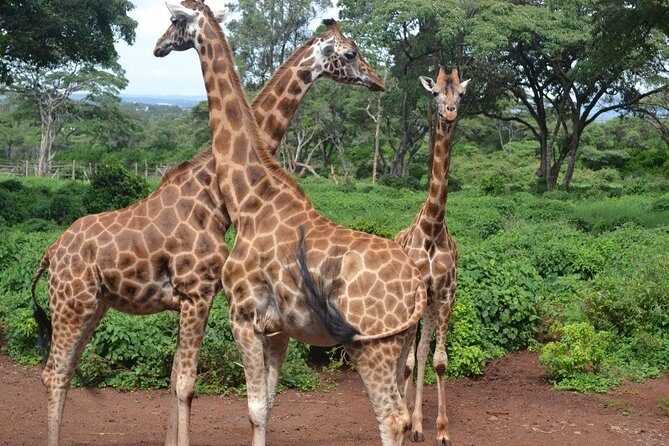
This stop is about more than the famous neck-and-charm photo. You’ll get conservation education tied to the animals’ rescue and semi-wild living situation, and it helps you understand why giraffes are part of the endangered-species conversation. The tour style here is more “watch and learn” than “walk and breeze past,” which I really appreciate when you only have one day to see Nairobi.
It’s also a good place to reset your pace before the elephant orphanage. Giraffe feeding tends to create a rush of excitement, and then your brain has to switch again—elephant babies are a different vibe entirely. Having an hour here gives you time to slow down, take in the story, and not feel like you’re racing for photos.
One note to keep expectations realistic: some days may include a shop stop around this first attraction. If that’s not your thing, I’d still go because the giraffe feeding is the core experience, but I’d ask what the timeline looks like before you commit your attention there.
Sheldrick Wildlife Trust: milk bottles, rope fences, and tiny elephant routines
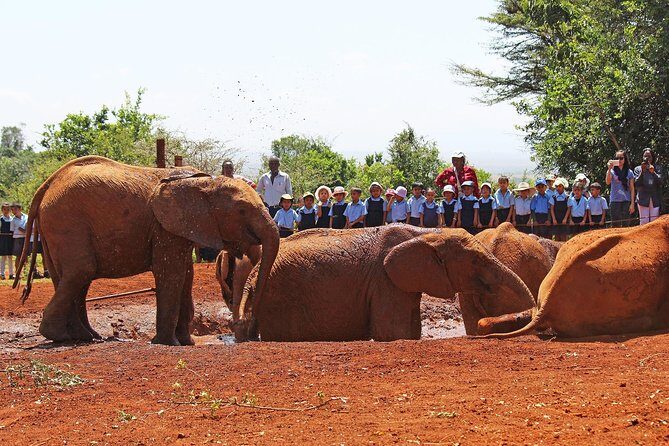
Next up is the Sheldrick Wildlife Trust, run by David Sheldrick Wildlife Trust. The elephant area is designed for viewing in an open space, with a rope fence that keeps things safe and controlled. You’ll be there for a walk-through and viewing during a set window, typically 11am–12pm.
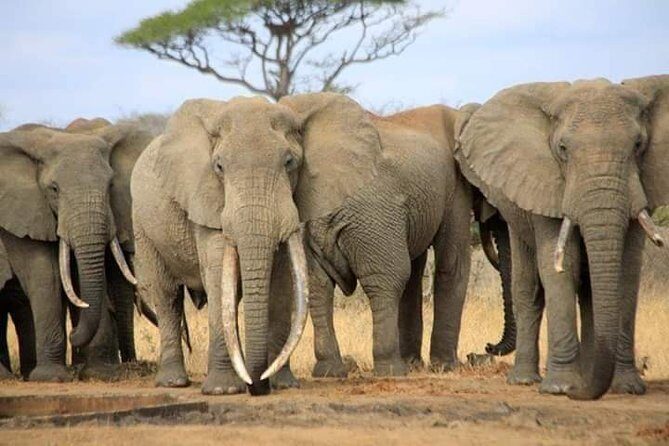
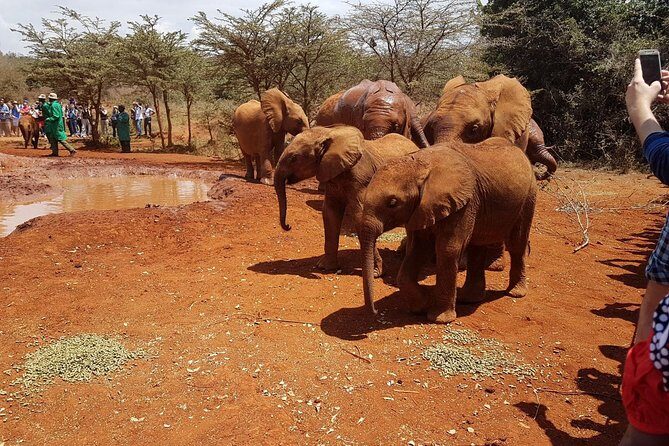
Here’s what you can expect: the youngest elephants come trotting out to greet their keepers. The keepers stand ready with giant bottles of milk, and then you’ll watch the little ones slurp and gargle their milk for about 10–15 minutes. After feeding, there’s water to play with, and the keepers help guide the interactions—nudges, gentle encouragement, and, yes, plenty of chances for photos.
The important part is the education you get while you’re watching. You’ll learn how old the calves were when they arrived, where they were rescued from, and what put them into trouble in the first place. That context changes the whole experience. It’s not just cute elephant footage—it’s rehabilitation in action, with keepers working hard to help babies recover and grow.
Now for the one big logistical factor that affects your planning: access to the elephant orphanage requires a Nairobi National Park fee of $45 per person. It’s mandatory, and it’s not included in the base $95 tour price. So when you budget, treat that $45 like part of the real entry cost.
The Kazuri Beads Factory stop: what you’ll actually take away
Between elephants and giraffes, you’ll also visit Kazuri Beads Factory. This is a cultural stop that focuses on craft, not wildlife, so it’s a nice mental break. The key detail: jewelry here is hand-painted by women, and seeing the process gives you a tangible sense of how tourism can support local livelihoods.
What I like about adding Kazuri into a day like this is how it balances the emotional intensity. Animal encounters can tug at your heart strings hard, then you get to shift gears into something you can observe and understand—how beads get turned into products, and how the work connects to community income.
A practical note: factory stops can sometimes feel like a sales floor at the end. That doesn’t have to be a downside, but it helps to go in knowing there’s likely to be an opportunity to buy. If you’re not shopping, look at it as a workshop visit and don’t feel pressured to force your purchase just to justify your time.
Price and logistics: the real cost, the real value
The tour price is $95 per person, and it includes entrance fees for both the Giraffe Centre and the elephant orphanage, plus small-group transport in a private vehicle. You also get hotel pickup and drop-off in Nairobi, which matters a lot when mornings are tight and roads can vary in traffic.
However, the elephant orphanage visit adds a mandatory $45 per person Nairobi National Park fee. Lunch isn’t included, and that’s worth planning for if you want to avoid hunger turning your “conservation day” into a “hangry day.”
So what’s the real value equation?
- You’re paying for three major stops in one day (giraffes, elephants, and Kazuri)
- You’re not paying separately for the core attraction entrances
- You’re saving time with door-to-door pickup
- You’re buying convenience with a small group and private transport
In other words: the $95 price is a strong start, but your all-in should be closer to $140+ per person before lunch. If that fits your budget, the structure makes sense for first-time Nairobi visitors who want maximum payoff with minimal hassle.




Small-group format and the guide makes the day
This tour caps at 7 travelers, and that small number affects everything. You get easier movement between stops, less waiting around, and more chance to ask questions. It also tends to keep the vibe calm when you’re dealing with popular places where crowds can build.
Guide quality is a real variable, and the difference shows up in how the day feels. In accounts tied to this experience, guides like Stephen and Benjamin have been singled out for doing a great job and handling things smoothly. One big benefit you can aim for is being at the Giraffe Centre right around opening time, which can help you avoid the worst of the crowds and get a more relaxed first hour.
At the same time, I’d give yourself a small buffer on expectations. One account described a guide going beyond what they wanted at a shop stop, and another described issues with tickets being confirmed. The takeaway isn’t to panic—it’s to do two smart things:
- ask your operator to confirm entrance arrangements
- ask the guide what the first-hour plan looks like, including whether there’s a shop stop
If you do that, you’ll protect the parts of the day you actually came for.
How long is the day, and where you’ll feel the schedule
The full tour is about 6 hours. That’s a practical length for Nairobi because you’re not committing a whole travel day, and you’re still getting two major wildlife encounters.
The schedule is built around a key elephant window. Sheldrick’s viewing is typically in a set period (11am–12pm), so you’ll feel the day tighten as you approach that time. The giraffe stop gives you a solid opening block and also helps you burn off the morning energy before the elephants.
One reason this structure works: it prevents you from wasting half the day in transit. With private transport plus pickup and drop-off, you spend more time at the actual sights and less time trying to solve Nairobi logistics on your own.
Who this tour suits best (and who should think twice)
This day tour fits best if you:
- want a focused Nairobi “best-of” day without driving yourself
- love animal conservation and want context, not just photos
- are traveling with kids or teens who can handle an hour at each main stop
- appreciate small groups and door-to-door convenience
You might think twice if you:
- hate shop-style detours and want a purely nature-focused schedule
- are very time-critical and want zero risk of ticket-administration issues
- prefer a slower pace with fewer stops
The core experiences—giraffe feeding and the elephant baby routine—are strong. The “fit” depends on your tolerance for the day’s structure and any non-animal stops that might show up.
My booking checklist for this Nairobi conservation day
Here’s how I’d set yourself up for a smooth day, based on what matters most from the tour details:
- Budget for the all-in cost: plan on the $45 National Park fee for the elephant orphanage plus lunch
- Wear closed-toe shoes and plan for standing and walking on-site (comfort matters at both centres)
- Bring sunscreen and something for sun protection; mornings can start cool and still turn bright
- Ask your operator what time you’ll arrive at the Giraffe Centre, since arriving near opening can make a big difference in crowd energy
- Confirm that entry tickets for the two conservation stops are arranged ahead of time
- If you’re not interested in shopping, politely clarify whether you’ll have a gift-shop stop and how long it takes
If you do those, you’ll spend your mental energy on the animals and the stories, not on avoidable surprises.
Should you book this Nairobi guided day tour?
If you want one efficient day that covers Nairobi’s most famous conservation stops—giraffe feeding, elephant baby rehabilitation at Sheldrick, plus a Kazuri craft visit—this is a strong option. The small-group cap and hotel pickup make it easier than DIY, and the included entrances help you avoid spreadsheet headaches.
I’d book it when your budget can stretch to the $45 National Park fee and when you’re comfortable with a structured schedule around the elephant viewing window. Skip or choose another option only if you strongly dislike shopping detours or you need absolute certainty with ticket administration on a tight timeline.
If those conditions fit you, this is the kind of Nairobi day that leaves you with both great photos and a clearer sense of why conservation work matters.
FAQ
How long is the Giraffe Center & Elephant Orphanage guided day tour?
The tour lasts about 6 hours (approx.).
What’s included in the $95 per person price?
The price includes entrance fees for the Giraffe Centre and the Elephant Orphanage, a small-group tour, transport in a private vehicle, and hotel pickup and drop-off.
Is lunch included?
No. Lunch is not included.
Do I need to pay extra to access the elephant orphanage?
Yes. You need to pay an additional $45 per person for Nairobi National Park, which is mandatory to access the elephant orphanage.
What time does the tour start?
The tour start time is 8:00am.
How many people are in the group?
The group is capped at a maximum of 7 travelers.