REVIEW · NAIROBI
Visit Kibera The Largest Slum With a Local
Book on GetYourGuide →Operated by Jack williams · Bookable on GetYourGuide
A slum visit that feels human. This tour’s interesting because you’re led full-time by Jack Williams and a team of guides who grew up in Kibera, and the money you pay helps fund education in the community. I love that it’s not a look-and-leave photo mission, it’s a guided, human-scale experience focused on daily life and practical context.
What I also like is the mix of stops: recycled crafts, a second-hand market where you can bargain, and time for street food and tea. One consideration: 3 hours is enough for meaningful snapshots, but it won’t explain everything about Kibera’s full complexity—so you’ll leave with questions.
In This Review
- Key things that make Visit Kibera feel real
- Getting Oriented at Prestige Plaza and Java House
- Meet Jack and the Four Guides Who Know Kibera From the Inside
- Stop 1: The Clean, Safe Office That Sets the Tone
- Stop 2: Crafts Center Where Recycling Becomes Jewelry
- Stop 3: Open-Air Market and How Bargaining Works With Guides
- Stop 4: The Home Visit That Shows Living Standards Up Close
- Stop 5: Cafeteria Break, Local Food, and Tea With Mechanics
- Photo Rules, Respect, and Comfort: What to Do in the Moment
- Price and Value: What Your $10 Buys Beyond the Tour
- Logistics That Actually Matter: Timing, Group Flow, Getting Back
- Who This Tour Fits Best (and Who Should Skip It)
- Should You Book Visit Kibera With a Local?
- FAQ
- How long is the Kibera tour?
- What does it cost?
- Where is the meeting point?
- Is transportation included?
- What is included in the experience?
- What language is the tour guide?
- Is the tour wheelchair accessible?
- Who is the tour not suitable for?
- What stops will you visit during the tour?
- How does the booking fee help the community?
- Is there free cancellation and reserve-and-pay-later?
Key things that make Visit Kibera feel real
- Local guides for the whole walk: You don’t wander on your own. The team stays with you from start to finish.
- Money that returns to the community: 50% of the booking fee goes back to support school fees and supplies for orphans and vulnerable children.
- A crafts stop that shows how people adapt: You’ll see materials being recycled into jewelry and handmade items.
- Market time with guide-powered bargaining: You can shop for second-hand goods and negotiate a local price with help.
- Home visit plus a short break: You get a look at living standards, then sit down in a cafeteria for local food and soft drinks.
Getting Oriented at Prestige Plaza and Java House
Your day starts at Prestige Plaza Shopping Mall on Ngong Road. The meeting point is simple: go to JAVA HOUSE, then meet the guide in front of it. This matters more than it sounds. Starting in a normal, easy-to-find place helps you get your bearings fast, especially because Kibera visits can feel intense if you show up uncertain.
From there, you’re not left to figure things out. The experience is designed to keep you moving with clear guidance, and you’ll be taken back to the same meeting point afterward. That back-to-start comfort is a big deal when you’re trying a neighborhood that most people only hear about through headlines.
You can also read our reviews of more tours and experiences in Nairobi.



Meet Jack and the Four Guides Who Know Kibera From the Inside
The heart of this tour is the people leading it. Jack runs the experience through his social enterprise and nonprofit work, with a nonprofit partner also involved to support local needs around education. He’s also personal about why this matters: he lost both parents when he was nine, and that early loss shaped his focus on helping children in difficult circumstances.
You’ll meet a team of four guides, and they’re all born and raised in the slum. That’s not just a feel-good detail. It changes how the information lands. Local guides can explain what’s ordinary here—work routines, household life, community priorities—without turning it into a lecture or a performance.
The tour is in English, and it’s structured so you can ask questions while you walk. Many guides can give facts. This format is built for conversation.
Also, the experience is described as wheelchair accessible. And there’s one clear age limitation: it’s not suitable for people over 95. (That’s the kind of practical rule you’ll want to respect.)
Stop 1: The Clean, Safe Office That Sets the Tone

Before you go anywhere, you’ll start at an office for introductions and a briefing. The details matter here: the office is described as safe and super clean. That’s a smart design choice, because it helps you settle before you step into a place where you may feel out of place.
This briefing gives context for the day—what you’ll see, what the tour is trying to do, and why the booking fee supports education. In a visit like this, context keeps you respectful. Without it, it’s too easy to treat poverty like a spectacle.
Stop 2: Crafts Center Where Recycling Becomes Jewelry

Next comes the crafts center. This is where you’ll see locals recycling materials to make jewelry and other handmade items. It’s not only about shopping. It’s about understanding the everyday problem-solving that’s happening all around you.
When you watch someone turn scraps into something wearable, you start seeing the economy in motion. You understand that creativity isn’t a hobby here—it’s a practical way to earn money and keep skills alive.
If you buy something, do it with patience. Handmade items often require time and careful work. Also, you’ll likely be encouraged to bargain later in the market, and guides can help you land on a fair local price. That guidance is part of the value of going with locals, not in spite of it.
Stop 3: Open-Air Market and How Bargaining Works With Guides

After crafts, you’ll visit an open-air market. This is where locals shop for second-hand items. The market stop gives you a different lens on living here: not everything is new, and not everything needs to be. People reuse, repair, and repurpose as part of everyday survival.
You’ll also have time to shop at the market and bargain with your guides so you can pay a local price. I love that the tour explicitly builds in guide support for bargaining. It reduces awkwardness and it helps you avoid the most common “tourist mistake”: paying a price that’s wildly out of line with what locals would pay.
Practical tip: keep purchases small and intentional. In a market like this, buying one or two meaningful items feels better than trying to “save the day” through shopping.



Stop 4: The Home Visit That Shows Living Standards Up Close

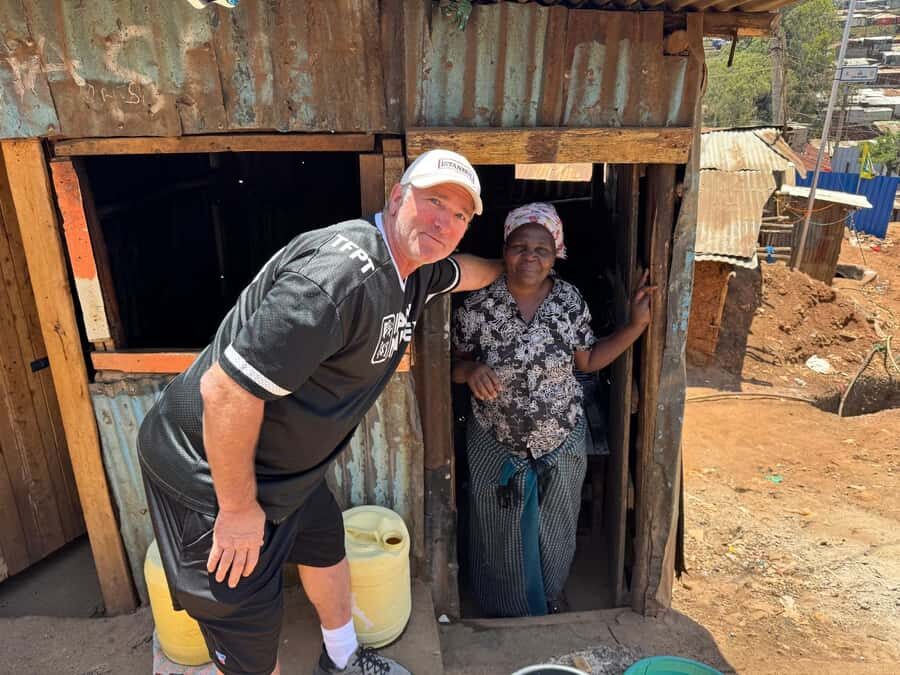
Then you’ll go to a home visit, where you’ll see the inside living standards of the people. This is the stop that changes people the most—sometimes in quiet ways, sometimes with uncomfortable questions.
A good slum visit doesn’t pretend hardship is simple. It also doesn’t treat dignity like a prop. This tour is built to handle that balance because it’s guided by people who actually live in Kibera and can explain what you’re seeing in plain language.
You should expect two things:
- a real look inside homes, not staged visuals
- time for your guide to explain daily realities
This is also where you need to control your behavior more than your camera. Keep your questions respectful. Follow the guide’s lead on what’s appropriate to photograph. If the moment feels personal, it is—treat it like it’s personal.
And yes, you’ll meet children during the experience. The tone is described as joyful, and that energy matters. It reminds you that life here is more than hardship—it’s also play, friendship, and community.
Stop 5: Cafeteria Break, Local Food, and Tea With Mechanics

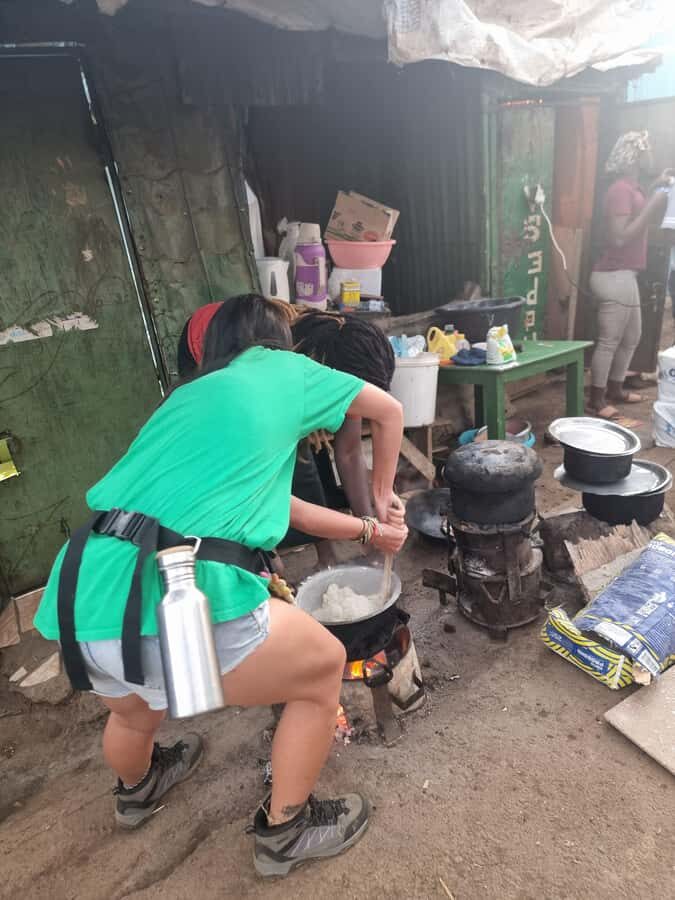
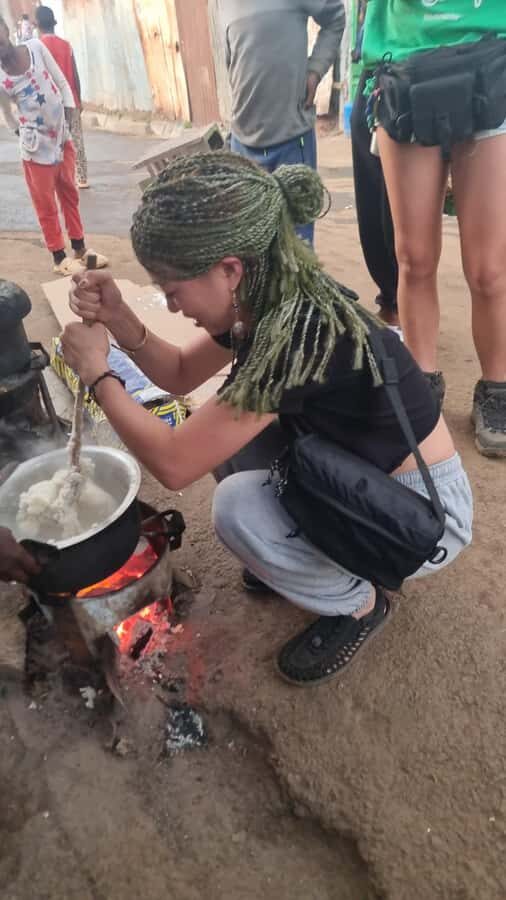
Finally, you’ll rest in a cafeteria. You’ll have soft drinks and local foods while you continue learning more about the slum and how the community works.
One of the standout details is that you can eat street food and have tea with mechanics. Even if you don’t know anything about cars or tools, this kind of casual, everyday interaction gives you a deeper picture of how people spend time and earn income. It also helps you see community life as normal life, not a permanent emergency.
This break is practical too. Three hours in a new environment can be mentally heavy. A sit-down moment helps you absorb what you learned without getting rushed.
Photo Rules, Respect, and Comfort: What to Do in the Moment

Kibera isn’t a theme park, so your approach should be grounded. Here’s how to keep the experience respectful and comfortable:
- Ask your guide first before taking photos. If something looks sensitive, wait.
- Don’t zoom in on people’s faces to get the perfect shot. Look for moments that show context: work, school, daily routines.
- Keep your body language calm. You’ll be walking with guides full-time, which helps, but your demeanor still sets the tone.
- If you feel overwhelmed, it’s okay. Step back, breathe, and let the guide reset the conversation.
From the way the tour is described, safety is treated as part of the experience—because you’re never on your own. Guides help you move through the area and manage interactions.
Price and Value: What Your $10 Buys Beyond the Tour
The price is $10 per person for a 3-hour experience. For Nairobi, that’s positioned as affordable, and the real value isn’t only the sightseeing—it’s what the tour funds.
Here’s the key point you should understand before you book: the booking fee supports school fees and supplies for orphans and vulnerable children. And 50% of the booking fee goes back to the community. That means your payment isn’t just covering guide time. It’s feeding into ongoing needs, and it ties the visit to something concrete.
This kind of model matters because slum tourism can otherwise feel extractive—someone profits from your curiosity while locals see little return. Here, the structure is designed so the community benefits directly.
Also, the tour includes an expert guide. It doesn’t include transportation to and from the area, so you’ll want to budget for that separately. Even with that extra cost, you’re still getting a guided, full-time experience with multiple stops and direct community support.
Logistics That Actually Matter: Timing, Group Flow, Getting Back
The tour runs for three hours, and it includes a complete start-to-finish loop from the meeting point at Prestige Plaza Shopping Mall. You’ll return to the same place after the experience.
That matters for two reasons:
- You’re not stuck figuring out transportation after a busy, emotionally charged day.
- The schedule is tight enough to be doable, but long enough to cover meaningful stops—office intro, crafts, market, home, cafeteria.
The tour is also described as flexible and can be customized to match your interests. If you’re especially curious about crafts, markets, or everyday household life, this adaptability helps you get more of what you care about within the time window.
Who This Tour Fits Best (and Who Should Skip It)
This experience fits best if you:
- want real context about life in Kibera, not just quick facts
- enjoy guided walking tours with conversation
- are comfortable with a home visit and want to learn respectfully
- care about education support for orphans and vulnerable children
You should skip it if you’re looking for a “light” experience with entertainment-only stops. A visit like this can be thought-provoking.
And if you’re older than the stated limit (over 95), it’s not suitable. On the other hand, the tour is wheelchair accessible, which broadens who can participate.
Should You Book Visit Kibera With a Local?
Book it if you want a guided visit built around dignity, local knowledge, and measurable community support. The biggest reasons to say yes are the local, full-time guides, the home visit plus everyday stops, and the fact that half your fee returns to the community for education.
I’d think twice only if you’re not ready for the emotional reality of seeing living standards up close, or if you’re expecting a long, deep timeline of life in Kibera in a single afternoon. This is a strong snapshot, not a whole life story.
If you do book, go in with a mindset of learning and respect. Ask questions. Bargain with your guide. Buy one or two items if it feels right. And treat the day like it’s about people first, not about collecting a story.
FAQ
How long is the Kibera tour?
The duration is 3 hours.
What does it cost?
The price is $10 per person.
Where is the meeting point?
Meet at Prestige Plaza Shopping Mall on Ngong Road in front of JAVA HOUSE.
Is transportation included?
No. Transportation is not included.
What is included in the experience?
An expert guide is included.
What language is the tour guide?
The tour is guided in English.
Is the tour wheelchair accessible?
Yes, it is wheelchair accessible.
Who is the tour not suitable for?
It is not suitable for people over 95 years.
What stops will you visit during the tour?
You’ll make 5 stops: the office briefing, a crafts center, an open-air market, a home visit, and a cafeteria.
How does the booking fee help the community?
The aim is education for orphans and vulnerable children, and 50% of the booking fee goes back to the community to support school supplies and fees.
Is there free cancellation and reserve-and-pay-later?
Yes. Free cancellation is available up to 24 hours in advance for a full refund, and you can reserve now and pay later (pay nothing today).