REVIEW · DIANI
Diani: Giriama Cultural Dance Show and Local Village Tour
Book on GetYourGuide →Operated by Kaaribu Experiences · Bookable on GetYourGuide
A village tour with rhythm, laughter, and real village life. In Diani, this 3-hour Giriama cultural experience pairs a local village walk with a Giriama dance show and hands-on stops like a school visit and a traditional healer encounter. I like that it feels un-staged and not rushed, so you get time to talk, watch, and ask questions.
My favorite part is how much you do beyond watching from the edge—like sampling palm wine and learning what everyday routines look like. One possible drawback: the base price covers the tour, but your hotel pickup/transfer costs extra and you’ll want to confirm the exact arrangement for your accommodation.
In This Review
- Key things to know before you go
- Diani’s Giriama Cultural Show: More Than a Dance Ticket
- The 3-Hour Flow: Where You Go and Why Each Stop Matters
- Stop 1: Ibiza Market for quick local context
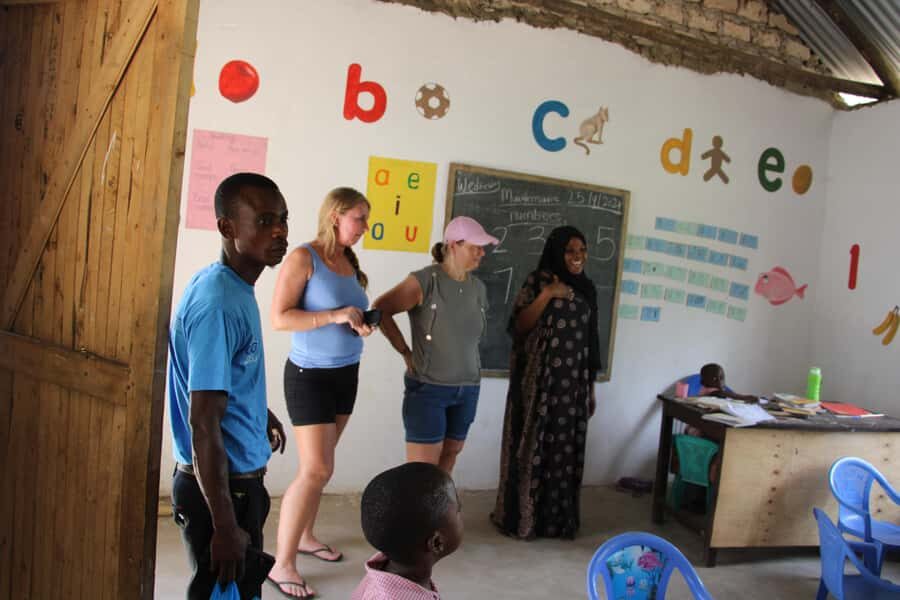
- Stop 2: Community school under a giant baobab
- Stop 3: Madafu (coconut water) and homestead life
- Stop 4: Traditional healer visit (Mganga)
- Stop 5: Dance arena and the story in movement
- Price, Value, and the Real Cost of Getting There
- What’s Included (and What You’ll Need to Bring)
- The Human Side: How Interaction Really Happens
- Who This Tour Fits Best (and Who Might Want Something Else)
- Practical Tips to Make Your Day Go Smoothly
- Should You Book the Giriama Cultural Dance Show and Village Tour?
- FAQ
- Is the palm wine tasting included?
- What does the $35 price include?
- Do I need transport from my hotel?
- Will I have time to visit a school?
- What should I bring?
- Are alcohol or drugs allowed on the tour?
- How long is the experience?
Key things to know before you go
- School + kids interaction: bring small school supplies or simple gifts if you want to share.
- Traditional healer (Mganga) stop: you’ll learn how indigenous herbal remedies are prepared and used.
- Coconut water and harvesting talk: expect madafu (coconut water) and explanations around harvesting.
- Dance Arena with 12 dancers: a staged-like show in feel, but rooted in village storytelling.
- Palm wine tasting: included as part of the homestead experience.
- Photography included: professional photos are taken using your own device.
Diani’s Giriama Cultural Show: More Than a Dance Ticket
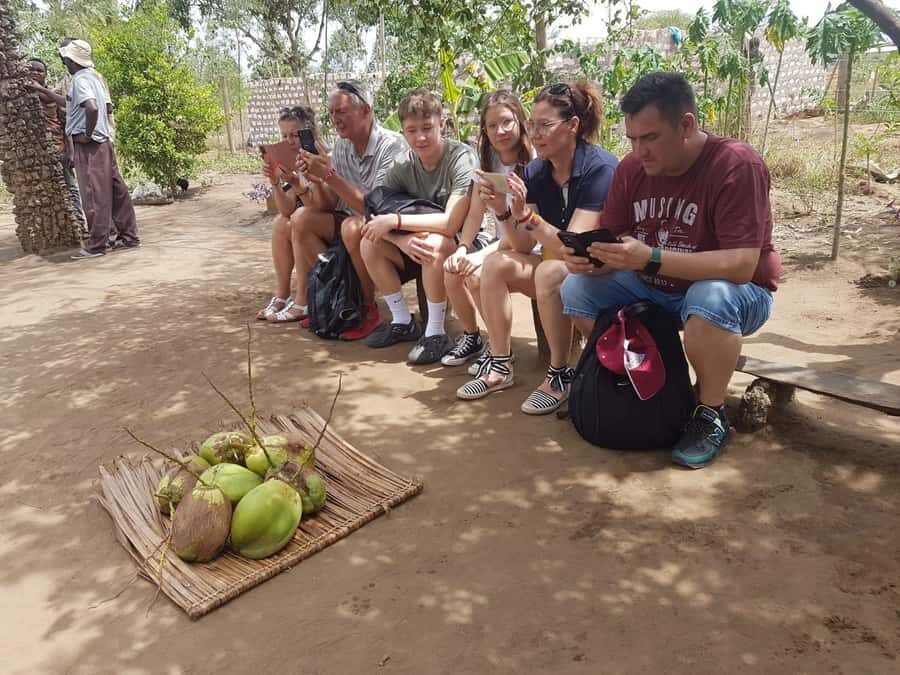
This is the kind of experience that makes the coast feel human, not just scenic. You’ll spend your time with the Giriama people, a coastal sub-group connected to the wider Mijikenda communities, and you’ll see village life from the inside—talks, routines, and the sort of community moments you usually miss when you stay only on the beach or in a resort bubble.
The main hook is the combination: a local village walk plus a cultural performance by 12 dancers. But the performance isn’t the only reason this tour works. The itinerary is built around everyday stops where you can ask questions and actually see how things get done—market life, a community school, homestead cooking steps, and a visit to a healer.
If you’re the type who likes culture that doesn’t feel like theatre, you’ll probably enjoy the pace. It’s not a nonstop checklist with pressure to buy something at every turn. It’s more like you’re being guided through a day that’s already meaningful to the people who live it.
You can also read our reviews of more tours and experiences in Diani.

The 3-Hour Flow: Where You Go and Why Each Stop Matters
The tour runs about 3 hours, and it’s structured like a path through community life. You start in a market area, then move through village spaces—school, homestead, healer, and finally the dance arena.
One helpful note before you go: you’ll need to wear comfortable shoes. Some walking happens on uneven village paths, and you’ll likely spend time moving between stops rather than sitting in one place.
Stop 1: Ibiza Market for quick local context
You begin at Ibiza Market, an open-air trading hub where locals sell daily essentials. The point here isn’t shopping for souvenirs like you’re at a mall. It’s to get your bearings fast—what people trade, what foods and goods show up in everyday life, and how the community moves.
Expect a lively scene with people working and talking. This is also where you can start learning the rhythm of the day: what’s important, what’s bought and sold, and how the village connects to the wider coastal world.
A small practical tip: if you plan to buy items later, don’t feel rushed here. Use this stop to observe and ask a few questions. If you do buy something, do it for the support angle, not as a performance for the guide.
Stop 2: Community school under a giant baobab
Next comes the local school, shaded by a giant baobab tree. Depending on the time of day, you’ll interact with students, and this is where the tour becomes emotionally memorable for a lot of people.
Bring small gifts if you can. The tour encourages simple items like toys, balls, sweets, clothes, pencils, crayons, stickers, or similar school supplies. You don’t need to “solve” anything—just bring something small enough that it feels thoughtful, not overwhelming.
Why this stop matters: it turns culture into people-to-people contact. You’ll see how education fits into daily community goals, and you’ll understand why your small donation or gift can matter more than a souvenir you can put in a bag and forget.
One consideration: the village may request additional school support. If you’re comfortable, have some spare cash ready for school-related needs or village contributions.
Stop 3: Madafu (coconut water) and homestead life
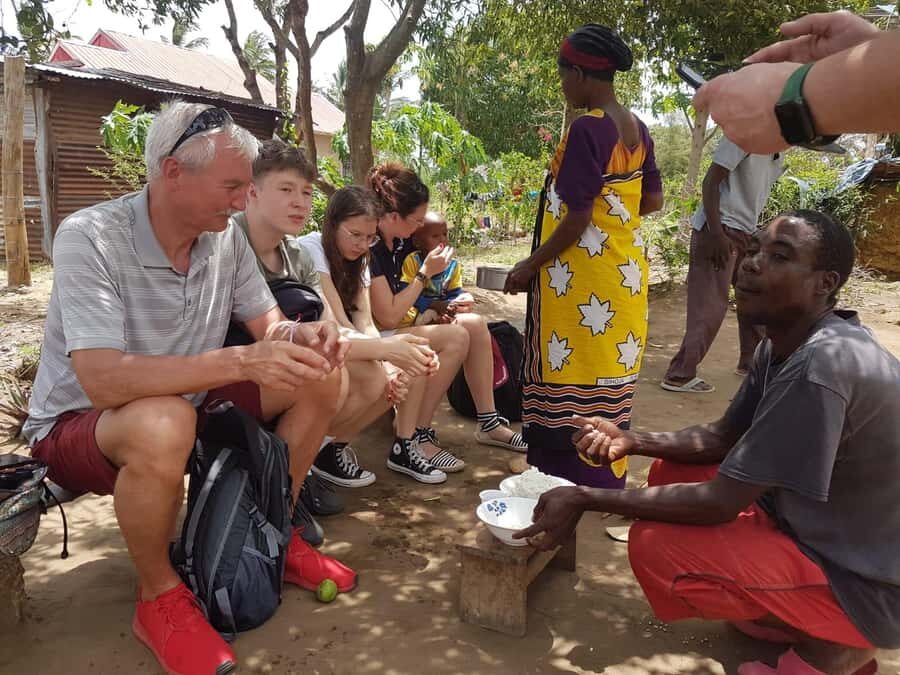
After the school, you’ll head to a homestead experience with madafu, coconut water, and explanations about harvesting. A host may climb a coconut tree to show harvesting methods. If time allows, you might also see palm wine tapping and join in simple preparations like cashew nut work or cooking steps for ugali.
This stop is valuable because it shows how coastal ingredients connect to survival and hospitality. You don’t just hear that people live close to the land—you see the chain of effort that turns coconuts into drinks and food.
You’ll likely notice two styles of learning at once:
- watching and listening while someone demonstrates
- doing a small part so you understand the work is real, not just a show
Palm wine tasting is included as part of this homestead segment. If you don’t drink, it’s still worth paying attention to the process and meaning around the tradition.




Stop 4: Traditional healer visit (Mganga)
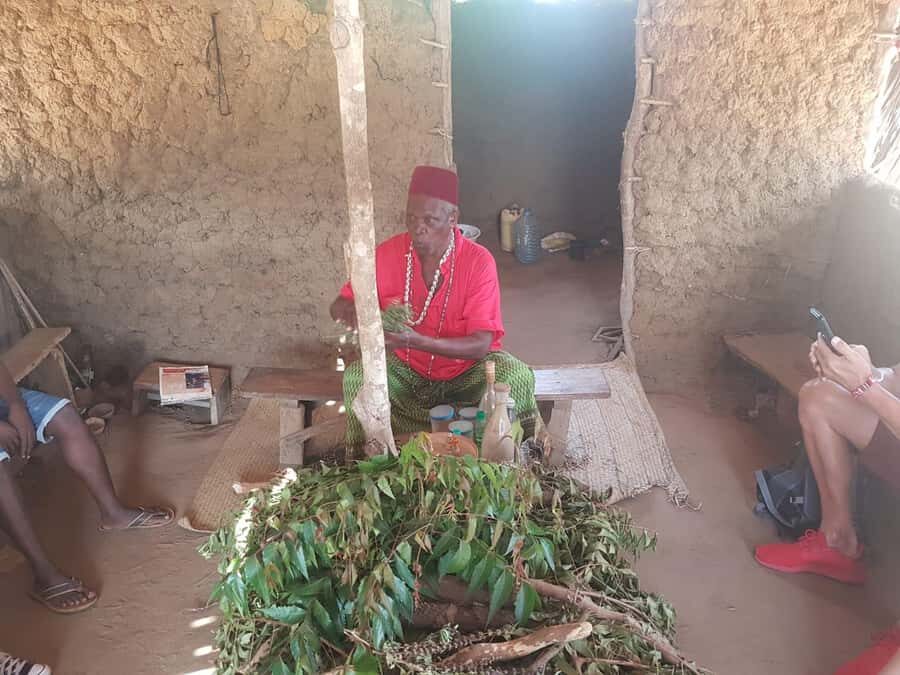
Then comes one of the most distinctive parts of the day: a visit to a respected traditional healer, known as the Mganga. You’ll learn how indigenous herbs are used to treat different ailments and how the remedies are prepared.
This is the stop for curiosity. Bring your questions. Ask about plants, how remedies are made, and how knowledge is passed down. You’re not going to get a lab-style explanation, but that’s not the point. The value is understanding the local medical system as something lived, taught, and respected.
A respectful mindset helps here. Keep your tone calm, listen closely, and let the healer lead the pace. Your job is to learn, not to turn everything into a debate.
Stop 5: Dance arena and the story in movement
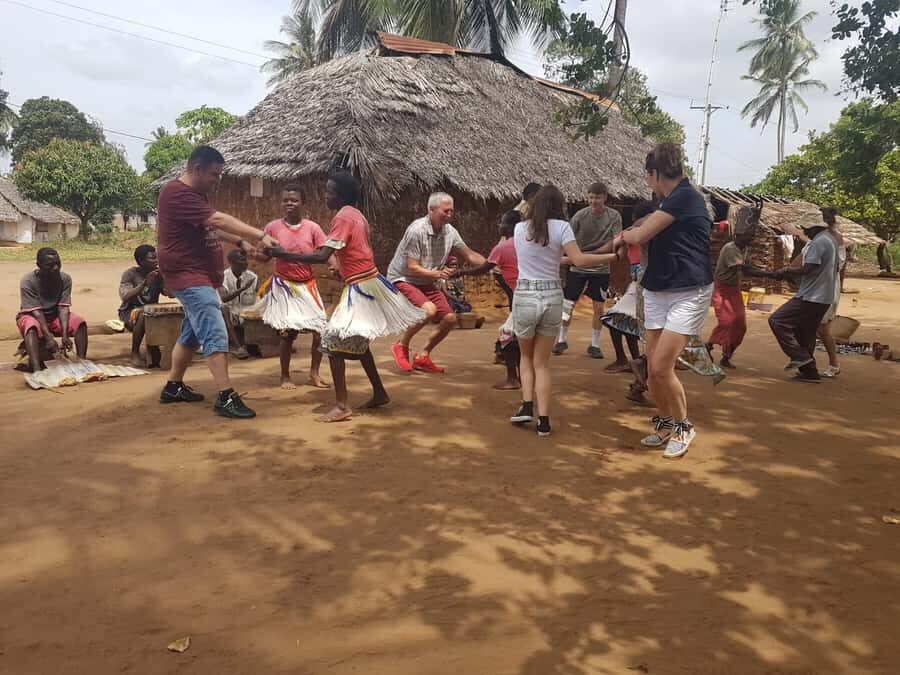
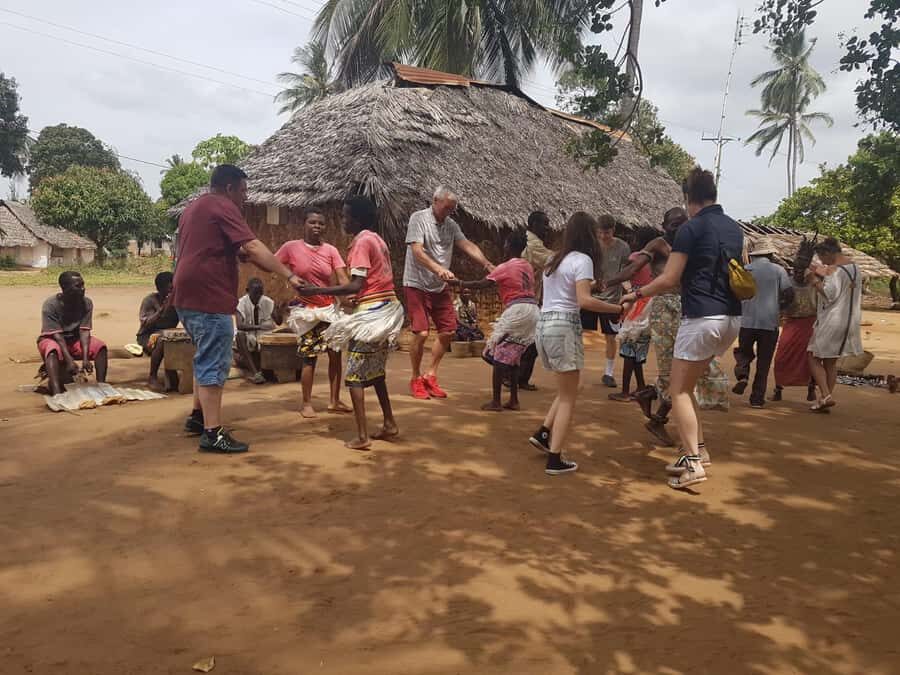
Finally, you’ll walk through narrow village lanes to the dance arena. This is where you’ll see traditional Giriama dances and a performance featuring 12 dancers working in harmony.
Each dance has meaning—weddings, celebrations, farewells, and other community moments. You’ll also be invited to join in, so your experience isn’t only watching. Laughter and rhythm become part of the language.
One possible consideration: some people felt the dance segment could have used more time. If dance is the main reason you’re coming, I’d treat this as a cultural introduction rather than a long standalone performance.
Still, the dance arena is often the part that makes you remember the day as a whole. It’s the moment where the village’s social energy becomes visible.
Price, Value, and the Real Cost of Getting There
The tour costs $35 per person for the 3-hour experience. On paper, that price looks straightforward. In practice, the real value depends on one thing: how you handle transport from your hotel.
Your hotel pickup and the in-village driving/transport are not included in the base price. The provider can organize a sedan for an extra $40 or a tuktuk for $25, and the exact amount is discussed after booking based on your location.
Here’s how to think about value:
- If you’re staying close to where the tour starts, the extra transport might be relatively painless.
- If you’re farther out, budget the transport cost early so the total still feels fair.
Also factor in what the base price covers. You’re getting a multi-stop village experience plus traditional attire, palm wine tasting, traditional dances, and professional photos using your own equipment. Since food and drinks aren’t included, you’ll want to plan to grab something before or after if your schedule needs it.
If you’re comparing to other coastal cultural options, the value here is that you’re not paying for a single show. You’re paying for several authentic community moments in one compact block of time.
What’s Included (and What You’ll Need to Bring)
Included in the experience:
- village tour with traditional healer visit
- palm wine tasting
- traditional dances performed by villagers
- traditional attire
- professional photos taken using your equipment
- a free walking tour on Tuesdays and Thursdays (you’ll need to communicate with the provider)
Not included:
- food and drinks
- hotel pickup/wait/drop-off driving cost (the transport itself is handled separately for an extra fee)
What to bring:
- comfortable shoes
- if you want to give gifts, plan ahead with small school supplies or simple items for children
A practical approach: pack your gifts in small bundles so you don’t end up trying to hand out lots of items at once. Keep it simple and let the guide handle the flow.
The Human Side: How Interaction Really Happens
This tour works because the interaction isn’t presented as something you do to check a box. The community approach is part of what makes the day feel real—talks in their way, laughs in shared moments, and time that doesn’t feel rushed.
You’re encouraged to engage:
- join in activities when invited
- talk with villagers during the walk-through areas
- ask questions at stops where there’s an explanation (school and healer are especially good for this)
A small but important detail: there are rules about behavior—no alcohol and drugs are allowed. If you were thinking about bringing alcohol or treating the day like a party, this is not that kind of cultural visit.
Who This Tour Fits Best (and Who Might Want Something Else)
This experience is ideal if you:
- want more than a dance show and you like learning through small, practical moments
- enjoy meeting people and asking questions
- care about community support (school supplies, school needs, small contributions)
It’s also a good fit for first-time visitors to Kenya who want to see something beyond hotel routines and beach life.
You might want to choose a different option if you:
- need a fully sit-down, low-walking plan (there’s a village walk and paths can be uneven)
- want a long, uninterrupted performance session rather than a tour with multiple stops
- prefer experiences where food is included (here, food and drinks aren’t part of the tour price)
Practical Tips to Make Your Day Go Smoothly
A few habits make a difference.
First: bring small gifts if you can, and keep them light—pencils, crayons, stickers, notebooks, simple toys, or sweets. People often remember the smiles more than the photos.
Second: carry a bit of spare cash. The school or village may ask for additional support, and it’s useful to have the option without feeling awkward mid-day.
Third: keep your questions respectful. The healer stop and school visit are where you’ll learn most. Ask how things are made and used, not just what they are.
Finally: plan your food and water around the fact that food and drinks aren’t included. You’ll want energy for the walking and demonstrations.
Should You Book the Giriama Cultural Dance Show and Village Tour?
Book it if you want a compact, 3-hour window into real village life in Diani. The mix of school visit + Mganga healer + coconut and palm traditions + dance arena gives you more than a single cultural highlight. It’s also strong value when you consider what’s included: cultural attire, photo coverage, palm wine tasting, and a full village-route experience for $35.
Skip or rethink it if your priority is a long dance performance with zero walking, or if you’re not prepared for the additional transport fee from your hotel. And because the day includes village movement, you should confirm the fit for your mobility needs before booking.
If your goal is to experience Kenya through people, not just places, this tour is the kind that can change your view of the coast in a few hours.
FAQ
Is the palm wine tasting included?
Yes. Palm wine tasting is included as part of the homestead segment.
What does the $35 price include?
The base price covers the village tour, traditional healer visit, palm wine tasting, traditional dances, traditional attire, and professional photos using your equipment. Food and drinks are not included.
Do I need transport from my hotel?
Yes, you’ll need a vehicle for pickup and for driving through the village. The transfer cost is not included in the base price; you’ll discuss it after booking. A sedan costs an extra $40 and a tuktuk an extra $25.
Will I have time to visit a school?
Yes. You visit a local community school (shaded by a giant baobab tree) and you may interact with the students. The tour encourages bringing small school supplies or simple gifts.
What should I bring?
Comfortable shoes. If you want to give gifts, bring small school supplies or simple items for children.
Are alcohol or drugs allowed on the tour?
No. Alcohol and drugs are not allowed.
How long is the experience?
It lasts about 3 hours. Starting times depend on availability.