REVIEW · RIFT VALLEY PROVINCE
Agro-Tourism Tea Workshop in Nandi Hills
Book on Viator →Operated by The Safari Side · Bookable on Viator
A cup of Kenyan tea has a whole day behind it. This Agro-Tourism Tea Workshop in Nandi Hills is built around one clear goal: show you how tea moves from harvesting to tasting, step by step, in the Highlands. I especially like that you don’t just watch machines; you see the people workflow—harvesting, weighting, transporting, transforming—and you get a proper tea factory visit in Nandi County. One consideration: the day starts very early, so you’ll want to be ready for a morning schedule.
What makes it feel more than “another tour” is the focus. You spend the morning learning how harvesting is done, then you watch modernized weighing, meet the tea pluckers, and see how important repeat work is for quality. The day finishes with a tea tasting, so you can connect what you saw to what you’re drinking. If you’re sensitive to long days, note it’s about 10 hours and it’s weather-dependent.
In my book, this is a strong value if you want hands-on learning and a cultural stop that’s genuinely tied to Kenya’s everyday life, not just a photo stop. You’ll also travel by private transportation, which keeps things simple when you’re moving between farm areas and the factory.
In This Review
- Key takeaways before you go
- Nandi Hills Tea Workshop: turning a chai ritual into a full day
- Price and Logistics from Swiss Side ItenFriends Bar
- The early morning start: why 5 AM makes sense
- Harvesting, weighing, and meeting the tea pluckers
- Lunch at the cottage: a break after real work
- The tea factory in Nandi County: where leaves become tea
- Tea tasting at the end: what to compare in your cup
- Who should book this tea workshop in Nandi Hills?
- Should you book the Agro-Tourism Tea Workshop in Nandi Hills?
- FAQ
- Where does the Agro-Tourism Tea Workshop in Nandi Hills start?
- How long is the tea workshop?
- What time does the workshop run?
- What’s included in the price?
- Is the experience private?
- Is good weather required?
Key takeaways before you go
- Only one-day tea-production workshop for the Highlands: you follow the chain from fieldwork to cup.
- Morning includes weighing and tea plucker interaction: you’ll see how labor and timing affect the final tea.
- Visit a tea factory in Nandi County (one of 19): production steps are shown, not just described.
- Lunch is included at a cottage: a calmer break after the morning field session.
- Tea tasting closes the loop: you taste what the process produces.
Nandi Hills Tea Workshop: turning a chai ritual into a full day
This workshop is an agro-tourism day focused on tea production in Kenya’s Highlands. It’s not a generic “tea farm stroll.” The point is process. You start with how tea harvesting is carried out, you move into weighing and handling (including a weighing step that’s been modernized), then you connect those field steps to how tea leaves become a finished product back at the factory. Finally, you taste the result.
The most useful part for me is the cause-and-effect feel. Tea is one of those foods/drinks where people usually only talk about the cup—flavor, strength, how you take it. This format shifts your attention to inputs: how leaves are collected, how batches are handled, and how processing changes the tea. That makes the tasting at the end far more meaningful because you’ve already seen what shapes it.
You can also read our reviews of more tours and experiences in Rift Valley Province.



Price and Logistics from Swiss Side ItenFriends Bar
This experience costs $137.46 per person and lasts about 10 hours. For that price, you get private transportation, all fees and taxes, a farm visit, lunch, and a tea factory visit. In plain terms: you’re paying for a full guided day with transport and the core access points—field + factory—so you’re not trying to coordinate pieces on your own.
Your start point is the Swiss Side ItenFriends Bar in Iten, and the activity ends back at the same meeting point. The morning window is 5:00 AM to 9:00 AM (Monday through Sunday), which means you’ll need to be flexible about exact pickup time within that range. Also, the tour uses a mobile ticket, which helps if you’re managing plans on your phone instead of paperwork.
There’s a quiet practical detail here: since it’s private, you’re not sharing the day with strangers in a big group. That usually makes it easier for questions—especially when you’re watching careful work like harvesting and weighing—because the group stays manageable.
The early morning start: why 5 AM makes sense
Tea work is tied to mornings. Your day begins with an explanation of how harvest is conducted, and you’re positioned to observe real work happening before conditions get too warm. Starting in the early hours also gives you better odds of comfortable walking and steadier attention during demonstrations.
If you’re traveling with a late-riser rhythm, plan for it. This tour’s opening hours (5:00–9:00 AM) signal that the schedule is designed around early field activity. You’ll enjoy the day more if you treat it like a morning hike: wake up ready, drink water, and don’t schedule anything tightly after.
Since the workshop requires good weather, keep an eye on forecasts. If conditions are poor, plans can change (the operator offers a different date or a full refund). So it’s smart to build this day earlier in your trip window rather than stacking it as your last possible option.
Harvesting, weighing, and meeting the tea pluckers
The core “wow” of this workshop is the morning sequence. You’re walked through how harvesting is done, then you witness the weighing process. The weighing step has been modernized, so it’s not just a throwback demonstration. You’ll see how the business side of tea handling connects to the field side.
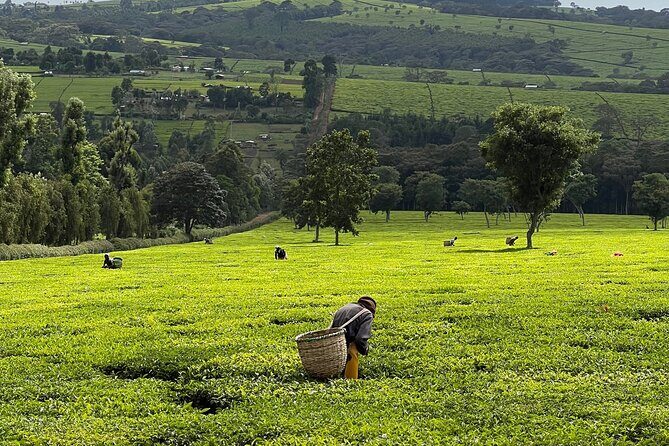
Then comes one of the most human parts: a meeting with the tea pluckers. This isn’t just a photo moment. You get to observe their proficiency and resilience at a repetitive task that matters a lot for quality. Tea plucking is skilled work—small motions, consistent output, and discipline over time. Watching it up close helps you understand why “tea” is really a chain of very specific decisions.
Here’s what I’d watch for during this part:
- How quickly and consistently pluckers work without rushing.
- How leaves are handled and prepared for the next step.
- How the weighing step connects the work to production requirements.
If you like practical learning—how something gets made, how labor fits into processing, how quality control shows up—you’ll leave the morning with a new mental model of Kenyan tea.
Lunch at the cottage: a break after real work
After the farm and plucker segment, you head back to a cottage for lunch. This matters more than it sounds. A tea workshop involves standing, walking, and watching close-up processes. Lunch at the cottage gives you a reset point before the factory segment.
Even if you don’t consider yourself a “food” person, lunch is part of why these days feel like agro-tourism instead of just sightseeing. You get time to slow down, ask questions, and absorb what you’ve learned before the production steps get more industrial.
Pack for comfort. The workshop is in Kenya’s Highlands, and early mornings can feel cool. Later, the day can warm up. A light layer helps, especially if you’re moving between shade and sun.
The tea factory in Nandi County: where leaves become tea
One of the highlights is the tea factory visit. You’ll go to one factory in Nandi County—there are 19 tea factories in the county—so you get a real production site experience rather than a general lecture.
In the factory, you focus on the process of turning tea leaves into a finished product. This portion is valuable because it bridges the gap between what you saw in the field and what arrives in your cup. It’s one thing to hear tea is processed; it’s another to see how the leaves are treated after harvest and weighing.
You’ll likely notice that the whole system depends on timing and handling. Tea is perishable in the sense that the leaf changes quickly after plucking. That’s why the early morning steps matter. If you take mental notes during the field part, you’ll understand what you’re seeing in the factory much faster.
A practical tip: wear comfortable shoes. Factory visits often include uneven surfaces and areas where you need to walk carefully for safety and access.
Tea tasting at the end: what to compare in your cup
The day closes with a tea tasting. This is where the workshop earns its keep. Tasting turns observation into understanding.
When you taste, you’re not just trying something nice. You’re making comparisons that tie back to the process you watched earlier. Even if flavors vary by batch, you should notice how processing changes the character of the tea.
How to get more from the tasting:
- Pay attention to aroma first, then sip.
- Notice how strong it feels and whether it tastes smooth or sharper.
- Think back to the field steps and ask yourself what might cause differences.
If you’re a chai fan (many people are), this tasting feels extra satisfying because you finally connect that everyday drink to a real production chain. You’ll also appreciate why Kenyan tea has its own personality.
Who should book this tea workshop in Nandi Hills?
This workshop is a good fit if you:
- Want a hands-on cultural day, not just scenery.
- Like learning how food/drink production works.
- Enjoy meeting people involved in the work—especially when it’s skill-based, like plucking.
- Want an easy add-on to a Kenya trip that already includes safari and highland areas.
It may be less ideal if you:
- Hate early starts.
- Don’t like long days with a lot of walking/standing.
- Want a purely relaxing itinerary with no structured learning.
If your schedule includes time around Iten and the Highlands, this is a strong way to add depth. And because the operator behind this experience is set up to handle multiple activities, you might find it pairs well with other nearby nature and culture plans.
Should you book the Agro-Tourism Tea Workshop in Nandi Hills?
Book it if you want your Kenya trip to include real-life production—harvesting, handling, factory work, and tasting—connected in one 10-hour flow. The value is strongest when you care about understanding how something gets made and you’ll actually use that knowledge while tasting your cup at the end.
Skip it only if early morning and a full-day schedule won’t work for you. Also keep weather in mind, since good conditions are required for the experience to run smoothly.
If you’re looking for a day that feels both educational and grounded in daily Kenyan work, this is one of the better choices in the Highlands.
FAQ
Where does the Agro-Tourism Tea Workshop in Nandi Hills start?
It starts at the Swiss Side ItenFriends Bar in Iten, Kenya, and it ends back at the same meeting point.
How long is the tea workshop?
The duration is about 10 hours (approx.).
What time does the workshop run?
The opening hours are 5:00 AM to 9:00 AM, Monday through Sunday.
What’s included in the price?
The price includes private transportation, all fees and taxes, a visit of the farm, lunch, and a visit of a tea factory.
Is the experience private?
Yes. It’s a private tour/activity, and only your group participates.
Is good weather required?
Yes, the experience requires good weather. If it’s canceled due to poor weather, you’ll be offered a different date or a full refund.